



 Newsletter
 Search
Q3 Results Unlikely To Provide Significant Market Boost
- Podcasts
- Published on 12 Jan 2026 6:00 AM IST
The big Q3 results expected this week include TCS and Infosys
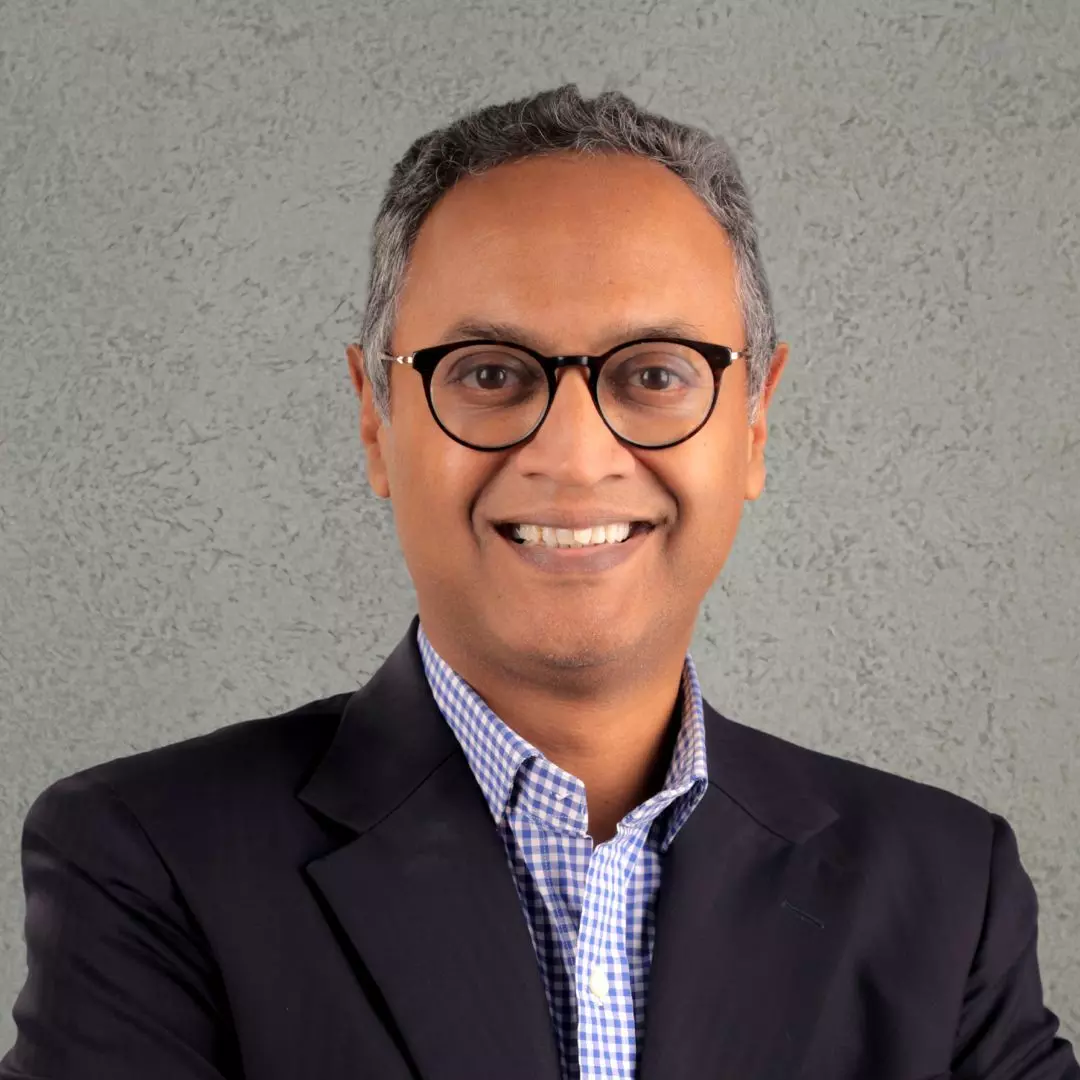
On Episode 771 of The Core Report, financial journalist Govindraj Ethiraj talks to Lloyd Mathias, Investor and Board Director. We also feature an excerpt from our recent India Energy Week interview with Sandeep Kumar Gupta, Chairman and Managing Director of GAIL (Gas Authority of India Limited).
SHOW NOTES
(00:00) The Take
(05:29) Q3 results unlikely to provide significant market boost
(07:58) India’s forex reserves are taking a hit because of the falling rupee
(09:07) US oil giants are unsure about stepping up investments in Venezuela as they weigh business and political uncertainty
(10:05) How India’s gas distribution network is growing rapidly to catch up with demand
(17:22) Indian once active angel investors have moved onto secondary markets and other asset classes
Register for India Energy Week 2026
https://www.indiaenergyweek.com/forms/register-as-a-delegate
NOTE: This transcript contains the host's monologue and includes interview transcripts by a machine. Human eyes have gone through the script but there might still be errors in some of the text, so please refer to the audio in case you need to clarify any part. If you want to get in touch regarding any feedback, you can drop us a message on feedback@thecore.in.
—
Good morning, it's Monday, the 12th of January, and this is Govindraj Ethiraj broadcasting and streaming weekdays from a cool Mumbai, India's financial capital.
The Take
For a country boasting amongst the world's largest railway networks, one that contrary to stereotype largely runs on time, the response to US Commerce Secretary Howard Lutnick's recent jibe was curiously off track.
When Lutnick said that India had missed the train on a tariff deal, the natural retort could have been simple. So what? There are always more trains to catch, or perhaps our track record in running actual passenger train is considerably better than yours. Now that would have hit home.
After all, the United States has spent decades struggling to build even a half-decent passenger rail network. Instead, the official and unofficial commentary in New Delhi dissolved into a painstaking and quite utterly pointless dissection of Lutnick's claims, complete with even more meandering forensic analysis of timelines. In doing so, India's chattering classes seem to have missed the forest for the trees.
The fundamental point is that Prime Minister Narendra Modi is not a businessman like a Gautam Adani nor is he a Dhirubhai Ambani. For that matter, he is not a Donald Trump either. While the Prime Minister hails from the mercantile state of Gujarat and may possess a certain mercantilist instinct honed during his days as Chief Minister, he is not a negotiator in the mould of the 47th President.
And for that, we can perhaps give thanks. Trump is a real estate developer-cum-beauty-pageant-promoter-turned-President. He brings a distinct set of skills and a worldview that the rest of the world is now rediscovering, often to its horror, on a daily basis.
Modi, by contrast, is a career politician used to dealing with other career politicians, for good or for bad. Could he have responded in three Fridays as Lutnick suggested was expected of countries like India, Thailand, and Vietnam? Possibly, but likely not. Expecting India's vast, multi-layered political process to crank up and deliver a flat tariff agreement in a matter of weeks is to ask for the near impossible, even though there was time.
And some quick background here. The India-US tariff deal was, in Lutnick's words, all set up. All that remained was for Prime Minister Modi to make a closer call to President Trump, Lutnick said in a podcast last week.
But that call never came. Lutnick noted that the Indian side seemed uncomfortable with the transactional nature of that demand, and while New Delhi deliberated, the train left the station. By the time India called back three weeks later, the US had already signed deals with Southeast Asian neighbours at higher rates, and informed India that the first stair price was no longer on the table.
Now, India has moved at a glacial pace on economic policy for decades. On trade, by all accounts, matters have been slower, if that were even possible. Global trade negotiators I've spoken to have often called the Indian side difficult.
They usually deserve the term tough for the Chinese. So we should not expect overnight miracles now. It's also worth remembering that until the Trumpian tariff tidal wave began hitting our shores, India had been raising its tariffs for the better part of a decade, reversing a two-decade trend of liberalisation.
We were becoming more protectionist, not less. Only recently has the government decided to reverse course with a spate of policy moves ranging from tax cuts to easing the regulatory burden on manufacturing. But expecting deals at the snap of the fingers is asking for too much.
Neither the domestic industry nor the farm lobby, the group the government worries about far more than Lutnick's deadlines, would allow it. Nevertheless, India's trade negotiations have been on a weak footing for close to a year now, and that is how long this has been going on. Something has got badly misaligned.
And not all of it is linked to India's refusal to accept Trump's insistence that he mediated a peace deal between India and Pakistan. India's current trade leadership struggles to match a sharp, lifelong investment banker like Lutnick, whose previous act was running the $16 billion Cantor Fitzgerald. Would a Mumbai-based banker like Uday Kotak be a better or have been a better match for the stakiest model that Lutnick said Trump had been following while making deals with other countries? Possibly.
But India rarely sees such private sector talent move into high government office. Even if they did, there is no guarantee they would survive the rough and tumble of Delhi's bureaucratic labyrinth. The silver lining is that India continues to degrease its regulatory pipes.
One hopes the Union Budget 2026 to be announced mostly on February 1st. We'll see more dramatic announcements along the lines of the last few months, including further tariff reductions. Now, these moves should not be made because Washington is demanding them, but because, as we've discussed on several occasions on the core report, India's own growth trajectory requires them.
In the meantime, New Delhi must find sharper, more empowered negotiators, its own counterparts to Howard Lutnick. We have the talent, but rather than using them as faceless advisors in industry ministry meetings, it's perhaps time to bring them to the fore. Lutnick boasted that he sets the table for Trump.
India needs its own table setters. If 2026 is indeed to be the radical economic pivot a la 1991, it's time to bring out new players on the cricketing field.
And that brings us to the top stories…
Q3 results unlikely to provide significant market boost.
How India's gas distribution network is growing rapidly to catch up with demand.
Once active angel investors have moved on to secondary markets and other asset classes.
India's forex reserves are taking a hit because of the falling rupee.
US oil giants are unsure about stepping up investments in Venezuela as they weigh business and political uncertainty.
Q3 Results
Third quarter Q3 results are going to start playing out this week. There was much expectation that the results, particularly if good, would turn the sentimental tide somewhat.
Now, it is not clear whether the results will even beat expectations or they will turn the tide. The big ones expected this week include TCS and Infosys. On Friday last week, the benchmarks fell for a fifth consecutive session on Friday and recorded their worst weekly drop in over three months.
The indices lost about 2.5% each for the week. The Sensex was down 2185 points and the Nifty was down 645 points in the last week. Inflation numbers are presently being watched and are expected to rise slightly as we reported last week's Reuters poll.
Now, the big sentiment overhang on the obviously the India-US trade talks and the fact that nothing is going right in that department and each subsequent day either brings or reveals more gloomy developments than the previous one. Also, foreign institutional investors are still selling as opposed to the general expectation that 2026 would see them turning buyers. Maybe they will, but not right now.
Instead, the opposite has played out. In the first nine days of January, foreign institutional investors have sold more than a billion dollars or about 12,000 crores worth of equities. A business standard report says domestic investors or DIIs have put in nearly 17,900 or close to 18,000 crores in January till the 9th.
But despite that, obviously, markets are not holding on. We have to remind ourselves that domestic funds have nowhere to go, particularly the SIP variety that goes into mutual funds, and those are usually committed for the medium to long term. Agile institutional investors like family offices and other funds have also been selling into the market in the last year, even as smaller investors have bought either directly or via mutual funds.
Of course, some foreign portfolio investors have bought into initial public offers, of which we've seen a flood, and that too has been sucking out liquidity from the market, but it does appear that they do it often for the listing pop than anything else. There is another not often focused on angle on bigger and higher net worth individual investors, which is that many of them have withdrawn from the once red hot angel investing and startup investing market and focus more on the secondary stock markets. While secondary markets have not exactly delivered stellar returns in the last year, the angel investing phase, which was an active class in itself has also diminished.
And of course, gold and silver have delivered better returns than almost everything else. Who would have thought that if you put your money in a brick of silver, it would have got you over 140% returns in the last year, as opposed to some promising consumer tech startup, which may or not have returned anything. Meanwhile, India's foreign exchange reserves recorded their biggest weekly drop in 14 months as the Reserve Bank sold dollars to support a weakening rupee analyst told Bloomberg holdings fell by about $9.9 billion to $551 billion.
And during the week, the rupee fell about 0.4% against the dollar, thanks to foreign fund outflows, which we spoke of the rupee has fallen about 5% last year. And that was the worst performing Asian currency in that period. Elsewhere in commodities, global rice production is forecast to hit a record 558 million tonnes and 2526 thanks to strong plantings in India, according to the United Nations Food and Agriculture Organisation quoted by Bloomberg.
Now this is likely to push global stockpiles to a new high. And farmers in India, of course, have just seen another bumper rice harvest, which is going to push a lot of grain into the global markets that's already seeing good supplies, if not oversupplies, and that in turn could see prices coming down. Growers in India, the world's biggest producer of rice may be forced to slash rates to stay competitive against rivals such as Thailand and Vietnam, according to a Bloomberg report.
Oil And Gas
Last week, we predicted that no business whether oil or otherwise would go rushing back to Venezuela following the overthrowing and capture of its president. The reason is and it goes beyond oil that businesses and CEOs who lead it cannot operate in an environment where there is considerable uncertainty on economic policy and whether any policy in the US specific context will survive Trump's term and if so how. Oil businesses think in decades and sometimes even centuries by the way.
ExxonMobil CEO Darren Wood said on Friday that they were ready to evaluate a potential return to Venezuela but the South American country was currently uninvestable and significant legal changes were needed. The comments came during a White House meeting with US President Donald Trump and this is a week after US forces captured and removed Venezuelan President Nicolas Maduro from power, according to this Reuters report which pointed out that Exxon's assets in Venezuela were nationalised nearly 20 years ago. Meanwhile, India is rapidly expanding its gas distribution network as pointed out and shared by state-owned Gas Authority of India Limited's management.
While India's official target is to increase the share of natural gas in its primary energy mix to 15 percent by 2030, as of now natural gas is about 7 percent of the country's energy basket. Sourcing and the distribution of gas will play a critical role in balancing India's energy consumption mix. I met with Gas Authority of India Chairman and Managing Director Sandeep Kumar Gupta in his office in New Delhi week before and I began by asking him to take us through what GAIL had added in capacity and distribution in the last year
INTERVIEW TRANSCRIPT
Sandeep Kumar Gupta: Yale is expanding its network on a pan-India basis and many new pipelines have been laid and have already been commissioned, gasified or are likely to be gasified very shortly. So a great part of the country is now covered with our natural gas network. If I can be precise in the answer, then our Srikakula-Mangul pipeline was gasified sometime back and now we are working on the spur lines to feed certain industries and that is also nearing completion.
The Mumbai-Nagpur-Jawalpur-Jharsuguda pipeline, which is a long pipeline serving Maharashtra, Madhya Pradesh and Odisha is also nearing completion. In fact, some parts are already gasified and at some points there is some work going on but that is also likely to be commissioned very shortly. If we talk about the eastern part of the country, our Jagdishpur-Bokaro-Dhamra-Haldia pipeline is also complete except for the Kolkata-Haldia and Dhamra-Haldia sections, which are pending because of certain issues of land acquisition or fisheries etc.
But we are likely to complete that also very very soon. And as you are aware about IGGLs, our group company, so that is also expanding its network in the northeastern part of the country. So we have expanded our presence not only in the natural gas infrastructure but otherwise also our USAR project of petrochemical is at a very advanced stage and hopefully within the next calendar year we will commission it.
And at Mangalore, the PTA plant which we acquired through NCLT process is also nearing completion and we should hear about the commissioning date very shortly.
Govindraj Ethiraj: You talked about two big pipelines or two significant pipelines that you are adding and almost added. What would you say is the percentage addition to the existing pipeline network in this year alone?
Sandeep Kumar Gupta: The pipelines which have been completed and which are getting commissioned is roughly about 3,000 kilometres and that is on top of about say about 16,000-17,000 kilometres. So that is the proportion. More than 10%?
Yes, definitely, definitely about 20%. About 20% the pipeline. And that seems to be a jump in terms of previous years?
Yes, definitely. The extent of work actually the initial projects happened the HVJ pipeline of 1800 kilometres and then the HVJ pipeline that was long ago. In fact, in the last few years, a lot of new pipelines are getting commissioned.
We acquired also authorisation for several new pipelines and in fact we have in hand authorisation for Gurdaspur-Jammu pipeline the work on which is going on. We have the authorisation for expansion of DUU-PL pipeline the work on which is again underway. The Kochi-Kotinad-Mangalore-Bangalore pipeline which was the Tamil Nadu section of which was stuck that is also nearing completion that will also get commissioned very soon.
And besides that we have obtained authorisation for certain LPG pipelines also expansion of our Jamnagar-Loni pipeline also. And one big thing which I forgot to mention earlier is the completion of the breakwater project at Dabhol which was long awaited and which will now see the monsoon tankers arriving at Dabhol which was not available earlier.
Govindraj Ethiraj: So this is the old Enron-Benjakumang Ratnagiri power plant. So in these new pipelines that are being raised I mean I want to try and link it to the macroeconomic picture as well but before I do that what is the source of the gas that's flowing into some of these new pipelines and who are the newer users if so?
Sandeep Kumar Gupta: So we have a very well diversified portfolio we are importing from Qatar, we are importing from US, we are importing from Australia and besides that we have many portfolio contracts. We have about 16.5 million metric tonne of portfolio out of about 27 million tonne all imported in India. So a lion's share of that imports is with GILT.
Besides that we have entered into certain new contracts also like certain quantities have been tied up with Qatar Fresh and certain new portfolio contracts have also been lined up. And we were in the market and now again we have revived that. So we will be lining some new volumes also.
As far as which sectors they are serving to? The primary demand growth centre is the city gas distribution network and that is growing at a phenomenal speed if we compare with 1920 to 2425 the increase is about 30 percent in domestic PNG connections and about 20 percent in the CNG volumes. So city gas distribution remains the biggest beneficiary of this growth and in fact the driver of this growth and through city gas distribution network lot of commercial establishments and lot of industrial establishments are also using this gas.
So this is one area. The second biggest area is the fertiliser plants. There in the past in the recent past only a few new fertiliser plants had come up which use gas.
But now with completion of our Mumbai Nagpur Jhansugada pipeline we are taking up the fertiliser ministry because we are interested in two fertiliser plants where we wanted to invest scale 100 percent investment in those fertiliser plants. So work on those two approvals for those two plants is also underway. This is about fertiliser.
Then the next consumption centre is power where we are again constrained because the gas at the present prices is not viable for the power sector and there is a huge potential if some kind of regulatory environment is there to reduce the pollution in the country then gas can find a very good use in the power sector also. Besides that refineries are using petrochemical plants as using instead of naphtha they are using gas for feed stock and going forward there will be usage in the steel sector as well as data centres perhaps also. So lot of sectors are getting benefited because of this natural gas availability.
Right and when you talk about city gas distribution you said it's the fastest growing and the largest chunk or just the fastest growing? Both. It is both.
It is fastest growing as well as the biggest user of the natural gas at present.
Govindraj Ethiraj: Right and today of course all of India is not covered on the city gas distribution.
Sandeep Kumar Gupta: It is. In fact the entire India except for the islands that is Andaman, Nicobar or Lakshadweep the entire country has been authorised by Petroleum and Natural Gas Regulatory Board into 307 geographical areas. Everything has been authorised.
The work on most of the areas is underway. There are certain areas where the work is going on and the supplies have not yet started because they are either not connected to the pipeline or perhaps it is not viable to transport gas through cascades but the authorisation is complete for the entire country. The usage also will start in all the geographical areas very soon.
New Asset Classes
The coming year will see investors weighing a totally different set of assets or asset classes to invest in compared to say a few years ago.
Now the startup ecosystem is seeing a major correction and a lot of capital particularly the Kickstarter form of angel investments is no longer going there or very little compared to before. India's secondary markets despite being narrow have offered good returns in the last three to four years and if you had timed it right in the last year even better but the light has dimmed. Lloyd Mathias investor and board director wrote in a recent LinkedIn post that nearly 14,000 business to consumer or B2C startups have shut down since 2020 or in the last five years.
He also points out what he calls the alarming collapse in new startups from 19,000 startups founded in 2020. Only 978 were founded in 2025 as founders and investors pulled back. He says this is not a normalisation, it's a resetting.
He also says as an investor the pattern is clear. The sectors now bleeding that's enterprise apps, retail, edtech, consumer internet are exactly the ones capital once chased scale without scrutiny. I reached out to Lloyd Mathias and I began by asking him how he was seeing investing trends from his vantage point in the coming year particularly given these new set of choices.
INTERVIEW TRANSCRIPT
Lloyd Mathias: I would say a couple of things. I think one, we saw a huge surge in startup funding, predominantly angels, but I think also funds, pretty much timed with the pandemic. I think 2020 came and the whole world came to a halt and suddenly realised that everything was digital first, right?
Whether it was digital e-commerce, whether it was education, even including health things like diagnostics and such like. So I think 2020 and 2021 saw a huge surge in funding, largely on the fact that people were at home and, you know, anxious and trying to do things. And both angels and funds tended to kind of fund loosely.
It was like putting in money saying that, hey, these things could get better and larger companies are going to be impacted because, you know, business is not as usual, people aren't going out, lockdowns and such like. I think that phase clearly ended by 2022 and the realisation that everything digital first is over pretty much came into play. But even more deeply, I would say two things.
I think one, a lot of investors who set aside say 5 or 10% as risk capital, which they would put into startups and shall we say slightly more edgy funding, I think realised that stock markets in general gave you a much better return on a slightly more consistent basis. Plus the hits and misses there were far fewer, as opposed to startups where for every startups, for every 10 startups you fund, you know, at least five will disappear without a trace and maybe one or two might give you a few multiples. So I think that phase is done.
I think people are getting more realistic. I think investors across the board are moving away from that growth at all costs to a kind of profitability first metric. And I also see the second aspect a bit of a late stage bottleneck, which means a lot of adapts that kind of came in, you know, 2020, 2021.
I think as they evolved a little bit, a lot of them face clear hurdles, both in terms of execution, in terms of product market fit, and most of all, I think lack of governance.
Govindraj Ethiraj: Right. And that's something that sort of seems to come up quite often nowadays. One of the points that you made is that India does not need more startups and it needs more companies to execute better on maybe the opportunities there are.
Can you walk us through that?
Lloyd Mathias: I would say, Govind, that we've reached a stage where, you know, it's time for a breather. I mean, we need to pause and take a look. At one time, there was a flurry.
It was like literally every week, there'll be a bunch of startups. And there was a period in, I think, 2022, when, you know, India boasts of more than 100 odd unicorns. I think after the last couple of years, when a few of these unicorns have gone public, some of them have not performed very well.
I think reality has caught up in more ways than one. And I'd say these on three basic counts. I think first is the logic of business, the fact that a business exists to return money to shareholders at one mile to make profits.
I think that has kind of come become centre stage. The second aspect, which is not so apparent in the initial stages, is that as companies get larger, I think issues of governance and regulatory concerns rise, right? A lot of the shortcuts that founders take as startups, right?
Taking the easy way out, using your spouse's office premises, or using a cousin to help you recruit people. I think a lot of that comes into question. So, the very fact that governance is a slightly more important aspect.
And I think third is related, again, to the business aspect, because people start looking at things like margins, whether the business is replicable, whether the business can extend beyond national boundaries. And I think many startups at that growth stage started floundering. So, I see that as the combination of these three factors have kind of slowed down startup funding.
And one extraneous factor purely is the fact that globally with interest rates on the rise, I think a lot of easy capital that was flowing in internationally now has taken a pause.
Govindraj Ethiraj: Right. So, let me ask you the maybe more subjective question here. One reason I got a sense that many people were investing was also in a way to find something to do, you know, wherein you worked with companies, you work with founders, you imparted knowledge and experience, which you of course had, and they too benefited.
And all of this led to an organisation growing and potentially exits and so on. Is that something that's also receding? Because now, as you said, secondary market allure is so strong, that really doesn't make sense to do all of this.
And, you know, break your head, maybe sit on boards and maybe get some legal notices and what have you.
Lloyd Mathias: I think that's a fair point. I would see a lot of angel funding in India is driven by two sectors. I think one is a lot of CXOs who, you know, kind of tidied the bank, who've got fair amount of reserves, who also realised that they want to kind of diversify their asset classes, right?
Besides the traditional debts and bonds and equity and mutual funds, they wanted to play a little bit of risk capital, right? And for them, this was a far better than a F&O option, right? Playing with startup.
A lot of them were hoping to extend their expertise, either in the form of sweat equity or indeed by making small early stage investments. I think that allure has diminished dramatically when they realised that the same amount of effort and time spent studying the markets or working with your wealth advisor, the investment firm, possibly gets you more consistent and maybe even more better returns, right? But a lot of them still do it, like I do to an extent, because of the intellectual challenge of working with a new generation of entrepreneurs.
It's also kind of sharpening your own skills and also helping them guide to a large extent. Now, whether that is financially prudent, I think the jury's out. But to a large extent, it is one of the drivers.
And I think a lot of people have now stepped back from that and said, hey, I might as well kind of get more consistent income and then maybe dabble a little bit here and there on the fringe.
Govindraj Ethiraj: And let me come back to where we started. You talked about the 14,000 B2C companies that have shut down. As you look ahead from here, I mean, which is we are in the beginning of 2026.
So what is not in flavour and what is in terms of investment, even for those, I'm sure there are quite a few who want to.
Lloyd Mathias: You know, the big drop off in startups that has happened in the last two years, I'm just tracing back as well as the trajectory, right? 2020, 2021, saw a lot of easy funding. I think everyone took a pause and looked at that aspect.
But I think the bigger issue is that a lot of startups suddenly started facing reality. I think the year one, two, three, when you're on the back of a new idea, you've got some funding first from friends and families, then from an angel network, you kind of go out and grow the market a bit. I think around the time when it comes to put the real moats on the ground, the business differentiators, the ability to actually build on your startup momentum, I think that's where a lot of startups fail.
Right. And specific sectors that I see that have really taken a knock, I think one is largely the consumer internet. A lot of them that started chasing, you know, small FMCG niche products that hope to go national.
I think a lot of them saw that there was a limitation to how much they could grow their brand. I think the other sector that's, you know, kind of in a sense face the negativeness of one or two large companies collapsing is edtech. Right.
After the whole issue on by juice, I think a lot of people are far more very on edtech. And of course, edtech has also gone through that phase where in 2020 and 2021, everyone was learning at home, right? Everyone was doing digital learning.
I think people realise that learning can't just happen through a computer. A lot of it is real. So people went back to the classroom, they went back to executive education.
So I think edtech saw another big setback. I think the third was, of course, the whole fantasy gaming, and that's, of course, more regulatory led. But I thought a large amount of them went through bad governance lapses, right?
If you look at, you know, marquee names like BlueSmart and to an extent Bharatpay faced it for a while, Go Mechanic. A lot of businesses did not put in basic covenants of good governance, right? I recognise that in the early stages, startups like to move it fast and, you know, do want to incur costs in terms of what they think governance as a luxury, but even basics like checking on related party transactions.
And the moment they get to that level, when they're due for a higher round of funding, I think that's when things like this come back to hurt them very hard. And I think the last aspect I want to stress, Bhuvan, is that there is a gap between that early stage funding and you can you say, say, pre-series A or series A. I think a lot of businesses drop off in that period.
And that typically happens in that kind of year three to four period. And we're actually right at that period right now, which is why we are seeing this disproportionate drop in the number of 14,000 startup funding shop and so on.
Govindraj Ethiraj: Right. And on the other hand, what still looks attractive or promising at this point?
Lloyd Mathias: I would say things still based on the digital public infrastructure, the fact that we have a strong backbone in terms of digital payments, the fact that India's internet population is about 700 million, out of which at least 200 million are ready to transact or are transacting in some form. So I think the consumer internet still remains a very, very rich mode. I think the second aspect is a lot in terms of the whole AI and digital analytics space.
I know that India has a long way to go in terms of developing our own LLMs and such like, but a lot of businesses that are using existing AI models and are therefore making businesses far more sharply focused, I think that's a big area. And the third, which is a complete antithesis, is a lot of traditional businesses that are cash generating based on manufacturing are now beginning to recognise that thanks to third party logistics, thanks to the spread of the internet, their markets could spread far wider, indeed, sometimes even internationally. I think that's another sector that I see growing dramatically.
Govindraj Ethiraj: Right, that's an optimistic note to end on. Thank you so much for joining me. Thanks, Govind.
Lloyd Mathias: Pleasure talking to you as always.


