



 Newsletter
 Search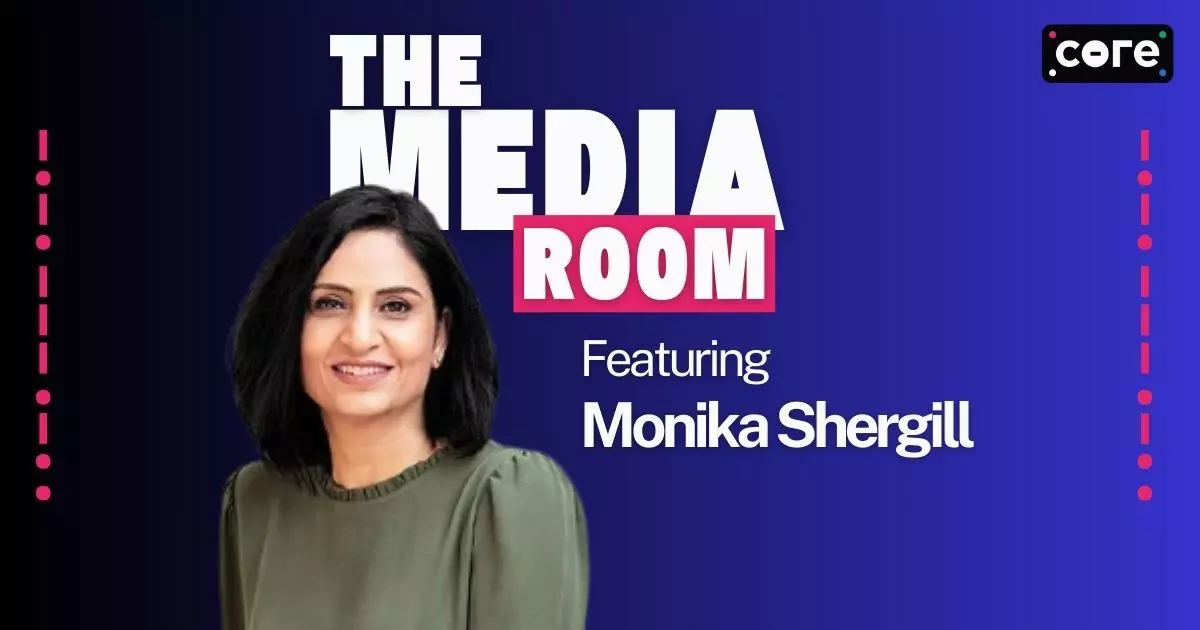
Netflix’s Content Strategy Explained | The Future of Streaming in India | The Media Room
- Podcasts
- Published on 27 Feb 2026 5:00 PM IST

India Is One of Netflix’s Fastest-Growing Story Markets
In this episode of The Media Room, Vanita Kohli-Khandekar speaks with Monika Shergill, VP - Content at Netflix India, for a deep dive into the strategy, data, and creative thinking behind one of the world’s biggest streaming platforms.
Monika discusses key insights unveiled at Netflix’s Next on Netflix showcase, revealing how the platform is thinking about its upcoming slate, genre mix, and audience-first programming approach. She breaks down how viewer behaviour is evolving, why Indian stories are travelling globally, and what really drives decisions - from greenlighting shows to backing creators and identifying breakout hits.
The conversation also explores major titles and industry signals, from global phenomena like Squid Game and Money Heist to Indian successes such as Kohra and films like Laapataa Ladies - illustrating how content now travels beyond language, geography, and traditional market boundaries.
If you want to understand where streaming is headed, how platforms decide what gets made, and what the next wave of entertainment will look like - this episode is essential viewing.
Register for India Finance and Innovation Forum 2026
NOTE: This transcript is done by a machine. Human eyes have gone through the script but there might still be errors in some of the text, so please refer to the audio in case you need to clarify any part. If you want to get in touch regarding any feedback, you can drop us a message on feedback@thecore.in.
TRANSCRIPT
Vanita Kohli-Khandekar: Hello and welcome to the media room. 10 years after it entered India, Netflix is at 16 million subscribers, about 50 million viewers, 4000 crore in revenue. Those are the mota mota metrics of the world's first pay streaming service in India.
It seems a little underwhelming if you think that Jio Hotstar is twice that size or YouTube is four times the size of Netflix. But Netflix's impact in India or anywhere in the world cannot be measured only by the size of its top line or number of subs in India. It has had a cascading effect on the world of media and entertainment ever since it came out with its first original House of Cards.
You know, it has kicked off a wave of consolidation within the industry which continues to date. In fact, Netflix itself is on the verge of acquiring Warner Brothers as we speak. I think globally right now Netflix has about 325 million subscribers, $45 billion in top line.
It is the world's largest pay streaming service. I mean, after YouTube, if there's a force to be reckoned with, it is Netflix. Though there are many other streaming services.
Earlier this month, Netflix introduced its slate for 2026 in India, what it calls Next on Netflix. Next on Netflix is Netflix's way of telling you what you can expect from the service in 2026. It's got a wide variety of things on show through the year.
And you'll see a bit of that in a showreel after I speak. And after that, to speak to us, we have with us Monica Shergill, Vice President Content for Netflix India. Over to the showreel and Monica.
Hi, Monica. Finally, I get you on the media room. So, so nice to have you on the show.
Monika Shergill: Welcome. So excited to be here with you, Vanita.
Vanita Kohli-Khandekar: Great.
And you know what, my viewers just saw the Next on Netflix showreel. I want you to take them through what's the logic for this programming? What's the programming about?
And what are you trying to do here?
Monika Shergill: I hope you liked watching it.
Vanita Kohli-Khandekar: I liked it. I'm already into Kohra. I'm on the third episode.
Taskari is not part of the Next on Netflix, I think.
Monika Shergill: Because Taskari started the year for us in January. And our Next on Netflix was in the first week of February. So Taskari was actually already a blockbuster by the time we did that.
Lovely show.
Vanita Kohli-Khandekar: I've just finished Raat Takke Liye. I've been on Netflix for a bit after being on Apple TV for a year now. I'm glad we knew away from there.
A lot of Netflix shows have been knives out. I've watched the whole series. But really, what's the, can you take us through Next on Netflix on the slate for this year?
Monika Shergill: I think this year, and every year we try to do this, we try to programme the entire year a little differently, in terms of flavour, in terms of mix, and reach out to larger audiences, while keeping the core of our audience base also happy with what we are constantly programming. So this year's Next on Netflix has more variety, more diversity, in terms of format, in terms of the kind of stories, the milieus, the settings, the genres that we are touching. So we have expanded in every genre, trying to bring different stories across, whether it's unscripted, whether it's scripted series or films.
Our South Slate is a new addition also.
Vanita Kohli-Khandekar: I saw that. I saw some tabloid shows.
Monika Shergill: And also we are ramping up in our, you know, post theatrical slate also this year, particularly from the South across Tamil Telugu and Malayalam. So both in terms of quality and volume, and the diversity of stories that are there, this year is going to be much bigger than the last year and the year before that.
Vanita Kohli-Khandekar: But you know what, I hear this every year. But what I can see this year, and I was discussing this with Shweta earlier, is there seems to be that whole move towards broadening the audience base, which happened, let's say, with the maamla legal hai, getting Kapil on to the platform. It continues.
Is this sort of a precursor to having an ad tier? Or is it just broadening and getting more subscribers? And where is this?
I mean, strategically, what was the vision for the programming slate this year? And as that sort happens?
Monika Shergill: So, you know, to answer that, I actually want to take you back to what is the mission of Netflix per se, as a company, our stated vision, and very passionate vision is to entertain the world. And when you have to entertain the world, and you're in a country of one point, nearly 1.5 billion people, you cannot entertain the world without India. Okay, how do you entertain India?
To entertain India, you have to, you know, speak to the absolute diversity and heterogeneity of this country. There is no country like India, anywhere, you know, in the world, where you will have the top few percentage population, which is like the global cosmopolitan population, has different tastes, exposure, likes, dislikes, and then you have the other extreme, and then you have everything in between. So, in India, everyone's entertainment tastes, just like our shopping, our food, where we live, what choices we make, what kind of holidays we do, all of that is really determined by what is our socioeconomic background, which community we come from, what language we speak, and so many other factors which determine what is the nature of entertainment that we like.
And when we have to entertain Indian audiences, besides the genre spread, the flavour, the tonality, the language, where a story is set, all of these things matter. So, this year, the difference is that we have actually, we have kept the core same, you will get our amazing prestige shows, like Quora, Raat Akeli Hai 2, which you have seen, Taskari, which speaks to the broadest set of audiences, not just in India, but even internationally, because it's about airports, customs, smuggling, thematically, it resonated with so many audiences across the world, and it raced to being the number one on the global list, and stayed for three weeks, which hasn't happened before on any show. So, that really tells you that when you're picking stories and subjects that can appeal in different ways to an audience, which is not just Indian, of course, Indian audience is the core of everything that we do, they have to love it first, but it has the ability to actually really appeal to a wide set of audiences.
Vanita Kohli-Khandekar: You know, you're talking about the audience, this is a question I've been grappling with for the last few weeks, because the audience, or what we think of as the audience has changed dramatically, what it likes, what it doesn't like, it is more emphatic, it's more black and white, and I'm not even talking pre-Covid, post-Covid, I mean, post-Covid is now almost five years, so we are long past Covid, and it is something with the Hindi cinema industry has been grappling with, yesterday I was in fact speaking to Mr. Bijli about something else, and we were talking about how the Hindi especially is grappling with it, Tamil Telugu also have not had a great 2025, Hindi had a great 25, but two or three films were, you know, it was very little concentrated. So, this thing of feeling of uncertainty of who we are talking to, and what they like, is there across the creative field, does it, you know, in streaming I don't see that much uncertainty, how do you, what is the audience, and not just for Netflix, but what is the audience, and then what is the audience for Netflix?
Monika Shergill: You know, the audience has been continuously getting shaped by external forces. One big part is the short format viewing, which is completely changing the dynamic of how people watch, what they watch, how they spend their time. The other thing is the access to anything from across the world, which internet technology has made happen, and streaming industry in particular has made happen with a lot of premium storytelling coming from across the world, and people are dividing their time between premium storytelling formats that they love, like immersive worlds, like series or cinema that they love, talent that they love to watch, and a lot of short format viewing. And plus the third factor is also the environmental changes that are happening with everything we see in the news, that always determines the moods of people, right? So, if you take that mix, the audience is very rapidly getting exposed to a lot of things, and that is determining the level of experimentation that's happening, and sometimes that also determines that this is too much, I want to go back to my comfort zone.
So, but the one core thing which I think all audience, irrespective, has realised they need to be given is value for their time, and that value oftentimes plays in terms of quality. People like to feel or believe that this was worth my time, this was great quality, and I liked it. Now, if we feel that movies have to do well, or streaming has to do well, or TV has to grab people's attention, you know, we are also fighting against a small dopamine hit that could happen by watching a short format video, versus therefore the quality consciousness has to be higher when we make long format.
Vanita Kohli-Khandekar: But Monica, you said it, you know, reels, a whole lot of the, there's a deluge. We are living, especially you and I as urban consumers, and many of us, many of the 500 odd million people who are online, we are among the most pampered consumers, I think. But there's a change, even the way we watch, and therefore it is demanding a change in the grammar of what is being served to us as fiction or non-fiction.
And you find creators up to that? How often do you find it? I'm just curious, you know, when you greenlight, and you greenlight three years in advance.
So, you know, how the hell do you manage to keep tabs on that? And attached to that, I'll ask you a question. You know, is it, does it make more sense to go in depth and in width in say Hindi or Marathi or whatever languages you're attempting and then attempt another language?
Or does it make more sense? I know dubbing and subtitling is an option. So there are two questions here.
One is the grammar change, and therefore how do you, the grammar change in creativity, and how do you sort of, you know, ensure that your greenlight process is up to speed on that? And B, does it make sense from a language perspective to be depth and width in one and then go to other? How does that work?
Monika Shergill: I'll actually go to the grammar change first and how audiences are consuming. And I want to double click on the quality thing that I was mentioning, Vanita, because audiences expect quality. They are seeing a certain level of quality from all around what they are watching.
For several decades, we've been watching dubbed Hollywood cinema. And, you know, there were specific tastes. But now you can imagine how that access has improved.
There are people watching stories, Korean stories, German stories, Japanese stories, Spanish stories. So when Indian stories have to compete neck to neck with them, I think quality both, you know, for what we programme in streaming and also what we programme in cinema has become very important. An audience which sees quality in cinema and streaming storytelling will love it.
There's a reason why people are loving Khora. There's a reason why people have loved Taskari or people have loved Single Papa, you know, which has been a delightful family comedy and a very progressive family comedy, because we are very clear that, you know, on Netflix, when we programme subjects, when we programme new milieus also, for us, it matters that we move the needle in some way, you know, and have layers to the storytelling. So even when you're competing with short format and you know that there is a different grammar to that, I think more and more the creators and platforms have to focus on doing high quality storytelling.
I mean, that's the baseline. That's a given. On the grammar changing a little, see, I think there will be slow burn.
Khora is so slow burn and loved so much. It reminds me of Trapped in some way.
Vanita Kohli-Khandekar: I don't know if you remember that Icelandic series. You just have to look out for that gaze, look out for that turn of air.
Monika Shergill: You'll miss something if it's so nuanced and audiences are loving it. So you know that there is appreciation if it's done well and it's done honestly. You know, it's not done a certain way for the sake of it.
It's a brand that people trust, you know. So even in storytelling and entertainment, people trust certain brands, certain makers. Okay, if we spend six hours of our life with this, it's going to be worth it.
On the language, regional storytelling, I think it's important to operate in width and depth both. There is no other way of looking at it because the south audiences are very stable audiences, Vanita. We see that ever since we started ramping up on our the, you know, post theatrical slate and then we started developing our originals also.
We have observed over the last three years and starting from 2023, the south viewing on the service has gone up by 50% year on year. And the audiences that we pull in through, you know, the language audiences that we get through any of the titles that we do, they're actually far more stable than many audiences in the north. They stay longer, they explore, they want to sample more.
So it's our responsibility as a platform to keep giving them more because currently we have more of Hindi but we are very fast in ramping up on our south. We have a very rich south slate now because we see that audience consumes a lot of entertainment.
Vanita Kohli-Khandekar: You know, the kind of programming in Next on Netflix is, like you said, more diverse. We know for a fact that CTV's penetration is going high, you know, I think whatever 50-55 million homes, roughly about let's say 200-300 million homes, people watching on CTV. It's a huge number and it is changing.
So you have to make it more family friendly. So is there to your mind, I know you programme to moods, you programme to entertain audiences, but is there a conflict to what Netflix does with, let's say, Kohra and then there is Kapil Sharma, which is popular entertainment. So is it the gamut and is it also changing the filter to what you do for premium programming?
Because if it is more CTV audience, it needs to be more family friendly. Is there any pressure or conflict on that as far as the programming?
Monika Shergill: I think the advantage here is that we are able to serve all audiences and that's a flexibility that no other medium has. And if we are not going to use streaming for that flexibility, then we are actually putting it back in the box from where it came. And that is not the idea at all.
For Netflix, the biggest learning and experience all over the world has been that we are like an ocean, you know, there is so much in Netflix that on a given day, you could actually be sitting and choosing to watch the Judith Polgar chess documentary, you know, where you are taking an hour and you're spending time with Judith Polgar and Garry Kasparov and you're seeing them talk, you're seeing how they, you know, beat each other in the games and, you know, you can do that.
And you can tune into Durandar as a family and you can watch that. You can, you know, watch Kohra in your time and space. And then you can actually come as a family and watch something like Hello Bachchon, which we are launching in just, I think, three weeks.
Which is a beautiful purpose-driven series on Alak Pandey, you know, the physics wala. And the transformative work that he has done with the children of this country, how he has impacted lives of millions of children, their families, where he has taken us back to that thing, that education is every child's birthright. And, you know, Vinit Kumar is playing Alak and it's a beautiful series and it's focused on students, on teachers, on parents, how parents need to reconcile to certain things and need to, you know, inspire and support their kids the right way.
So I feel that for us, on streaming, it allows us to do very commercial things like Ikka, which will be Sunny Deol and Akshay Khanna's face-off. And they're coming back together after 30 years of Border. And so that's going to be commercial.
Family Business, which is a big family drama business series with Anil Kapoor, Vijay Verma and a huge ensemble cast. Glory, which is going to be a very interesting title, very big sports drama that we are doing about winning an Olympic gold and how much is too when it's winning versus, you know, ethics in sports and what does it really mean. So very great cast.
So we have Suvinder Vicky of Kora One. Oh, he's so good.
Vanita Kohli-Khandekar: Yes.
Monika Shergill: And we have Divyendu and Pulkit. And so that's going to be another one to watch out for. So I just feel that we can move from comedy like Maa Behen and Toaster, which is Rajkumar Rao to very high octane, inspirational, very purpose driven films and series like Hum Hindustani, which is on India's first elections and election commissioner.
How did the leaders get together and decide that India is going to do the most difficult thing which no other country has done of becoming a democracy after 150 years of colonial rule? What was that process? Why did they choose the most difficult thing?
You know, when so many, you know, countries in the West had not given universal adult suffrage and then Operation Safed Sagar, which is our partnership with the Indian Air Force on the Kargil mission of the Air Force, which has never been spoken about the highest aerial battle in the world. So, you know, we are able to do so many different things. We are able to romance, you know, those simmering crime thrillers, comedies that can bring families together, Kapil Sharma, which is casual entertainment.
It's not lean in entertainment. It's good, casual. You can have your dinner time fix.
Vanita Kohli-Khandekar: But, you know, I was speaking to some cinema expert recently. You know that I had interviewed you for my book also. Same thing I was speaking.
And I was talking to her about the difference that streaming has made or what impact is it. So one of the things she mentioned, I thought it was really interesting. She says, you know, of course, it's an algorithm driven world.
So my profile page and my husband's profile page and your profile page will all be different. But also there's a Bible. You give a Bible to creators.
Do you think that that is in some sense, is the Bible about the creative or is it about the process? I'm just curious because I know that there's a Netflix Bible, but what does it mean? Does it sort of create strictures that content has to look a certain way, feel a certain way?
How does that work? Because this was a big thing which came out of that.
Monika Shergill: It's very fascinating that you bring this up. Actually, we take tremendous responsibility of the creative ecosystem that we do work in. How do we partner?
Are we bringing something meaningful to them? Because for us, it is about doing the business, but it's not just about doing the business because we are in the business of stories, which is culture defining, which is supportive of talent, of art in different ways. So it's very important for us to share what we learn.
But having said that, the Bible, the Netflix Bible, which we share so openly and I'm so proud that we are a company which doesn't put, you know, sort of things under lock and key. It is just a format of pitching. That's it.
It's nothing else. It's a format of pitching that if you're making a pitch and you want your pitch to look world class, your pitch to look world class, then the good format in which to put it is this clean format. And then it's up to the writers, creators, and we don't just share it with people who pitch to Netflix.
We have put it out in the industry, whether you want to pitch to, you know, any of the competition, even when you're pitching your film to a studio, you can make use of that. So it's a very interesting sort of framework.
Vanita Kohli-Khandekar: You know, one thing I do, you mentioned the creative ecosystem. And I know for a fact, because I've written about this, about the kind of investment in management time and money that Netflix has done in helping develop the ecosystem. Do you think it's up to speed now?
You know, it's a question which I've asked you earlier, do you think it's up? And when I say up to speed, I really don't know what the definition of up to speed is. But is it up to speed?
Monika Shergill: I think we have a long way to go.
Vanita Kohli-Khandekar: Yeah.
Monika Shergill: Because we have not been making too much premium cinema or premium long format. As much as many of the mature markets across the world, do we have more stories than many markets we do? Have we tapped into our local IPs?
Not enough. There's so much out there that we haven't done. But to be able to do it in a manner that we are able to impress the audience and satisfy the audience, which is watching stories that are inbound from all over the world, and are liking them and are watching them.
And Indian audiences are one of the most experimental and adventurous audiences.
Vanita Kohli-Khandekar: Are they?
Monika Shergill: Yes. I thought they weren't. Very, very.
Why do you say that? Because of the consumption we see in subs and dubs. Give me an example.
And we have audiences loving Japanese anime. There are some German titles which people watch. Hollywood has always been a big market in India.
The Hollywood content has found big audiences here. Spanish. We were one of the biggest markets for Money Heist.
Squid Game has done so well and so many other Korean series. Also, um, you know, newer sort of languages like some Thai, like Hunger had done well. So it's, you can see that anything which is doing well across the world, Indian audiences are curious.
They want to check out why it's doing well. They want to be with it. That's because your thing throws it up, trending across the world, right?
And that's why we do. Correct. Because everyone should know what's trending across the world.
And what are the people watching? Because audiences like validation. Time is short.
People like to watch things that are good. They want to be in conversation around content, right? Correct.
So if you're curious, you want to be with it. You want to experience what are the good stories that the world is watching. And in the same way, that is why Indian stories are also doing well um, internationally in many markets, because when they start working those themes or those genres, those stories, when they start doing well, um, there are audiences that they get served to who become curious and they watch.
So I think, uh, and there's a very important, uh, stat here, which you should know. I might've mentioned it to you before. 70% of all viewing, 70% of all viewing on Netflix happens in subs and dubs.
I think for all content you've mentioned. So can you imagine the sheer scale at which people are experimenting with stories from other cultures in other languages of other milieus? And that's what creates, um, you know, those global moments.
It shapes culture. It brings, uh, like, uh, people love Korean food here. Uh, there are restaurants that have opened up.
Uh, there is a whole stream of, uh, you know, cultural exchange that has happened. We've also made a film called Made in Korea. You did?
Yes. Which is a Tamil film. Oh yeah.
Vanita Kohli-Khandekar: I saw it on the show. Was it on the show?
Monika Shergill: It's a lovely film. Yes, it was on the next on Netflix, uh, sizzle. So Made in Korea is like a beautiful story, which, uh, comes from this village in Tamil Nadu.
And this girl who's obsessed with K-dramas and finding a signal to watch K-dramas and her biggest dream of her life is to go to Korea and to experience Korea and how somehow she manages to get there, but in circumstances that she never imagined. So it's a very... Don't tell me she becomes a K-pop star.
I'm not telling you anything.
Vanita Kohli-Khandekar: You have to watch the film. I'm coming back to, I'm going to come back to what Indian shows are doing abroad. But first 10 years of Netflix.
Quickly, if I had to say top three achievements of 10 years of Netflix, what will you go with? Quick. This is like edited version of a corporate plug.
Monika Shergill: Okay. Okay. I think, I think the top three, uh, is, uh, one, um, great quality story after story.
So, um, I think that's a good one that we've achieved the diversity that we play to. I haven't seen any other streaming service do that in entertainment and being a monthly service, we have managed to maintain a run rate of diversity and quality. And the third thing I would say, um, a great Netflix team internally and an ecosystem that we work with externally.
So that partnership with the industry and how we have done over the last 10 years and what we stand for as creators, as platform, as storytellers who are taking Indian stories to a wider India and around the world, I think we've done well.
Vanita Kohli-Khandekar: Which is that one Indian show, which is really done very well overseas and non-diaspora. I'm just curious, is it diaspora, non-diaspora, which is a show which has done well overseas. Okay.
Monika Shergill: Yeah. So, uh, I will actually give you three names. Um, as a film, RRR has been that film, uh, and completely cut through the diaspora, diaspora, uh, beyond the diaspora and, um, put Telugu cinema and, uh, South cinema on the map.
Heeramandi, um, has actually cut through and completely, uh, uh, you know, taken the Indian exotica and the deep storytelling and it's done very well in many markets. And the third one, which is a surprising one, um, has been Royals. Uh, yes, because there is this curiosity about Indian royalty and it was a young, cool show and, uh, fun, easy breezy.
People love watching that kind of stuff. And Ishaan Khattar, uh, was already in the perfect couple. So, Ishaan was, uh, earlier in the Suitable Boy.
Uh, Ishaan was in our US series, The Perfect Couple. So, Ishaan also had a base and plus Indian royalty, uh, and what that stands for today, that fascination. So, these three, People love the monarchy, na?
Huh? I mean, I'm a crown freak, so I'm a fine one for saying, I watch the crown so often. Yeah, I mean, I don't think it's something we can all say very proudly.
Vanita Kohli-Khandekar: You know, one of the things which creators always tell me is we don't know how well our show is doing. We don't know. That feedback loop, how well does it work?
How robust is it, uh, with creators? You know, if you could, I remember asking you this when we did our last podcast, but just wanted to refresh that a bit if it's possible.
Monika Shergill: See, if I say in absolute terms, um, streaming is different from the box office and is different from television. Television, you extrapolate a lot. You have a very small sample size and then you map and extrapolate and have your numbers.
Uh, box office is very like to like. You sell a ticket, you know the collection, right? Though that also is going through its challenges right now, right?
But that's more one to one. Um, on streaming, we understand the data, um, you know, deeply the viewership, et cetera. Uh, and we try to communicate as much as possible to our creators through our engagement report, our weekly top tens, the trending lists.
In fact, we have a system of having a conversation. Uh, some of it is informal and some of it is absolutely institutionalised for us as a company, because we feel that if the creators don't know what is working and what is not working, we will not be able to set them up for success. Uh, you know, the next time they work with us, it's very important for us, for the creators to know.
And we do this for post-theatrical cinema also, by the way, which is not something which is even required. Like if a film that has been a blockbuster or a medium success film, how does it do on the service? Did it become as huge and beyond on service?
Did it stay the same? How did the songs perform? Which markets did they do well in?
Because if, if you look at cinema, uh, Vanita, and you know this better than me, we are not able to touch audiences beyond 2% through cinemas. We have eight and a half thousand cinemas. There's a limitation on the number of shows, you know, and certain films get more number of prints and shows.
Other films get smaller. There's a whole, um, sort of ecosystem at play where, uh, access to cinema is also, uh, a function of how people are, how many people are able to see it. When that same film comes on streaming, the access suddenly opens up, you know, to so many more people, many more people experience it at the same time across the globe.
And therefore the learning is a different curve. Having said that, uh, the good films perform good on the service. There was a time when, um, a lot of films not doing well also would do well on streaming, but now that has changed, uh, uh, to a great degree because people like more and more validation that something is worth their time.
And also the amount of content has increased. So when you have so many choices and you have lesser time, you will always want to gravitate to something that speaks to you or that has been recommended to you.
Vanita Kohli-Khandekar: Like I remember Lapata, um, Mr. Amit also said this in an interview and earlier also, it didn't do well. I saw it in the theatres and four months later people were telling me, have you seen Lapata lady? I said, so I saw it four months back because they were seeing it on Netflix.
So I think more people discovered Lapata on Netflix.
Monika Shergill: Lapata became a phenomenon globally on Netflix because when it came in, when a good film, and this is where I'd really like what streaming does, you know, it is nothing to do with scale, but it has everything to do with story, how authentic the story is, how well it's told and, um, you know, how does it appeal to audiences? The word of mouth that catches once something good comes on Netflix, same happened with Maharaja, uh, you know, same happened with Lucky Bhaskar. I haven't seen Lucky Bhaskar.
You must actually, it's the other way of looking at, uh, the scam, the Harshad Mehta scam. You must see it from a bank manager's point of view. Very interesting film.
And actually, uh, it, uh, you, when you watch the film, you understand why it does well because, uh, you understand the psychology of people, uh, you know, because almost all of us working class people, how do you see a scam and, uh, you know, and when you get willy nilly involved in it, what is your role and responsibility? Where is your moral compass? Very interesting film.
Vanita Kohli-Khandekar: You know, you're adding sports, you're adding chat shows, you're adding everything to, you know, reach out to as many people as possible, given the format. How is streaming different from TV now? It has become as, it is becoming as linear.
I mean, the technology of course allows you because I can watch Netflix on my phone or on my device or on the CTV. But what, what separates the idea of streaming from TV now? Is it just the technology or is there something deeper that?
Monika Shergill: I think streaming is very different in the sense that streaming is based on choice and, um, flexibility because, uh, you can choose what you want to watch in TV. You cannot choose what you want to watch. Of course, you can switch between channels, but channels, uh, the programming of channels is one to many.
And when you have one to many programming, there are certain guardrails that you have to operate within. Uh, you will either on, on a sports channel, you'll only get sports. On an English movies channel, you'll only get English movies.
And on a general entertainment channel, you will get general entertainment, but of a certain kind, which talks to probably everyone in the family. Streaming because of the technology and the creativity sitting on top of that technology and the audience centric approach that you can follow. You can make things for one person, for a bunch of people to watch.
You can have device flexibility. Um, you can have time and place flexibility. So for instance, India has the maximum mobile, uh, uh, user, uh, consumption maximum globally.
And that tells you something that people are on the go. They're watching a lot of video. It's not like Indians are just talking on the phone and therefore the mobile data consumption is so high because people are constantly watching video right now that, uh, when you know that Indians love their entertainment and they like to watch video entertainment, that opens up huge possibilities for you.
And there, uh, the range of programming you can do, of course, as Netflix, I'm actually very happy that, uh, and proud that we could in a very timely way, keep expanding the audiences without letting go of what Netflix stands for as its core, because we will have international content. We will have the best kind of Indian prestige entertainment. And you know, this myths between what is prestige cannot be widely loved.
Vanita Kohli-Khandekar: I think no, no. And within the same also, if I was to talk about a broadcaster who has, let's say you were with Viacom or star, you have 30 channels or whatever. So you, you have that one Netflix, which is offering you everything in under one roof, essentially.
Netflix is on the verge of acquiring Warner brothers. If everything goes through in the U S what does it mean for your operations in India?
Monika Shergill: I think we've all seen how the news is playing out. Nothing specific for India will change, but I think if, um, um, if it goes through and when it goes through, when we are very confident, it's going to be great for the entertainment industry globally, um, um, you know, in general, because Netflix has the best, uh, uh, technology and a creative DNA. You know, we, we are a company which, uh, works very hard to keep the creative DNA, uh, ahead and use the technology to support it.
Warner brothers has studios and IP, which need that, uh, technology to actually be able to reach so many people across the world. So I feel that it's a great, uh, sort of match and taking those brilliant IPs, like I was telling you earlier, people like trusted things. So when you take trusted IPs and you, you merge it with a company, which is trusted for global entertainment, I think that combination can only be good for the industry at large, uh, the consumers and really giving you the highest quality entertainment, uh, you know, coming to your doorstep or your device.
We come back to quality. Yes. We started with, I absolutely, and, and I cannot, uh, emphasise that more like literally that is, you know, the most important thing.
Vanita Kohli-Khandekar: Lovely. I really enjoyed it, especially the content part. When we were talking, I really enjoyed this conversation.
Thank you so much, Monica, for being on the media room.
Monika Shergill: Thank you.
Vanita Kohli-Khandekar: Always lovely talking to you. Thank you.


