



 Newsletter
 Search
Markets Recover From AI Scare Trades
- Podcasts
- Published on 17 Feb 2026 6:00 AM IST
The stock markets were recovering from the AI scare that's been ripping through IT stocks worldwide in the last few days
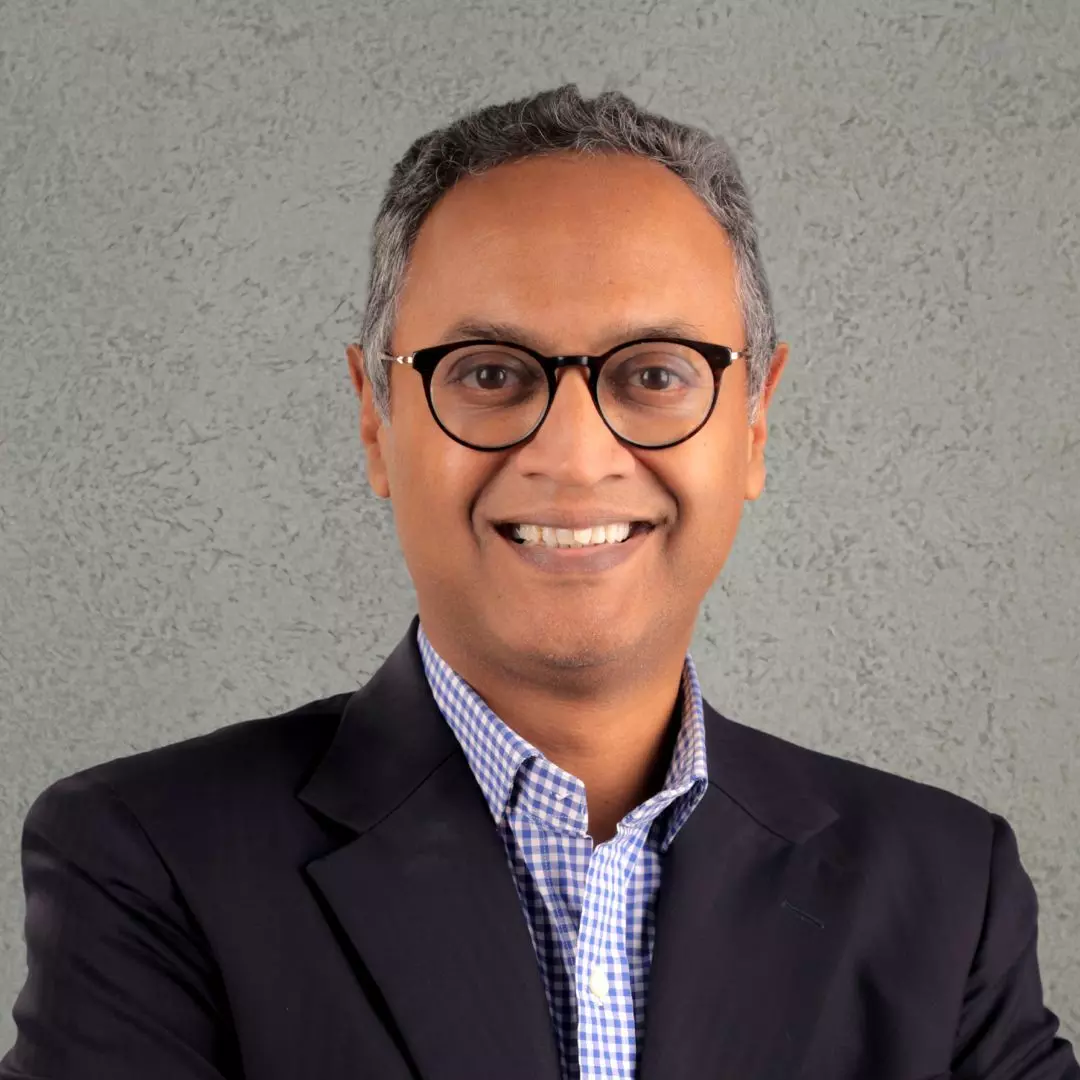
On Episode 800 of The Core Report, financial journalist Govindraj Ethiraj talks to T Koshy, Former MD and CEO of the Open Network for Digital Commerce (ONDC).
SHOW NOTES
(00:00) Stories of the Day
(01:14) Anthropic says Indians are heavy duty users of its tool
(03:01) Markets recover from AI scare trades
(04:41) The India AI Impact Summit kicks off with interesting sessions, curation and some glitches.
(11:00) How India’s ONDC project is being replicated in Indonesia
Register for India Finance and Innovation Forum 2026
NOTE: This transcript contains the host's monologue and includes interview transcripts by a machine. Human eyes have gone through the script but there might still be errors in some of the text, so please refer to the audio in case you need to clarify any part. If you want to get in touch regarding any feedback, you can drop us a message on feedback@thecore.in.
—
Good morning, it's Tuesday, the 17th of February, and this is Govindraj Ethiraj broadcasting and streaming weekdays from Mumbai, India's financial capital.
The top stories and themes…
The stock markets recover from AI-scared trades.
Anthropic says Indians are heavy-duty users of its tools, suggesting greater AI usage by software engineers than otherwise expected.
How India's ONDC project is being replicated in Indonesia.
The India AI Impact Summit kicks off with some interesting sessions and curation and some glitches.
AI and Markets
It must be worth noting that while the experts were debating the impact of artificial intelligence in New Delhi on Monday, the stock markets were recovering from the AI scare that's been ripping through IT stocks worldwide in the last few days, ever since Anthropic revealed its new stack of game-changing tools.
But the battle of the AI doomsday predictors versus those who say that AI will only supplement but not decimate jobs continued. Speaking of Anthropic, the company's CEO Dario Amodeis, presently in India, had an interesting take. Speaking in Bangalore on Monday, he highlighted India's technical intensity, noting that the country's use of the AI assistant Cloud stands out globally.
He said that we've always seen a mixture of casual consumer, prosumer, and developer use. Cloud has always skewed towards productivity and professional tasks, but I think that's even more so here in India, he said at a company event in Bangalore reported by Money Control. Significantly, he said that apart from India being the second largest market for Cloud AI assistant, nearly half of Cloud usage in India comprises, and this is the important part, computer and mathematical tasks like building applications, modernising systems, and shipping production software.
All of which suggests, obviously, that it's helping or being experimented upon in core software engineering development and not in run-of-the-mill tasks. Amodei noted that Anthropic India revenue run rate has doubled over the last four months since his last visit, and Claude code Anthropic agent a coding tool for developers growing even faster, he said. Meanwhile, India's Secretary of the Ministry of Electronics and IT, S Krishnan, said on Monday, speaking to Money Control once again, that artificial intelligence is unlikely to have a major negative impact on employment and is expected instead to generate new opportunities.
It is, of course, unlikely that a government official would speculate on loss of jobs, though to be fair, government or otherwise, there is no crystal clear picture that is emerging yet from my readings of quotations of people in the space or maybe even outside all over the world. The official also pointed to opportunities in semiconductor manufacturing, which India has embarked upon, data centres of which India is obviously receiving huge, specifically billions of dollars of investments, among others. Finally, in all of this, the stock markets held up quite well.
IT stocks were actually stable on Monday after the beating they took in the last week or maybe because of that. Meanwhile, what did drive buying up and led to the snapping of a two-day losing streak on Monday was value buying in stocks like HDFC Bank and Reliance Industries, both index heavyweights. At market close, the Nifty 50 was up 211 points to 25,682.
The 30-stock Sensex was up 650 points to 83,277. Broking and exchange stocks fell about 10% after the Reserve Bank of India revised capital market exposure norms, while in the broader markets, the Nifty Mid Cap and the Nifty Small Cap were up 0.5 and 0.1% each. Now, the new exposure norms are worth noting.
The Reserve Bank has tightened rules and bank loans to proprietary traders and stock brokers, which is aimed at curbing leverage trading. This obviously comes on the heels of the government's move in the last union budget on the 1st of February to raise taxes on derivative trading. That's the securities transaction tax.
And the Securities and Exchange Board of India revised margin rules for a popular single-stock derivative trade earlier. All of this obviously are aimed at reducing volumes and curbing risk appetite. And this is also significant because proprietary trading firms account for more than half of equity options turnover in the National Stock Exchange, according to a Bloomberg report.
And last year, their share of cash equities trading had climbed to a 21-year high of 30%, according to exchange data, again quoted by Bloomberg.
AI Impact Summit
Now, back to the AI Impact Summit that kicked off in Delhi on Monday, since that's something everyone is talking of. While the organisation of the event appeared a little chaotic, particularly around the main Bharat Mandapam venue in New Delhi.
This is the old Pragati Maidan venue. The sessions themselves appeared well curated with a very diverse range of topics, focussing on issues ranging from energy, governance, children and platforms, sovereign AI, food security, health infrastructure, and many more. And this was just the first day.
I did sit through, in a manner of speaking, some of the sessions from distant Mumbai, all quite efficiently streamed online on YouTube. And I found the speakers well curated, quite diverse from different parts of the world, and also quite well gender balanced as it happens. Some of the discussions I tuned into were interesting and relevant, particularly for policymakers in some of these areas, because AI is and will impact everything, including, for example, agriculture, which was discussed as it happened on day one.
While not specifically AI, there's something interesting happening in the context of India's digital stack. And while obviously that's one of the foundational inputs into AI linked development and innovation, there is also a lot going on in terms of where India's own digital stack is going, particularly overseas, and more on that shortly.
Gold, The Rupee and Oil
And gold prices were down on Monday, thanks to lower liquidity as markets in Asia and the United States were shut for holidays.
And a firm dollar put more pressure, according to a Reuters report, which added that spot gold was down slightly to $5,007 per ounce, after losing more than 1% earlier in the session. Meanwhile, the rupee was also mostly stable on Monday, and it moved in a narrow 10 paise band to close at 90 rupees 65 paise from its previous close of 90 rupees 63 paise, according to a Reuters report. The rupee had jumped earlier this month, thanks to all the optimism flowing from the US-India tariff deal, and is now more stable.
This finance segment is presented by India Finance and Innovation Forum 2026, being held from the 16th to the 18th of March at the World Trade Centre CAF Parade in the city, and you can find the link to register in the show notes. India's wholesale prices, or WPI, rose 1.8% year-on-year in January, the fastest in 10 months, as vegetable and basic metal prices were up, according to data released on Monday, and reported by Reuters. Economists polled by Reuters had projected wholesale prices to rise 1.25% year-on-year in January, after a 0.8% rise in the previous month.
Wholesale price inflation was last higher in March 2025 at 2.25%. And in oil, China's Russian oil imports are now set to hit a record high in February by climbing for a third straight month, as many refiners bought deeply discounted cargoes, as India has started slashing purchases, according to traders who spoke to Reuters. Russian crude shipments are expected to amount about 2.07 million barrels per day for February deliveries into China, surpassing January's estimated rate of 1.7 million barrels per day. Meanwhile, oil prices were mostly stable on Monday, as investors were looking out for the upcoming U.S.-Iran talks, which hope to de-escalate tensions.
Brent crude futures were up slightly to about $67.86, so that's just under $68 on Monday afternoon. India's merchandise trade deficit has widened to about $34.6 billion in January, and that was the last month or the final month to be hit by the steep U.S. tariffs on Indian exports, which is at about 50%, and assuming nothing else changes, then next month, that's February, or the current month, should obviously see a change in the trade deficit numbers. Goods imports rose, however, due to gold and silver shipments, according to officials who spoke to Reuters.
Economists had expected the January trade deficit to be $26 billion, according to a Reuters poll, compared to $25 billion in the previous month. Merchandise exports fell to about $36.5 billion in Jan, from about $38.5 billion in December. Imports rose to $71 billion, from $63 billion, and that jump from 63 to 71 is because of a rise in gold and silver imports, which, of course, many of us have been buying via exchange-traded funds and elsewhere.
The U.S., a few weeks ago, said they would slash tariffs on Indian goods to 18% from 50%, which obviously helps most exporters. In return, India has to cut Russian oil purchases, even as it has to double its imports of U.S. goods.
Speaking on gold and silver imports, a note from Kotak Institutional Equity says, India is an indirect exporter of capital by being a large gold importer.
It says that continued large inflows into gold ETFs and consequent purchase import of gold by ETFs along with unbated imports of physical gold may pose challenges to India's current account deficit, and any reversal in recent foreign portfolio investment inflows to outflows may weigh on India's balance of payments and the large current account deficit and capital outflows will complicate reserve money creation, domestic liquidity, and deposit creation. It says that the purchase of financial and physical gold by households is tantamount to export of capital from India. The note also says that domestic gold ETFs saw a massive 24,000 crore rupees of inflow in Jan 2026, a figure that we've discussed here, which obviously was way above the flows in previous months, and that also overtook very slightly though the investment in mutual funds equities, which of course also was because flows into mutual funds that's equities was dropping or had dropped quite sharply.
The note says that the surge in investment into gold ETFs globally implies massive speculation in gold along with silver, though they're not sure if this is in lieu of the usual strong demand for physical gold or a loss of confidence of a section of households in the modern monetary system, the foundation of modern economies. Kotak says they assume it's the former because the latter is too frightening to comprehend.
The Indonesia Open Network Project
Indonesia has launched an Indonesia Open Network, or ION, an open digital infrastructure inspired by India's own Open Network for Digital Commerce, or ONDC.
The initiative was officially unveiled at the 12th Annual Indonesia Economic Forum in Jakarta two weeks ago. It's been launched under the theme of a digital archipelago building inclusive digital commerce in Indonesia and expects to expand market access, reduce transaction costs, and enhance the competitiveness of Indonesia's micro, small, and medium enterprises. It also adopts the key principles of India's ONDC, that's open standards, interoperability, and decentralisation while being tailored to Indonesia's unique economic and geographic context according to a official release.
Now, while this is another case of India's OpenStack architecture being exported, there is an AI angle in this, timely in the context of the AI Impact Summit. I spoke with T. Koshy, who moved on from ONDC in June after a three-year stint and has been actively working on the ION project in Indonesia, along with former Telecom Secretary and Founding Director General of the Aadhaar Project, R.S. Sharma. I began by asking T. Koshy what kicked off this collaboration between Indonesia and India?
INTERVIEW TRANSCRIPT
T Koshy: Probably you would have heard that last January 26, the President Prabowo of Indonesia was the Chief Guest at our Republic Day. And between both the countries, they signed a number of collaboration agreements and so on and so forth. And one of the components in that was technology, especially digital, with a lot of focus on DPI.
And there they started looking at what are the possible areas in which they can sort of learn from India and adopt from India. And they found that the idea of ONDC was something really appealing, especially because independent of this, there had been a lot of thought that is happening among the policymakers that what could sort of help in enhancing the participation of the small and micro businesses in the larger economy and how can we make sure that the new technology does not exclude them but rather include them. So because they had thought process in this line and even had worked on some kind of, the legal framework for that, but they didn't have a solution in their hand.
That's when they thought that this was like ideally what is meant for them. And the same time, in light of this bilateral cooperation agreement that was signed, the Indian Ambassador to Indonesia, Mr. Sandeep, was been actively working towards identifying areas of mutual interest. So he again took the initiative and they started looking at this possibility.
And they identified one of the think tanks called Indonesia Economic Forum and who does incubation of many of the national level projects to look in seriously. And they had sort of started working on it and studying ONDC on our success as well as what are the areas where we could improve. They sort of got in touch with me because that was the time they realised that I was sort of moving out from ONDC, active participation in ONDC.
They asked, then we discussed and then they got really excited. They put together a very, very powerful advisory council there with very senior policymakers and then they just started thinking about getting it done. So in the last few months, in fact, they opted in Dr. R.S. Sharma, who was the founding chairman of ONDC, myself and the Indian Ambassador to Indonesia, Sandeep, as their advisory council members. And we had a number of deliberations on how to get things forward. And as you know, last week was a curtain raiser and they're expecting that the transactions, etc., should start sometime by June, July, is the expectation. They put themselves a very, very aggressive target and getting things moving.
Govindraj Ethiraj: Right. And they too are looking at crashing the transaction charges by almost from 20 percent to, let's say, two or three percent. And there was a similar effort or trust in India as well.
So how would you say is being the broader success or lessons so far from the ONDC experiment in India and to the extent that it's applicable to Indonesia as well?
T Koshy: So if you look at India was a demonstration that the idea of open network is possible. And as you know, we were at the time when we thought about it, we looked at what is the technology stack on which we could work out. We identified backend and backend 1.0 was just being released. And so in that way, we were a proof of concept in that sense. And the beauty is that proof of concept proved and that today we do something like 18 to 20 million transactions every month, starting from 1000 transactions in a month to I mean, January. And a lot of things with respect to fine tuning of the technology flows, technology stack, business rules, business processes, participation rules and so on and so forth got evolved.
And as you know, that India always took a line that this is something that is worth sharing. And ONDC always took a view of making this learning publicly available for other people to look at and benefit from it. So that is a way even they were saying that we found that technology works.
It needs a significant amount of government endorsement. So they are taking this as a national priority. And they feel that this is something on which a lot of handholding and affirmative action could really help when it comes to small and medium enterprises.
That's the reason their Ministry of Small and Medium Enterprises take. The minister was personally there who said that this is going to be an area where it is going to be a national level push and support coming to help the small business to take advantage of this. There we are also seeing there, you know, the large enterprises with the digital consumers like Indosat, they are one of the largest telcom company, one of the largest bank which is dealing with the private sector, one of the largest retailers in the country, etc.
Had been brought into saying that we will bring our digital consumers in helping in the demand generation. So there's a lot of, and their association called Appindo, which is their association of big business, they felt that in addition to making their businesses visible, they have a conscious programme to help all small and micro enterprises in their locality or associated with the business to be a part of the digital market. The good thing that I'm observing there is that the priority participation from all the relevant segment is significantly good.
And that is something I believe that will help to build on what we already learned, and then take advantage of what is, you know, that we've been learned and then proceed further.
Govindraj Ethiraj: Right. So in India, is the composition likely to be similar? I mean, you talked about small scale industry or smaller medium enterprises, among other categories.
So in India, for instance, one of the relative successes was Namayatri, which is really for mobility. So is that something one is do you as you look back, you see that as a continuing success and also something that is likely to be used elsewhere?
T Koshy: See, if you look at wherever there is a white space, it built up very well. As you correctly said, Namayatri on the mobility side, and probably if you look at it, you would see public transport, metro, you know, all those things collectively together are now picking up very high adoption in ONDC. And I don't know whether you observed one of the recent areas where we are getting a lot of interesting adoption is in the financial products, especially in the mutual fund and so on.
So I saw the latest data that is being published into the forum. And so what we are seeing is so in a typical platform, somebody will develop a platform which is a domain specific. So it will either succeed or fail.
The beauty of a network is that it makes it available to diverse domains. Some domain will pick up fast, some domain will not pick up, some domain will pick up slow. Some of the participants will succeed, some will fail, but collectively the network will grow.
So that is something that we believe is also shareable there. So we are seeing that we are starting with these areas where we see there could be a white space, which could be in the area of mobility in terms of tourism, in terms of financial products, and in terms of grocery and so on and so forth. As I told you, a lot of focus attention is coming from the broad segment of what you call small and medium enterprises, which has a wide range of domains that is there.
And because it is being given as a focus attention, we would see active participation, maybe adoption much faster, because we are able to also learn from whatever that we didn't do it right here.
Govindraj Ethiraj: Right. So the AI Impact Summit is going on in Delhi where you are. And I know that you're speaking later in the week as well in a session around this theme.
So how would you see the impact of AI so far or ahead in the context of open networks?
T Koshy: See, the way I look at it, you know, AI is going to make open network more powerful. What is a fundamental components of open network? Unbundling and interoperability.
Unbundling means each components of transaction, whether it is a seller interface, buyer interface, logistics, credit, insurance, these are all different components that goes into warehousing and so on and so forth. Each of the components can now be provided effectively by entities who are specialised in that and the protocol would help them to stitch them together. And in each of them, based on the kind of segment they are catering to, they'll be able to make innovative solutions focused to that particular client.
For example, buyer application will now think of only about buyer because he doesn't have to. He's an agent of the buyer. He's not a particular agent of the seller.
So in all these things, AI become extremely powerful in helping them to cater to a broader cross section and give very focused attention. So we expect that AI is going to make this innovation very much more possible and much more fastly implementable for both the buyer side, seller side, as well as different components. I understand that the team working there is already sort of looking at possibilities of bundling the AI based solution, both on the buyer applications as well as on the seller applications.
In the session that I'm sort of participating in end of this week, we have some team members from Indonesia Open Network also participating to learn from what is happening here as well as share their ambitions.
Govindraj Ethiraj: Wonderful. Good note to end on. Thank you Koshy for joining me today.
T Koshy: Thanks a lot.


