



 Newsletter
 Search
Markets Jump 1,000 Points As They Join Global Rallies
- Podcasts
- Published on 27 Nov 2025 6:00 AM IST
On Wednesday, it did appear that India was joining the global and Asian rallies driven by Wall Street expectations of an interest rate cut next month
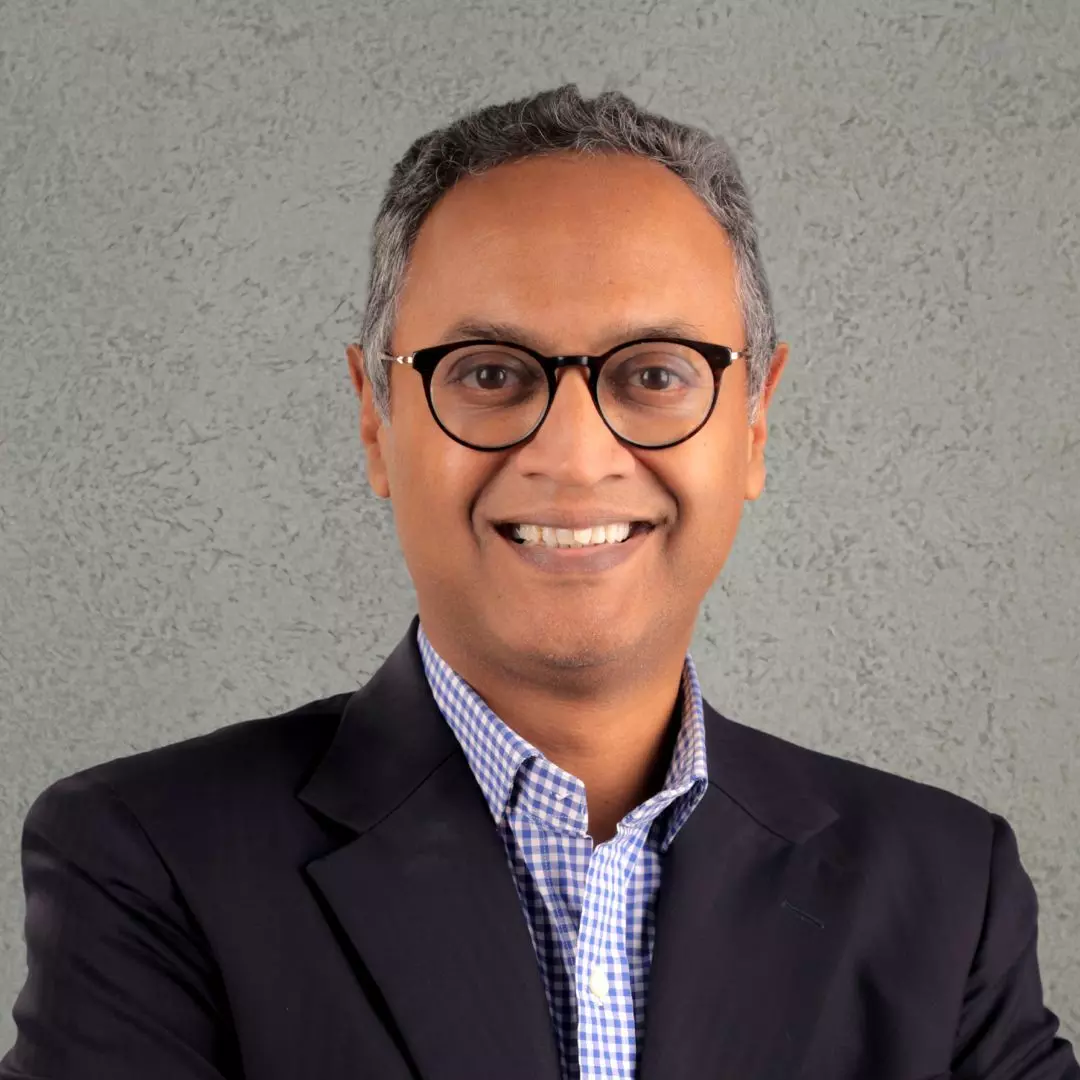
On Episode 736 of The Core Report, financial journalist Govindraj Ethiraj talks to Arvind Chari, Chief Investment Officer at Q India UK.
SHOW NOTES
(00:00) The Take
(05:09) Markets jump 1,000 points as they join global rallies
(07:38) JP Morgan pitches Nifty at 30,000 in a year's time
(10:10) Supply of fresh equity has likely peaked, says CLSA
(11:28) The Government wants you to take note of the small reform doses
(24:24) India’s rare earth magnet push
Register for India Energy Week 2026
https://www.indiaenergyweek.com/forms/register-as-a-delegate
Register for the 3rd Edition of the Algorand India Summit
https://algorand.co/india-summit-2025
NOTE: This transcript contains the host's monologue and includes interview transcripts by a machine. Human eyes have gone through the script but there might still be errors in some of the text, so please refer to the audio in case you need to clarify any part. If you want to get in touch regarding any feedback, you can drop us a message on feedback@thecore.in.
—
Good morning, it's Thursday, the 27th of November, and this is Govindraj Ethiraj broadcasting and streaming weekdays from Mumbai, India's smogged out financial capital.
The Take: Naidu's Latest Gamble
The global race to build data centres that power artificial intelligence has arrived in India and has now reached the coastal state of Andhra Pradesh, pulled in by an old hand at the game. A joint venture, Reliance Industries, Brookfield and Digital Realty has just announced a $11 billion plan to construct a sprawling AI native data centre in Vishakhapatnam.
Now this comes just a month after Google and the Adani Group declared a similar $15 billion investment in a data centre in the same city. Suddenly a state that's often overlooked in India's tech narrative is at the epicentre of a $25 billion plus bet on the nation's digital future. The man credited with this coup is of course the state's Chief Minister N.
Chandrababu Naidu. Two decades ago, as the leader of a united Andhra Pradesh, he waged a successful campaign to pull investment away from Karnataka. Andhra Pradesh at that time included the now distinct state of Telangana, which houses the capital of Hyderabad.
Naidu pitted himself against Bangalore, the country's established tech capital with the slogan, bye-bye Bangalore, hello Hyderabad. His understanding of what built a tech ecosystem was strikingly granular. In a 2004 interview, he explained to me and my colleagues then that Hyderabad, then the state capital, needed a vibrant nightlife to attract the young men and women who would work for global tech firms.
It was a prescient, if unconventional insight for an Indian politician at the time. The gamble worked. American giants like Microsoft and GE were amongst the first to plant their flags.
Microsoft's 1998 development centre in Hyderabad, its first outside the United States, was widely attributed to Naidu's personal persuasion of Bill Gates. Whole new districts like the aptly named Cyberabad came up also around 1998. Today, Hyderabad is a buzzing metropolis with robust infrastructure, a new airport, and a thriving economy that extends far beyond its original IT roots into pharmaceutical research and much more.
The city's explosive real estate growth and prices are a testament to its success. And yet, the success then did not translate into political victory. In a move that stunned the urban commentariat, including financial journalists like me, Mr. Naidu's party was roundly defeated in the 2004 state elections. The reasons were complex, a mix of rural distress and anti-incumbency that the urban tech boom could not overshadow. Now, 20 years later, he's back, and his target has shifted from software to the essential hardware of our time, that's data centres. But this new price comes with its own set of challenges.
The first is environmental. Data centres, as we pointed out earlier, are notorious for their immense energy and water demands. As the economist and former planning commission member, Mir Shah and Sunil Mani recently argued in an article in Business Standard, the unchecked growth of these water-guzzling data centres could strain fragile coastal ecosystems.
From Britain to Singapore, they point out communities have faced blackouts and water shortages driven by data centre expansion. They rightly insist that India must integrate environmental sustainability from the start, demanding transparency on water footprints and pushing for renewable energy and advanced recycling. This is not a secondary concern, they say it's a prerequisite.
The second challenge is human. Unlike the GE and Microsoft offices of the 2000s, which created thousands of jobs for young educated workforce, data centres are not manpower intensive. They are actually vast automated cathedrals of computing power.
Now the cruel irony here is that the artificial intelligence they empowered is explicitly designed to eliminate jobs. We may not know the scale or the timeline of this, but the direction is clear. The economic transformation Mr. Naidu is chasing may not generate the widespread employment that typically fuels political capital. Mr. Naidu's comeback is a masterclass in identifying a new growth engine for a state that's been known as India's rice bowl. He's pulling the data centre boom away or trying to from its traditional home on the west coast where Mumbai alone hosts over half of India's capacity. He may well create an economic win for Andhra Pradesh and the investments are real and the momentum is palpable.
Mr. Naidu is betting his state's future on AI among other things, but he must also hope that this time the rewards are not just monumental, but also palpable to the people he serves.
And that brings us to the top stories and themes…
The stock markets jump over a thousand points as they join global stock rallies.
JP Morgan pitches a nifty in 30,000 in a year's time.
The supply of fresh equity has likely peaked, says brokerage CLSA, which could lead to more momentum in the secondary markets.
India outlines a rare earth magnet push, says we could be self-reliant in two or three years.
The government wants you to take note of the small reform doses.
Indian Markets And Global Rallies
The Indian stock markets have not really been in sync with global market rallies for some time now, and India has definitely not joined the AI rally that has powered stocks from Wall Street to China, Hong Kong, Taiwan, and Japan. On the contrary, it's lost out. On Wednesday, it did appear that India was joining the global and Asian rallies driven by Wall Street expectations of an interest rate cut next month.
Interest rate cuts in the United States have traditionally meant more equity flows to emerging markets, but that's not been the case with India in the last year plus, and actually we've been seeing consistent outflows in the last year, more than $16 billion of net as it happens. Stock prices also jumped on Wednesday in a broad rally driven by financials and rate-sensitive stocks because of a possible reserve bank of India rate cut next week, and which brings us to the prices. The 30-stock SENZX was up 1,022 points to close at 85,609, just 368 points away from its all-time high of 85,978.
The 50-stock Nifty Index was up 320 points to a 14-month high of 26,205, just 70 points away from its record high of 26,277. Both benchmarks hit their last all-time highs in September 2024. Will they hit the new highs on the 27th of November?
That's Thursday and that's today. Well, we don't know, but let's see. Meanwhile, in the broader markets, on Wednesday again, the Nifty Mid-Cap Index and the Nifty Small-Cap Index were also up more than a percent, and overall, both benchmarks have posted their best session in five months since June, and ended, like we said, just marginally 0.4% below their September 2024 highs. As we said, other Asian markets were also up, tracing a rise in Wall Street after data showed that U.S. retail sales rose less than expected and consumer confidence weakened, bolstering expectations of a Fed rate cut, according to Reuters. Back in India, rate-sensitive shares were lifted by record low inflation, and comments from the Reserve Bank of India governor signalling room for further rate cuts next week, according to analysts quoted by Reuters. The big movers in the benchmarks on Wednesday were HDFC Bank, ICICI Bank, and Reliance Industries, which are also the three heaviest-weighted stocks.
A Bullish JP Morgan
India's benchmark Nifty 50 Index could climb to 30,000 by end 2026, or in a year's time, suggesting an upside of about 15% from current levels thanks to steady fiscal and monetary policy that is expected to fuel demand, Reuters reported JP Morgan saying on Wednesday. A Reuters poll of economists, by the way, expects the Nifty to hit 28,500 by the end of 2026 and 28,850 by mid-2027. Now, the Nifty has gained about 11% this year, but it's still underperforming Asian and emerging market peers.
JP Morgan analysts said that while market valuations are still at a premium to other emerging markets, they've eased below their long-term average after 14 months of underperformance. They also said that the recent tax cut-led drop in inflation and steep rate cuts by the central bank are likely to boost, or I guess further boost, domestic demand. Reuters also quoted the brokerage expecting the Reserve Bank to reduce rates by another 25 basis points in December, amplifying the impact of tax reductions that are already lifting consumption, credit growth, and auto sales.
JP Morgan has maintained its preference for domestic-facing sectors over exporters, adding that a U.S.-India trade deal could spark a near-term re-rating. And finally, oil, with India ramping up petroleum imports from the U.S. and scaling back crude purchases from Russia, the analysts see the probability of a resolution of penal U.S. tariffs as very high, with that additional 25% likely to be removed. JP Morgan is overweight on materials, financials, consumer sectors, hospitals, real estate, defence, and power, and underweight on IT and pharma.
Elsewhere, gold prices rose to a near two-week high on Wednesday, thanks to benign U.S. economic data, which of course reinforced expectations of a Federal Reserve interest rate cut next month. And spot gold was up to about $4,161 per ounce on Wednesday morning, the highest since November 14th. Analysts told Reuters that they continue to see a further upside in the near term, and their year-end forecasts were between 4,000, or rather around $4,200, and a mid-next-year target of about $4,500 per ounce.
The rupee was weaker on Wednesday, and closed so, hit by consistent portfolio outflows, among other factors, according to Reuters, which added that the rupee closed at 89.27 rupees against the U.S. dollar, marginally weaker than its previous close of 89.22 rupees.
A 16% Rally
The supply of IPOs, which hit a record in the last year, has likely peaked, setting the stage for a 16% rally in the benchmarks by the end of 2026, according to CLSA, the brokerage. The brokerage said that heavy equity supply from a deluge of initial public offerings and secondary placement has crested, easing a key liquidity pressure on the market, and the transition away from peak supply comes as India's valuation premium to other emerging markets has moderated, according to a report in The Mint. The market is emerging from a long adjustment phase, and is now building a more stable profitability base, CLSA analysts wrote.
And they also said that after a 14-month reset where growth and earnings expectations were tempered, profitability now appears more predictable. They also say that India is benefiting from global flows as international investors see it as a safe haven, even as the worldwide market narrative is still dominated by artificial intelligence. While their own exposure to Indian equities is lower than the start of the year, CLSA says its models still point to a significant upside, and that valuations support the case with India's forward price to earnings multiple now trading at a lower premium to emerging markets while price-to-book ratios are cheaper than that of Taiwan.
An Outlook
With the markets in sniffing distance of all-time highs, what are the indices reflecting and what are they not? Which means, or rather put differently, what's changed in the underlying markets and what's not in the last year? And what is the prognosis on flows from here on?
And what are the macro factors that are driving the current rise in the markets? And also, an insight on what the government wants you to note in terms of what it's been doing in terms of supporting the economy. I spoke with Arvind Chari, the London-based chief investment strategist at Q India UK, an affiliate of Quantum Advisors India, presently visiting Mumbai and also visiting our studios in Mumbai.
INTERVIEW TRANSCRIPT
Arvind Chari: You're absolutely right. I think the benchmark indices are hiding kind of some of the pain that investors are feeling. You can see some news articles saying, this one's portfolio is down by X percentage despite the market, and that's true.
And that is true, especially in the mid and small cap space, where again, the indices are flatlined more or less near the all time highs. But the underlying breadth is very different. Like someone was telling me that the BSE 500 index, if you look at the drop from 52-week highs, so the median share drop is about 20%.
That doesn't tell you that this is a bull market or this is a market at the peak. So indices definitely are hiding that fact. And we haven't seen an impact of that in, say, retail investor flows.
But if I look at recent equity flows, if I remove SIPs, which has been steady and growing, and it's a fantastic story, as we all know, the net other lump sum flows are almost zero in equities in mutual funds in the last month or last two months. Again, just shows that momentum or expectations is gone down. Maybe it's a function of supply.
You've seen a significant amount of paper being issued in the last two years, I think close to 30-40 billion dollars of IPOs would have happened. Maybe that is also impacting the fact that money is moving away from certain entities and getting into these IPOs. So you're seeing those drawdowns.
Maybe the indices, because some large weights are doing well, and the index levels are being maintained.
Govindraj Ethiraj: The stocks that have done well, again, if you look at Wednesday, for example, I'm just using that illustratively, HDFC Bank, ICICI Bank, Reliance, I mean, these were some of the stocks that really powered the sensing. What is that telling us? What's that side of the story telling us?
Arvind Chari: I think if you look at from a valuation comfort perspective, if you look at large cap indices, take the large cap indices, the valuations are close to long term averages, slightly above long term averages, but not by that much. And when the median is like that, then you know that certain companies are below long term valuations, financials typically, and some companies are maybe above long term valuation. So there is a lot more comfort on the large cap space in terms of valuations.
And if it is supported by earnings growth that is projected to be in double digits next year, then you would expect that the PEG ratios going forward also will be meaningfully comforted. Where you again have some more difficulty is the mid and small cap space. Nominal growth is lower, nominal sales are revenues and corporate revenues are lower.
And there, if I look at valuations, it seems at 30-40% premium to its own average. I'm talking about the BSE mid cap. BSE small cap is very difficult to identify because you don't have enough stock coverage and analyst coverage.
But BSE mid cap has been about 35-40% premium to its long term average. So that's where the discrepancy is. So I think it tells you that maybe in the large cap space, as it is reaching all time highs, there is a merit in terms of earnings growth and valuation comfort, a lesser so in the mid and small caps.
Govindraj Ethiraj: So which brings us to the valuation question and the earnings question and earnings leading to valuations. Of course, there seems to be a general consensus that there has been a recovery, things are looking better and the outlook is even sounder and clearer in the next couple of quarters. Are you in agreement with that?
Arvind Chari: I won't say couple of quarters, but I would say one thing that in terms of economic momentum, and I'm saying like, India, 6% to 6.5% real GDP, it's a given. If you're going below, that's a real problem. In very difficult circumstances, last 45 years average, we have done 6.3%. I see the momentum going towards 7%. And I have not been, I won't say very bullish or optimistic, but since demonetisation, I have not been so optimistic on the economic outlook that I see in terms of demand and the consumption and the income story recovering. And we're already seeing, maybe seeing the first signs of private capex increasing. We have seen two quarters of YOY double-digit growth in projects under implementation, projects under announcement.
It is reasonably wide. I won't say it is very broad, but it's reasonably across different sectors. That tells me that the economic momentum is happening.
You would have seen all the state governments, welfare announcement that they've made is about 1% of GDP over the last one year. It's the central income tax and the GST rationalisation, the centre's general sense of doing some bit more revenue and income welfare measures. We like that, you know, that we've always been votary that if India does not grow at 7%, then we need this income support for stability.
I think that is what is adding to the earnings momentum. And we should expect to see, not in the next one or two quarters, but in the next year, I would assume that it will be in double digits.
Govindraj Ethiraj: And in the last few days specifically, I mean, several leading global brokerages have given out positive bullish statements. I mean, they've done that in the past too, but now they've come up with fresh ones and we are obviously reaching the end of the calendar year. Is that a sign that flows could come back because the flows themselves, I'm talking about foreign portfolio flows, and I'll also link that to where you sit in London.
Is that a sign that flows are likely to come back or could that still be dependent on other factors?
Arvind Chari: In September, we were told that India is anti AI. India's underperformance was because India did not AI. And in the last week, we have said that India is the reverse AI, like because AI is now into a bubble, India might actually benefit by not having AI play.
So, you know, the market sentiment will keep shifting based on themes and thematics and people keep playing that over a period of time. What I would say is that, and I've said this in a show before, that almost 75-80% of the flows that comes into Indian equity markets are not India dedicated flows. They come from global or global emerging market or Asia or Asia mandated flows.
And India is a weight in that. So, historically, India has had an overweight in many of these indices, because India has rightfully done so much better than emerging market indices. In the last year or two, we have seen an underperformance.
India has underperformed rightly because of valuations not being too stretched, earnings growth support not being there. India underperformed in the last year, I mean, what about 25-30% underperformance against the MSCI EM. And what we see now in global portfolios is that India is kind of underweight in global portfolios and India's relative valuation, especially on the large caps, seems to be on par with its own history or maybe lower than the history.
Those things tell me that as the momentum changes and if the earnings growth expectation comes up, you should see some reversal of the outflows that we have seen. Or maybe the outflows might not be as strong as you've seen in the last year. It's about $30 billion of foreign portfolio outflows.
Maybe that has stalled. And if the momentum comes up or if the actual AI trade fails out in China and Korea and Taiwan, then I think India will get allocated. So, you will get those global allocations.
We still don't see very high appetite for India-dedicated flows. We expect it to improve and myself have had many conversations with investors where investors are thinking about doing India-dedicated, but we don't see very large inflows. And last year's underperformance is a reason for them saying that, you know, this is a reason why we don't want to do a country mandate.
We are okay with doing an emerging market or a global mandate. For that, you need some more action and you need some more conviction in global allocators that the Indian equity markets is to be played directly to a dedicated mandate. We see some flows in funds.
It might change, but the broad allocation will come from the global emerging market funds who exited India or booked profits in India coming back. Whether it will be large enough, I'm not very sure as of now. But in terms of expectations and where valuations are, especially in large cap space, I think investors should look at India.
Govindraj Ethiraj: Yeah. So let me ask that question maybe in a slightly different way as well. So when you talk to investors, how do they view India?
Do they view India as an option that is sort of lower down the scale compared to China and all the AI kind of phenomenon that we've seen? I mean, this AI or AI link tech in Hong Kong, China, Taiwan, and of course the United States. Or is it that, I mean, it's lost that sort of flavour of the month phase or it's out of that flavour of the month phase right now, and maybe it'll come back.
Arvind Chari: That matters to those investors who have India allocation either directly or through emerging markets. And then the emerging market funds or emerging market managers are deciding that they should overweight India, underweight India, depending on flavour and theme and sentiment. The bigger question for India is always are the large institutions, pensions, sovereign wealth funds who do not have India dedicated, will they make the leap of faith and say that I don't want to play India public equities through emerging markets.
India has a great public equity story. It's shown long-term track record as a great company. And I want to make a dedicated bet.
That threshold is difficult to break because they're all so benchmark focused. Their benchmark is MSCI ACRE, all country world index or MSCI EM. And for them to take a country bet becomes that much tougher.
They do that with the US, but to do that with countries like India and China, they did for China. It hasn't worked. So that leap of faith is what India requires.
They understand the story. They've seen the returns. They've seen the link between GDP growth and equity market returns.
It's a stocking thing, right? Not many countries have that where GDP growth and equity markets returns are so closely linked. So they get that.
They have to make the leap of faith of allocating more or allocating dedicated to India and say that I don't want to play it through a global mandate. Till that time, we are dependent on this sentiment between India and relative and the sentiment of emerging market managers saying that is India AI or not AI? Those things will take precedent.
Capital gains is one sore point for every investor. Not many countries impose capital gains and that is a big threshold of returns giving away. And when you see net of capital gains tax, is India still attractive from that?
All those things matter in terms of allocation.
Govindraj Ethiraj: Last question. So as we head into end of 2025, what's the outlook for 2026 at this point of time? I mean, how do things look?
Arvind Chari: On the GDP front, I think we will see closer to 7% growth, maybe for the full year, maybe slightly higher. That should get reflected in a bit of nominal growth because that has been a challenge, right? 8%, 9% nominal growth is not good for India.
The basic India story is 6% or 6.5% real GDP, 10%, 11% nominal GDP, and then revenues and corporate profitability comes about, right? That's the main story. So we need to get to that trajectory.
Looks like it will happen. I think household income demand drivers are there. When I went to Delhi last week, everybody was talking about, please watch our GAOBA committee recommendation and the Somnathan committee recommendation.
We are focused on deregulating, decriminalising, the quality control, already not everything, but that's the message that they are sending. Look at those aspects. It might not be big bank, but there are small, small steps that we are doing.
If it works and impacts sentiment, what we need to still see is private capex. As I said, we are seeing some good signs of it. If that continues, maybe we'll have a better earnings outlook, which will support the valuation.
Otherwise, valuations are stretched if the earnings did not even compound in double digits in India.
Govindraj Ethiraj: That's a good note to end on. Arvind, thank you so much for joining me.
Arvind Chari: Thank you so much, Govind.
Energy
Talks on the Russia-Ukraine peace deal are moving fast, perhaps faster than many expected and could lead to some resolution, which means a direct impact on oil prices. Oil prices were steady on Wednesday after falling to a one-month low in the previous session as investors looked at the prospects of oversupply and, of course, followed talks of a potential Russia-Ukraine peace deal. Brent crude futures were down about 13 cents to $62, 35 cents a barrel on Wednesday and West Texas intermediate crude futures were down 7 cents to $57.88. Analysts told Reuters that the market remains fundamentally skewed to the downside with investors increasingly pricing in an oversupplied 2026 and no convincing demand catalyst to offset it. The big shift in the Russia-Ukraine talks is this. Ukraine President Volodymyr Zelensky told European leaders that he was ready to advance a U.S.-backed framework for ending the war with Russia, with only a few points of disagreement remaining. Analysts said that if finalised, the deal could rapidly dismantle Western sanctions on Russian energy exports, which could drive WTI prices to about $55 per barrel.
A Rare Earth Plan
India's Union Cabinet, chaired by the Prime Minister Narendra Modi on Wednesday, approved a 7,000 crore scheme aimed at promoting the manufacture of rare earth permanent magnets, or REPM. The Mint newspaper reported Minister of Information and Broadcasting, Ashwini Vaishnav, saying that incentives under the scheme could allow India to become self-reliant in rare earth magnet manufacturing in the next three to four years. He said that this could create a completely integrated manufacturing ecosystem.
India's annual demand for these magnets is between 4,000 to 5,000 tonnes. Now, rare earth permanent magnets are critical to electric motors and high-efficiency systems. And obviously, the establishment of a domestic integrated manufacturing base will significantly strengthen India's technological competitiveness, and of course, reduce dependence on China, where a lot of the world's rare earth magnets come from.
NVIDIA and Google
NVIDIA on Tuesday said its technology remains a generation ahead of the industry in response to Wall Street's concerns that its dominance of AI infrastructure could be threatened by Google's AI chips, according to CNBC. NVIDIA said that they were delighted by Google's success. They've made great advances in AI and they continue to supply to Google.
And NVIDIA said this in a post on XStroke Twitter, but they also added that NVIDIA is a generation ahead of the industry. It's the only platform that runs every AI model and does it everywhere. Computing is done.
And that post came after NVIDIA saw its shares fall 3% on Tuesday after a report that Meta, one of its key customers, could strike a deal with Google to use its Tensor Processing Units, or TPUs, for its data centres. NVIDIA claimed that its chips are more flexible and powerful compared with so-called ASIC, or ASIC chips, such as Google's TPUs, which are designed for a single company or function. NVIDIA's latest generation of chips are known as Blackwell, and NVIDIA offers greater performance, versatility, and fungibility than ASICs, NVIDIA said in a post reported by CNBC.
Google-stroke Alphabet, meanwhile, took another step towards $4 trillion in market value on Tuesday by rising another 1% to extend a month-long rally thanks to investor enthusiasm about its parents' AI tools, cloud computing, and chips business, even as NVIDIA shares fell about 2.6% that day, taking its capitalisation below the $5 trillion valuation, which, of course, is historical in itself, reached just weeks ago.
The NVIDIA-Google spat, if you want to call it that, followed news that Meta was in talks to spend billions of dollars on Google's AI chips as an alternative to NVIDIA.


