



 Newsletter
 Search
Markets Hesitate And Slide
- Podcasts
- Published on 4 Dec 2025 6:00 AM IST
A depreciating rupee will act as a shock absorber to Indian exports to high tariff countries like the United States
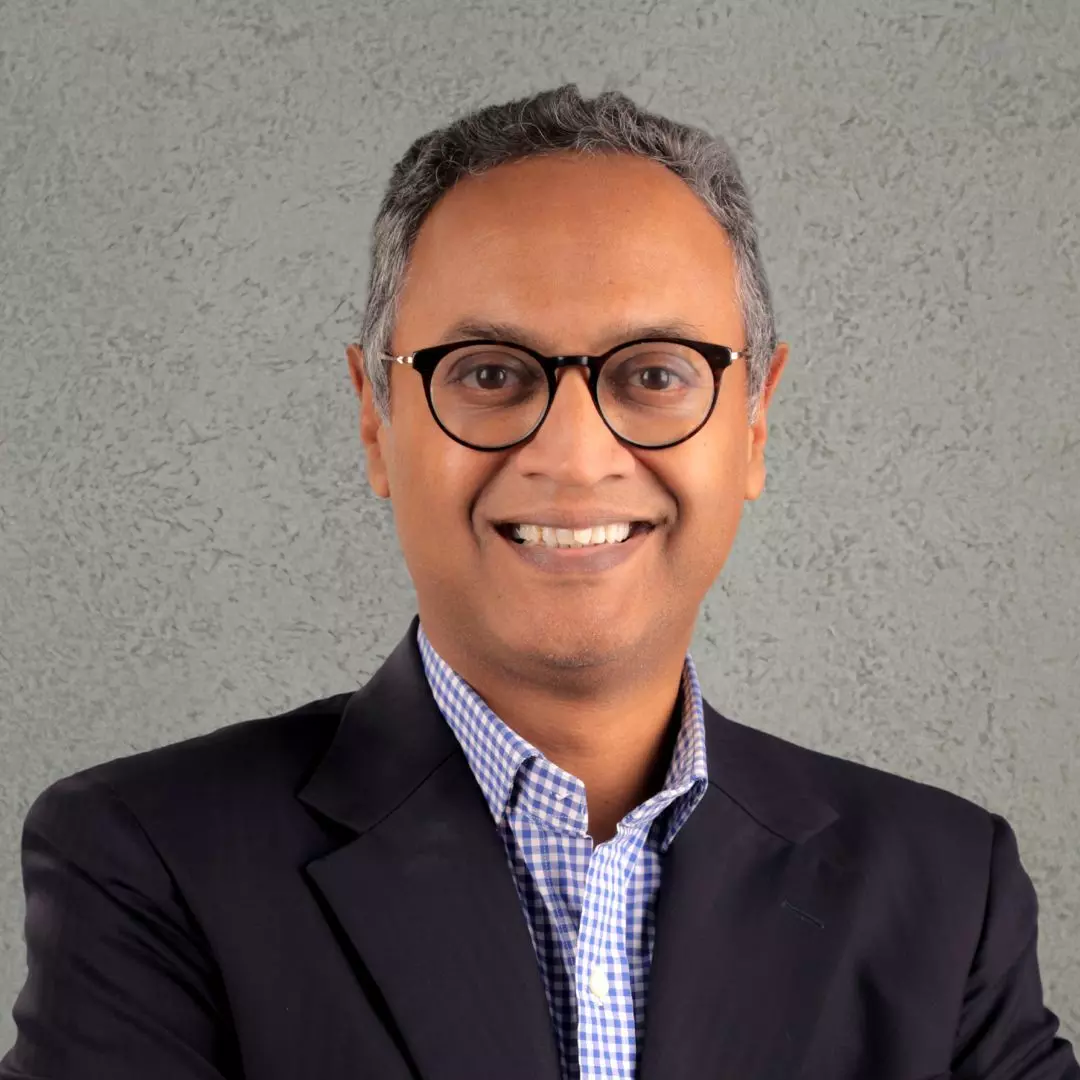
On Episode 742 of The Core Report, financial journalist Govindraj Ethiraj talks to Indrani Bagchi, CEO at Ananta Aspen Centre and Venkata Satish Guttula who is an Independent Cybersecurity Consultant.
SHOW NOTES
(00:12)The Take
(04:55) Markets Hesitate And Slide
(08:41) What Putin’s Visit To India Means For India ?
(18:02) Indigo Struggles With Cancellations, Delays.
(19:09) The Government Pulls Back A Directive To Install A Cyber Security App On Mobile Phones, But What Is The Solution To The Problem ?
Register for India Energy Week 2026
https://www.indiaenergyweek.com/forms/register-as-a-delegate
Register for the 3rd Edition of the Algorand India Summit
https://algorand.co/india-summit-2025
NOTE: This transcript contains the host's monologue and includes interview transcripts by a machine. Human eyes have gone through the script but there might still be errors in some of the text, so please refer to the audio in case you need to clarify any part. If you want to get in touch regarding any feedback, you can drop us a message on feedback@thecore.in.
—
Good morning, it's Thursday, the 4th of December and this is Govindraj Ethiraj broadcasting and streaming weekdays usually from Mumbai, India's financial capital, but in transit right now.
The Take
Consider the arithmetic of the textile trade. When the rupee was at 80 to the dollar, a $2 t-shirt yielded about 160 rupees. With the currency depreciating to 90 rupees, the same exporter can competitively price their product at around $1.75 to hold market share or maintain the price point to earn 20 rupees more. Now, in the real world that may not happen in that form as input costs obviously might fluctuate, but by not that much.
A depreciating rupee will act as a shock absorber to Indian exports to high tariff countries like the United States, particularly against other exporting countries that face lower tariffs. It's no surprise then, for example, export heavy IT and pharmaceutical stocks rallied on Wednesday in the stock markets as the currency breached the psychological 90 rupees mark. This movement signals a distinct strategic pivot in India's currency management.
Under the previous governor at India's central bank, Reserve Bank of India, the mandate was stability at all costs, a tightly managed float that earned the rupee a reputation for resilience, but also drew attention from the International Monetary Fund, for example, for excessive intervention. Now that era appears to be over. With no resolution to geopolitical trade barriers in sight, the Reserve Bank of India is evidently allowing market forces to take the wheel.
It will come back next year, India's chief economic advisor, Anant Nageswaran, remarked on Wednesday, right now it's not hurting our exports or inflation. I'm not losing my sleep over it. If it has to depreciate, now probably is the right time.
Some observers attribute the slide to speculators, but blaming speculators is a tricky stance to take in free markets, as many countries have discovered to their disadvantage, particularly since it works in both directions. In this case, the market is betting against an imminent US-India bilateral trade deal. A US trade delegation is visiting just next week, but a breakthrough seems unlikely, and this, of course, is overshadowed by the presence of Russian President Vladimir Putin, who arrives in New Delhi today.
The Kremlin has explicitly stated that Russian oil exports to India will resume soon. Now, all of this is obviously and has been the bone of contention with Washington DC. Half of the 50% tariff imposed on Indian exports is a punitive measure specifically targeting India's purchase of Russian crude, which the US views as funding the war against Ukraine.
Although Indian refiners had paused direct purchases, reports now suggest Russian oil continues to flow via mid-sea transfers. Now, while exporters may cheer a weaker currency, the rupee at 90 is a hard sell domestically. It raises the cost of overseas education, travel, and, of course, outward investment.
Crucially, it increases the import bill for the world's third largest oil consumer, that's India. Though with crude prices hovering near $63 a barrel, the inflationary impact remains muted for now. But the real story is not about the price of oil, but the price of confidence.
There is a disconnect of sorts in the current data. India boasts strong macroeconomic fundamentals such as low inflation, moderate interest rates, and an impressive 8.2% GDP growth rate in the latest quarter, thanks to strong domestic consumption. However, the rupee's weakness exposes the vulnerability on the external front, a slowdown in foreign direct investment and portfolio flows.
So it begs the question, which metric truly gauges the health of the Indian economy? Is it the BSE Sensex and NSE Nifty hitting all-time highs, or sustained domestic flows into mutual funds, or the currency sliding to historic lows? While the domestic story is strong, honest self-reflection suggests that the rupee is a more accurate barometer of India's global standing. The depreciation reflects diminished interest from global fund managers, who may also be currently distracted by the AI-fuelled equity frenzy in Western markets. Whether this lack of inflow is a matter of faulty perception or fundamental reality is irrelevant.
The market pricing is unambiguous. Policymakers may not be losing sleep over the rupee today, but if the trend reflects a deeper structural disengagement by global investors, they may soon have to.
And that brings us to the top stories and themes for the day…
The Stock Markets Hesitate and Slide
What Russian President Vladimir Putin's visit to India means for India
Indigo struggles with cancellations and delays
The government pulls back a directive to install a cybersecurity app on mobile phones, but what is the solution to this problem?
Weakness Again
The rupee fell below the psychological mark of 90 to the dollar, and less dramatically, the nifty 50 slipped below the psychological 26,000 mark yesterday. The market peak crossed after a 14-month wait now appears to be receding into history, at least near history. The markets are now distinctively weak again, and the chances of a Santa rally are fading.
Though that is the case in global markets as well, who are struggling with Bitcoin-induced indigestion. Indian equity benchmarks, that's the Sensex and Nifty, extended their decline into the third straight session. On Wednesday, the Sensex was down 31 points at 85,106, and the NSE Nifty 50 was down 46 points to 25,986.
In the broader markets, the Nifty mid-cap and Nifty small-cap fell 0.9% and 0.7% each. The rupee was the big news of the day, falling past 90 per US dollar to a record low on Wednesday, declining for the sixth consecutive session. Reuters said that traders' bet, subdued trade and portfolio flows will keep Asia's worst performer under pressure without the Reserve Bank of India's intervention.
The rupee fell to a record low of Rs. 90.29 per US dollar and ended the day's session at Rs. 90.19, down nearly 0.4% on the day.
The rupee has fallen 5.3% year-to-date, putting it on track for its steepest annual decline since 2022 and making it the worst-performing Asian currency, said Reuters. India's Chief Economic Advisor, V. Anant Nageswaran, on Wednesday said that he was losing sleep over the currency's fall and that the weakness had no impact on inflation and expected it to recover in 2026. Meanwhile, on Wall Street, more evidence of a slowdown in the US jobs market reinforced bets the Federal Reserve will cut interest rates in its final policy meeting of 2025.
All of this drove stocks higher, while bond yields dropped alongside the dollar, according to Bloomberg, which added that stocks held gains in early New York trading, with the S&P 500 poised to advance for the seventh time in eight days. Bitcoin also kept climbing as traders looked for signs that the crypto market may be regaining its footing after a prolonged sell-off.
The India Energy Week Segment
Oil prices, climbed more than 1% on Wednesday after Russia said talks with US officials in Moscow failed to reach a compromise on a potential Ukraine peace deal that could have eased sanctions on the oil sector, according to Reuters, which added that Brent crude gained about 68 cents to about $63.13 on Wednesday afternoon. Goldman Sachs analysts said in a note that oil markets and prediction markets do not appear to price a large probability of a near-term price agreement and removal of sanctions on Russian oil, according to Reuters. Russia and the US failed to reach a compromise after a five-hour meeting between Russian President Vladimir Putin and US Donald Trump's top envoys, according to the Russian government, on Wednesday. President Vladimir Putin is in India on Thursday, that’s today.
The Putin Visit
President Vladimir Putin of Russia is set to start his India visit today, for the first time since Russia's invasion of Ukraine, a trip that puts the spotlight on the country's defence and energy ties against the backdrop of India's struggling bilateral trade agreement deal with the United States.
The visit will also reiterate India's position and ability to explore an independent geopolitical path. America has doubled India's status to 50% to punish India for buying oil from Russia and has of course pressured India to buy more American arms. Putin's visit comes against the backdrop, as we just talked about, his talks on Tuesday with the US envoys and on a new peace plan that America is pushing hard for Russia and Ukraine to accept.
Now, India has maintained a cautious stance in relation to the war in Ukraine, calling for a halt to fighting but not damaging its relationship with Russia. Bloomberg reported that on the eve of his visit, Putin hailed his country's ties with India and China and pledged to boost relations to a qualitatively new level. He told a business forum in Moscow on Tuesday that he will discuss trade with Prime Minister Narendra Modi, including increasing the import of Indian goods into our market.
Putin and Prime Minister Modi are expected to discuss raising bilateral trade from the current 68 billion dollars to about 100 billion dollars by 2030 and also improve systems to settle transactions in the rupee and the ruble, according to Kremlin spokesperson Dmitry Peskov, who spoke to local media on Tuesday and reported by Bloomberg. For India, of course, breaking into the Russian market won't be easy. Bloomberg quoted analysts saying that local and Chinese goods are widely available and competitively priced, leaving Indian exporters with quite a small list of viable products.
I reached out to Indrani Bakshi, CEO at Ananta Aspen Centre and also columnist on foreign affairs with the Times of India and I began by asking her in what context was the current visit by President Vladimir Putin being framed and also how she saw the dissent being put forth by some of the European country ambassadors of Germany, France and Britain in India to that visit.
INTERVIEW TRANSCRIPT
Indrani Bagchi: Officially, this is the annual summit. Prime Minister Modi was in Russia in 2024. So, this is President Putin's turn to visit.
He will be actually staying the night in India, which he hasn't for a while, even when he visited earlier. Now, the framing for the visit is interesting because one, India's framing, this is a regular annual summit. We do this all the time.
And President Putin's line, I mean, the Russian line is, this is a special relationship. We do not want external sanctions to affect this relationship and we will do everything to make sure that this relationship remains protected from external influences. In fact, Dmitry Peskov, President Putin's spokesperson, yesterday told a group of Indian journalists that there is no limit to the Russia-China relationship and we believe there should be no limits to the India-Russia relationship.
That opens up a whole set of questions that we can get into later if we wish. But it basically shows a couple of things. One, the Indian investment in Russia remains.
We may not be buying top-line military equipment or platforms from them, but we are investing in them, whether in the commodity sector, certainly in energy and connectivity. You will see mobility agreement being sort of signed between the two sides. And it's important because India is now signing migration and mobility, rather mobility agreements with countries around the world, whether it is Australia, whether it is Europe.
We just signed one with Germany, Japan, etc. That's on one side. The downside, as you pointed out, well, we'll have to see.
The U.S. is sending a trade delegation to New Delhi after the 8th of December, which is next week. We don't know whether the Russian visit will have an impact. On the other hand, we should make this clear that India has been subjected to an extra 25 percent penal tariffs by the Trump administration for buying Yashnor, which frankly, as you know well, was not under sanctions.
There was just a price cap. And we have been singled out for this because of, we believe it's a personal problem between Prime Minister Modi and President Trump, but that's a different matter. And we've spoken about this in your earlier shows.
I think the bigger issue that we will be looking at is not whether we breach anything at all, but to be able to point out that yesterday and today, President Trump's own negotiators, that is Steve Whitkoff and Jared Kushner, his son-in-law, who are negotiating the Ukraine peace deal, were actually sitting with President Putin in Moscow to thrash out the details. Now, some areas remain unaddressed, according to the Russians and according to the reports. But the fact is that they are pushing for a Ukraine peace deal with Russia.
India engaging Russia should not be a matter of overriding concern. However, as you mentioned that there were three European ambassadors in India who wrote a joint op-ed in the Times of India yesterday about Russia, their position on the Ukraine war and on India's relationship with Russia is very well known. And for them to put their positions out before the visit was okay.
They also have to tick their own boxes, whether India listens to them or takes their advice is a different matter. But the fact is that they are also feeling the heat from the negotiations between the US and Russia regarding the Ukraine peace deal, although there have been some changes, minor changes made to the offer. The fact is that Europe does feel kind of left out.
All of this kind of frames the visit between President Putin pays to India tomorrow.
Govindraj Ethiraj: Right. If I were to look at the two things that seem to be the centre stage, one is oil and how we go about importing oil or more of it. And the second is defence.
How are you seeing the importance or the time being given to these two issues? And is there anything else which is on the table?
Indrani Bagchi: Oil like trade and like water finds the path of least resistance. So even though India has reduced significantly oil buys from Russia, largely because the price differential it has narrowed considerably. So it really doesn't make that much sense anymore.
Besides, India signed this long term LPG deal with the US that has gone quite a way in addressing the trade deficit that US has with us. The other is, I think what you will see in terms of trade is lowering of barriers, making sort of easing up Russian investments in India. My personal sense is there will be sectors where Russia will not be able to invest in India, largely not because Russia is Russia, but because Russia is way too close to China for our comfort.
And if you saw a story in the FT the other day, about the level of the Chinese components that are part of Russian drones, Russian missiles and other Russian military equipment, that remains a source of concern to India. It has been something that has been flagged by India to Russia several times. And therefore, it will be difficult for India to buy a whole lot of stuff from Russia.
Having said that, the negotiations on the next round of S-400 missile interceptor batteries will happen. I don't see that deal coming through just yet, because Russia still owes us two batteries of the S-400 from the last round that we bought. I honestly don't, but I do believe that there is some conversations will happen.
Russians have said that there will be conversations on the Su-57. I would hesitate to say that this will go beyond the conversation stage. That's where I think it will be.
Govindraj Ethiraj: Right. So, bottom line question, and you've touched upon this already, is that will this visit have no impact on India-US bilateral trade agreement talks? Could it have some impact, or would it have lots of impact?
Indrani Bagchi: The VTA between India and US is going nowhere. It is not going anywhere. And I know the Commerce Secretary has gone on record to say that he expects it at the end of this year.
I wish him all the best, of course, because I do think this needs to go through. And I think he's spoken about a deal that goes in two tranches. One is a tariff reduction, and the other is the first framework agreement for the trade deal.
Having said that, from all sources in Washington, everything is at a standstill and has been there for a while. So, I don't know if we should be holding our breaths on this. And I don't think it has much to do with Putin's visit.
Govindraj Ethiraj: Right. That's a good note to end on. Indrani, thank you so much for joining me.
Indrani Bagchi: Thanks, Govind.
Indigo Delays
Winter fog-induced delays are yet to start and so have the cascading impact of it across India, but the problems have already begun for India's largest airline Indigo, which has more than a 60 percent market share. On Wednesday, it said that it had faced delays and cancellations in recent days due to technology issues, airport congestion and what it called operational requirements.
Business Standard reported that Indigo has cancelled more than 300 flights in the last two days and delayed hundreds of others as a mounting pilot shortage hit operations following the enforcement of the new flight duty time limitation rules and its on-time performance touched 35 percent on Tuesday, according to data provided by the Ministry of Civil Aviation. Reuters reported sources saying that just at Delhi airport, at least 38 or close to 40 domestic and international were cancelled between 12 a.m. and 5 p.m. on Wednesday. At the Mumbai airport, about 33 flights were cancelled between the same timings, that's 12 a.m. and 5 p.m. on Wednesday.
A Cyber App Is Scrapped
The government has scrapped an order to smartphone makers on Wednesday to preload a government-run cyber security app, the Sancharsati, on all new devices following an outcry from political parties and civil society, amongst others. The government had privately told companies like Apple, Samsung and Xiaomi on November 28th to preload new phones with an app that cannot be deleted, called Sancharsati, within 90 days, a story that was first reported by Reuters on Monday.
The cyber security app was supposed to help in tracking lost or stolen phones and also help filing complaints against cyber frauds, including the much feared digital arrests. But the question is, if this was the solution and is not being accepted, what could be the solution for these problems which have obviously not gone away? I spoke with Venkata Satish Guttala, former chief information security officer at Rediff.com and I began by asking him what the original objective was and could that be achieved differently.
INTERVIEW TRANSCRIPT
Venkata Satish Guttula: I have gone through the Sansar Shastri app, what it does and primary thing what they are trying to do is that it is a one-stop solution for all the cybercrimes which are happening in our country. If you look into Sansar Shastri app and you can see that it is doing two things. One is it is getting the IMA number of the mobile phones and it can be used to block the mobile phones which are being stolen or that are being used in cybercrimes.
And number two, it got another thing called as Chaksu. Chaksu is where users can report any cybercrimes that are happening. So if someone is fallen victim to digital scam or he is receiving any threatening mails or sex torture scam, he can report to that thing.
So these are the two things which are primarily used by this Sansar Shastri app.
Govindraj Ethiraj: Right. So IMEI, which is the International Mobile Equipment Identity, that's the 15-digit code which identifies a specific mobile number, right? So which allows, I'm assuming, the telecom operator to switch it off.
So now there have been, of course, questions raised on privacy and the potential invasion of privacy by such an app. So let me start with the digital arrest part and complaining or making, filing complaints. How would this app have addressed that issue given the manner in which many of these digital arrests or similar scams that is online or WhatsApp linked scams are perpetrated?
Venkata Satish Guttula: So coming to a digitalised scam, let's say a digitalised scam, basically you get video calls by people who impersonate as a law enforcement agency inside. They actually wear police uniform, they have a setup where they have flags, Indian flags and everything, and they call that. So once a user is duped into the scams, they can use the Sansar Shastri Chaksu app to report these things.
Because if anyone is financially scammed, they want to protect that money, right? So that money, what they will do is they will route it to different bank accounts. And from there, they will try to withdraw that money as soon as possible.
The crux of the matter is, at times we need to report to the agencies as soon as possible so that they can freeze that money. People don't know whom to approach and know where to approach, how to report that thing. So what Sansar Shastri app is trying to do is that you have an app where you can immediately log in and where you can immediately contact authorities and report to them that you are a victim of a scam and they can freeze that amount.
Govindraj Ethiraj: The challenge I'm assuming is that many of these syndicates use international numbers or even let's say burner phones, which Indian telecom networks will not be able to control or access.
Venkata Satish Guttula: As I told you, Sansar Shastri app is being promoted as a cybersecurity app, which prevents cyber scams, right? But now coming to the question what you asked, most of the digital scams are happening on WhatsApp. People are getting video calls and as I told you, they are impersonating.
But these calls are getting routed through international numbers. How will the agencies track those international numbers if they are using this thing? So we are telling, okay, Sansar Shastri app should be there on Indian mobiles.
But what if that scamster, maybe they are sitting in Cambodia? You know, there are a lot of cases where those people are actually scamming us. So if we get calls from Cambodia or other countries, or maybe they use mobile phones which are bought from internationally, so how will you stop that thing?
I don't see the effort which has been taken and paying users have to go through having these applications on their phones. So I don't see it's a silver bullet that will reduce the need to scam.
Govindraj Ethiraj: Right. So, okay. So if we were to address both these, let's say, challenges, one of stolen mobile phones and the second of digital arrests and similar frauds, what would be the solution then?
What kind of solution should we be thinking of which is not, let's say, privacy invading or invading privacy?
Venkata Satish Guttula: Mobile phones, when they connect to different networks, the IMI number gets registered on the operators. Now, if a mobile phone is stolen, we know what is the IMI number and we can go and complain to the law enforcement agency. What they can do is they can approach the operators and they can ask the operators to not to register that phone.
It could not be used on any operator, right? So that can be done. But having said that, there are tools where the IMI number can also be spoofed.
But if some scamster changes the IMI number of the mobile phone, how will it help? What is stopping that person to root the phone, jailbreak the phone and again change the IMI number? It is not going to block it, right?
So there are ways and means to circumvent whatever things that government is trying to do.
Govindraj Ethiraj: Suppose we want to, let's say, slow this down or stop it. So what is the alternative solution, including for this whole increase in digital arrests that we've seen?
Venkata Satish Guttula: In digital arrests, there are a lot of cases where people are losing lakhs in crores of rupees, right? I think 54 or 54, which is highest, which has been a scam from a person in Mumbai. So we need to look into that how these scamsters are getting that information.
So look into where these scamsters are getting the information, stop that thing, and then you need to do user awareness, right? So it has to come to the user awareness. Yes, user awareness sessions are happening, but it is not happening in a scale which we did for Pulse Polio, right?
Pulse Polio, everyone knows what Pulse campaign is. They are when door-to-door campaigning and it's a great achievement what we have done in eradicating polio. So we need to have such kind of campaigns in doing user awareness and teaching everyone.
If we look into the scams, digitalised scams, mostly adults who are above 60 or above 70, they are getting duped by this thing. They don't know the nuances of all the technologies, what are happening. Go to them, go door-to-door, educate them what are the scams, how are they getting duped and all.
So this is what we need to do now.
Govindraj Ethiraj: Satish, we've run out of time. Thank you so much for joining me.
Venkata Satish Guttula: Okay, my pleasure,Govind.


