



 Newsletter
 Search
Iran Tensions Lead To Markets Flip Flopping
- Podcasts
- Published on 16 Jan 2026 6:00 AM IST
When it's not trade, it's war or it's the other way around
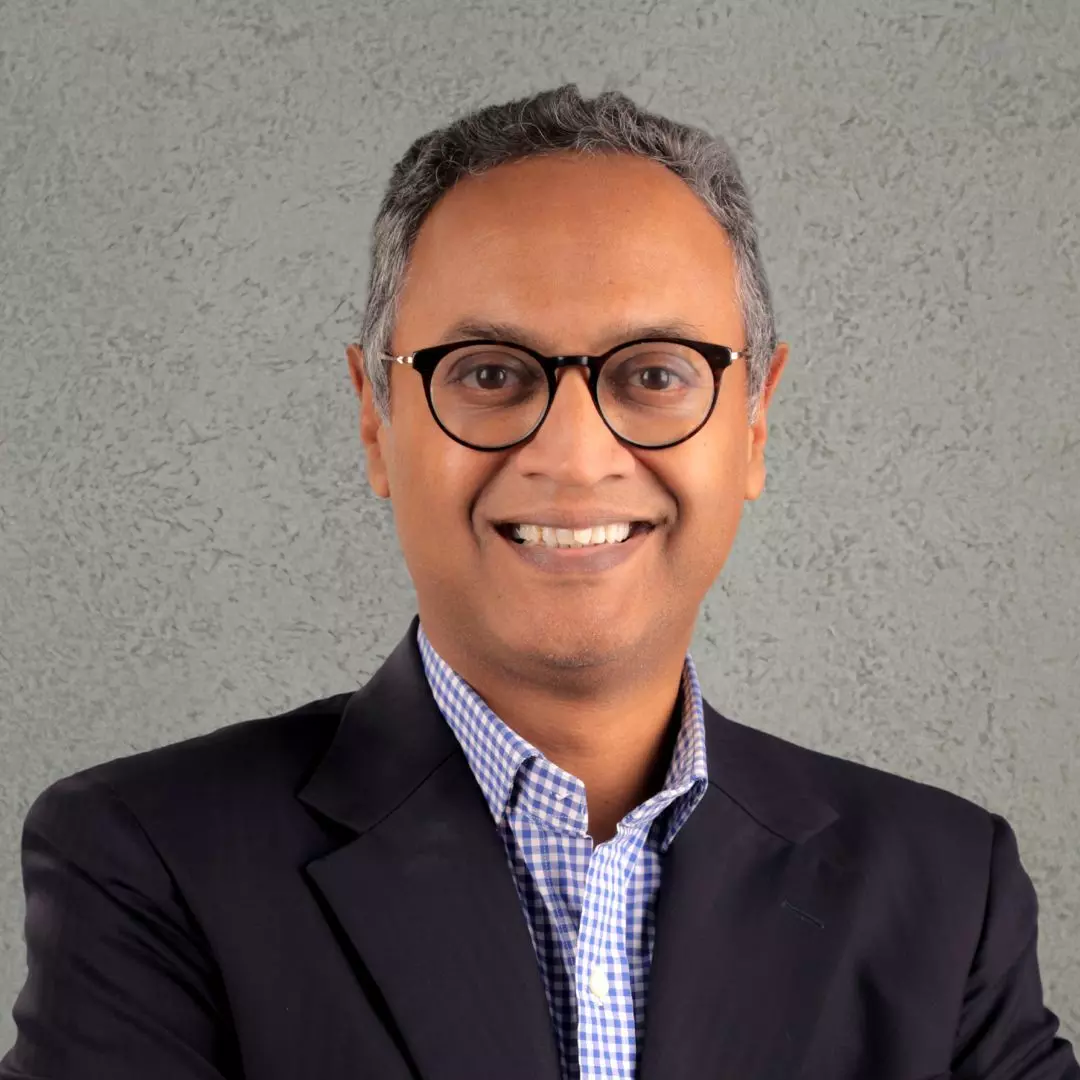
On Episode 774 of The Core Report, financial journalist Govindraj Ethiraj talks to Nishank Goyal, CEO at Masters India.
SHOW NOTES
(00:00) Stories of the Day
(01:14) Iran tensions lead to markets flip flopping
(03:12) Gold, silver hit record highs again, quite predictably
(04:03) Indian exports to the US are holding steady for now
(05:52) Oil prices pull back as US says will not attack Iran for now
(12:02) China trade surplus hits record $1.19 trillion despite US tariffs
(22:29) Feedback
Register for our Exclusive live event on the Budget 2026
Register for India Energy Week 2026
https://www.indiaenergyweek.com/forms/register-as-a-delegate
NOTE: This transcript contains the host's monologue and includes interview transcripts by a machine. Human eyes have gone through the script but there might still be errors in some of the text, so please refer to the audio in case you need to clarify any part. If you want to get in touch regarding any feedback, you can drop us a message on feedback@thecore.in.
—
Good morning, it's Friday the 16th of January and this is Govindraj Ethiraj broadcasting and streaming weekdays, usually from Mumbai but presently in transit.
Our top headlines…
Iran tensions lead to markets flip-flopping once again
Gold-silver hit record highs quite predictably
Indian exports to the US are holding steady for now
Oil prices pull back as the United States says it will not attack Iran for now
And China's trade surplus hits a record $1.19 trillion despite US tariffs.
War and Trade
When it's not trade it's war or it's the other way around. On Wednesday Iran closed its airspace for five hours which led to a scramble amongst airlines to reroute traffic passing through which in turn impacted quite predictably Indian airlines like Air India and Indigo who announced delays and potential cancellations. Elsewhere the government of India asked all nationals currently residing in Iran to leave by any available means as the security situation in that country deteriorated further following massive anti-government protests and a crackdown on those demonstrators.
Now there are twin concerns. The first is the intensity of the demonstrations in Iran and the violence that's accompanying it. The second of course is that the United States might attack anytime in solidarity with the protesters which President Donald Trump ruled out on Wednesday, Thursday but whether this was just a slight or not remains to be seen.
Oil prices fell nevertheless and more on that shortly. In India and Mumbai the stock markets were closed on Thursday for civic elections in the city or BMC elections as we call them which is also the reason we did not have an edition that's the core report on Thursday morning. As you know we take a break whenever there's a markets holiday.
The holiday that was on Thursday or yesterday was declared the week before and not obviously the best way to do it. If it had to be a holiday it should have been declared much earlier. Ideally at the time the elections were announced which was exactly a month ago.
On Wednesday markets were down further in any case and there was no indication of a turnaround on Friday. It could of course happen but there is no signalling to that effect at this point or anything that we can see except that mild relief of no attack on Iran by the United States at this point. I do stress at this point.
India is however awaiting clarity and this is the trade part on whether it will be hit with a 25% tariff on exports to the US because it exports to Iran though it's barely over a billion dollars and the government has said here that this is mostly of a humanitarian nature. Either way we need clarification.
Gold and Silver
Gold hit another record high on Wednesday along with silver before pulling back slightly as geopolitical and economic uncertainties once again pushed investors towards safe haven assets like gold and silver.
There are also expectations of federal reserve rate cuts in the United States. Spot gold was or rather hit about $4,619 on Wednesday after hitting a record high of $4,641 per ounce. Meanwhile the artificial intelligence and chip mania continues in full steam.
TSMC, that's the Taiwan semiconductor manufacturing company, on Thursday reported a 35% increase in fourth quarter profit. Beating estimates and hitting a fresh record as demand for AI chips remains strong. The world's largest contract chip maker has now posted year-over-year profit growth for eight consecutive quarters according to CNBC.
Steady Trade
India's merchandise trade deficit widened slightly to about $25 billion in December as imports rose while exports to the United States remained firm despite those tariff hikes. America has imposed tariffs of 50% on certain Indian goods from late August and that has hit shipments of chemicals, textiles, seafood exports and food items.
The overall exports seem to have stabilised. India's commerce secretary told reporters and Reuters that U.S. exports have grown year-on-year in the first nine months of the current year and exports could be more than $850 billion for the current fiscal year ending March 31st, 2026. Merchandise exposed to the United States were down to about $6.8 billion in December from $6.9 billion in November but shipments were actually up year-on-year by 9.75% or close to 10% to about $65.8 billion for the first nine months of the year 2526.
Discussions are on between trade negotiators from both India and the United States and we have to see where that goes. Overall India's merchandise exports rose to about $38.5 billion in December from $38.1 billion in November. The more interesting point which is also a continuation of sorts of what we saw last month is that India's push to diversify exports towards China, Russia and the Middle East with a lot of incentives and trade pacts including with the European Union has cushioned shipments after the U.S. raised tariffs in late August to that combined 50% including a 25% tariff because India is importing oil from Russia.
The India Energy Week Segment
Oil prices fell more than 3% on Thursday after President Trump said that killings of demonstrators during protests in Iran were ending, easing concerns over military action against Iran and therefore potential oil supply disruptions. Brent futures were down a little over $2 to about $64.33 a barrel on Thursday afternoon and West Texas intermediate crude was at about $59.96 so just under $60.
Trump said that he had been told that killings in Iran's crackdown on protests were easing and he believed or rather that he believed that there was no current plan for large-scale executions that is executions of protesters and that the U.S. is adopting a wait-and-see posture after threatening intervention earlier according to that Reuters report. On Wednesday Brent had hit a high of $66.82 or closing in on $67 which is the highest since September. The U.S. is however withdrawing personnel from military bases in the Middle East according to an official on Wednesday after a senior Iranian official said that Tehran had told neighbours it would hit American bases if Washington strikes according to that Reuters report.
More Tax Travails
In a setback to Tiger Global Management, the venture capital firm the Supreme Court of India on Thursday upheld the Income Tax Department's claim that capital gains arising from the U.S.-based investor's $1.6 billion exit from Flipkart in 2018 is taxable in India. The exit from Flipkart happened when Walmart acquired a controlling stake in the Indian e-commerce company and that was or rather is still one of India's largest cross-border deals according to a report that summed it up in the Mint newspaper. The Supreme Court set aside a Delhi High Court August 24 judgement which quashed the tax demand and had ruled in favour of Tiger Global.
The larger point here is that this could change how India taxes foreign investors and how it reads the India-Mauritius double taxation avoidance agreement. In 2016, India had amended the India-Mauritius tax treaty to curb tax avoidance stipulating that shares acquired on or after 1st April 2017 would be taxed in the country. Investments made before this date were grandfathered and continued to enjoy tax exemption.
The key issue therefore was whether Tiger Global could claim capital gains tax exemption under the treaty for the sale or whether its Mauritius-based entities were more like front companies controlled from the U.S. implying a misuse of the treaty and making the gains taxable in India according to that Mint report. So in the ruling, the Supreme Court agreed with the tax department that Tiger Global's Mauritius entities were only routing vehicles and the real control and decision-making lay with the U.S. parent and it also said the focus must be on the real purpose and substance of the transaction rather than merely on the location where the company is registered. This of course brings back memories of Vodafone, a dispute that arose in 2007 when Vodafone acquired Hong Kong-based mobile operator Hutchison Wampoa for about $10.9 billion.
At that time Vodafone International had acquired the share capital of Hutchison with its headquarters in Hong Kong and the sale was made by another Cayman Islands entity of Hutchison Group. The Indian tax authorities issued a notice demanding $2.2 billion as capital gains tax because of that transaction between those two companies. Vodafone however said that the transaction did not involve the transfer of any capital assets situated in India but the income tax department obviously disagreed.
Now there is much more to this but we will pick this up in the next day or two because this is a case that is likely to invite much discussion in coming days.
Auto Market
Meanwhile just to give you a sense on how the top end of the automobile market is doing, Mercedes-Benz says its revenues in India in 2025 grew thanks to strong demand for its high-end luxury cars even as strong competition from BMW in the entry level of the luxury market pulled down its overall sales. So Mercedes sold about 19,000 vehicles in 2025 versus 19,500.
BMW sold about 18,000. The interesting thing is that demand for its top-end models grew about 12% and its performance car brand AMG grew about 34%. Of course the volumes are small.
The point to note is as Mercedes says is the average selling price of a Mercedes in India now is $111,000 up from about $98,500 two years ago.
Is IT Looking Up?
Infosys which is India's second largest software services company has raised its revenue forecast and signalled a healthy demand outlook referring to steady discretionary tech spending and renewed momentum in its core financial services business. Its net profit for the last quarter though fell about 2.2% and the company said large order bookings defined as deals about 50 million dollars rose to about 4.8 billion dollars from 3.1 billion dollars in the previous quarter and 2.5 billion dollars a year earlier.
Infosys said that they had become the AI partner of choice for the largest clients in financial services and energy sectors and therefore they saw a good outlook. Data consultancy services and HCL tech who also beat revenue estimates earlier this week also talked about AI-led demand according to a Reuters report which summed it all up. Last month Accenture which is headquartered in the United States also beat first quarter revenue estimates on strong demand for AI-driven IT services.
Elsewhere in banking Japan's Sumitomo Banking Group or SMBC has got an in-principle approval to set up a wholly-owned subsidiary in the country according to a statement from the Reserve Bank. SMBC picked up a 24 percent in Yes Bank but was so far operating through a branch. The larger point here is that there are several Japanese financial institutions who are expanding their presence in India as we speak.
China's Surplus
China's trade surplus the difference between exports and imports has hit 1.19 or close to 1.2 trillion dollars in 2025. Exports jumped five and a half percent from 2024 in dollar terms compared with 5.9 percent the previous year according to a report in the Wall Street Journal which quoted China's customs agency.
Shipments to the U.S. fell but Chinese manufacturers found new customers elsewhere and exports to the U.S. dropped actually 20 percent in 2025 but exports to several Southeast Asian countries went up 13 percent, the European Union 8.4 percent, Latin America 7.4 percent and Africa 26 percent. So this gives you a sense on how China is mitigating its export basket as India also is. The Wall Street Journal report also points out that as some U.S. buyers have adjusted sourcing to sidestep higher tariffs on made-in-China goods supply chains that have shifted from China to places like Vietnam or Mexico still rely on Chinese components or equipment keeping China's formidable manufacturing ecosystem busy.
Tax and Technology
With the union budget 2026 coming up on the 1st of February tax collections both direct and indirect are going to be in focus. How should companies particularly smaller ones who are growing fast or even larger ones for that matter be looking at their tax and their tax compliance preparedness and processes.
I spoke with Nishank Goyal, CEO of Masters India, a GST subida provider appointed by the government's goods and services tax network and it runs a software solution and has been doing so for more than nine years. I began by asking Nishank who has been partnering with us how the nature of compliance has been changing.
INTERVIEW TRANSCRIPT
Nishank Goyal: And this started with when I entered business about nine years back, I started this company, helping companies pay tax. And at that time, no one sort of realised how big this would become or how big this has become today. Because historically, taxes have been something that's been done by back office, you do it, and you wait for auditors to come in for them to check it.
And then essentially, government would check your files later on about two to five years later, and you would get a notice. And essentially, that is what back office dealt with. But today, it's real time.
When I say real time, essentially, when you're moving your goods from your factory, even before that, when you're generating an invoice to your customer, it must be reported to the government first before it can go to the customer. So government has sort of now officially become your accountant, where they keep getting all the records of your business transactions. And that is what has changed over nine years.
Government just started with monthly return filing back in 2017, then introduced eBay bills in 2018. And then we had invoicing in 2020. So today, government gets a record of whatever you're doing, whether in terms of sales, whether in terms of purchase on real time basis.
So that's a big, big shift. And today, these systems are connected. Earlier, you could report something to one department of government, and you could report something else to the other department of government, they wouldn't know.
And today, you do something in GST, and you get a notice from income tax department. And I think that has been news recently, wherein people have started talking about how government has access to all this information and how they're getting these notices. So today, clients have become real time.
And I wouldn't blame government. I think there are both advantages and disadvantages. Obviously, as we move towards real time compliance, there are challenges, right?
It takes some effort to change. We all know that bringing change, especially when we talk about large enterprises, it takes some effort. But the advantage is that today, everything points in one direction.
You don't waiting for years to pass by for everything to reconcile and come together. So you know that if you've done it correctly, it's done and dusted. If you've not gotten notice in under a year, you're not likely to get a notice, right?
So there are both advantages and disadvantages. As I said, I would put them in short term and in long term, they're just advantages of what's happening in the country today.
Govindraj Ethiraj: Right, as we look ahead, and this sort of more real time compliance, as you called it becomes and has become a way of life, what should companies be doing within to ensure that they are up to mark or up to scratch with these changes?
Nishank Goyal: So I think we work with all kinds of companies today. And some of the largest companies operating in India are our customers. And we have seen that the companies that are thinking of tax, not as an afterthought, but something that has to be the foremost requirement or something that has to be dealt with regularly are the most successful ones.
And they do not see the challenges such as what we were talking about just now. They rather see these things much in advance and they say that, hey, it's okay, it's going to happen. There's no point crying about it.
There's no point basically arguing over it. Let us see how we can take this change, use it to our advantage. And I think that is what the most successful companies in India today are actually doing.
They're seeing tax as a way to bring change within organisation, a way to bring change within their supply chain. Because tax today is not just limited to what they are doing within their organisation, it extends to their vendors on one side and it extends to their customers on the other side. And it allows companies to sort of take this unorganised sectors in some cases, right, where they are the leaders and organise, which in term help them in medium to long run to sort of organise the complete supply chain.
And I think that's what businesses have to do. Businesses have to look at tax as a way to bring change. If they're able to do that, then yes, they'll be at the forefront of it and they will only see benefits out of whatever the government is doing today.
Govindraj Ethiraj: Right. That's an interesting point. And if you were to, you know, leave CFOs with a real-time compliance checklist or a readiness checklist in the next, let's say, year or two, what are your top items or checkpoints that you would include in that?
And what could be the metrics that you would track monthly to know that it's working effectively and efficiently? It would not be prudent for me to advise CFOs.
Nishank Goyal: They've got much more grey hairs than me at these large organisations. And then they have their own audit control set up and then they are working fabulously. What I see today is that one thing that some of the organisation leadership is missing is that when they do reconciliation, when they basically match their ITC record today, we often see that they continue to rely on their books and say that, hey, even if it doesn't match, the vendor's data doesn't match, let it be.
We will look at it later on. And I think that will become a problem as today, this year, government introduced something that is called IMS, Invoice Management System. Originally, the idea was introduced back in 2017, but government had to sort of take it back because the systems were not ready.
The government was not ready. The businesses are not ready for it. What really that means is that government expects you to accept or reject each and every invoice that you get or you generate.
And that is a big change. It doesn't seem like it, but accepting or rejecting each invoice in real time is a big change. And today, I see that a lot of times because there's so much workload within the companies, organisations try to sort of do what's necessary and pocket what's not necessary to the later.
And I think that's one thing that CFOs need to start tracking, wherein the amount of mismatch that exists today in their books versus their vendor's book needs to be reconciled, if not monthly, at least quarterly. Reconciled, not just in their excels, but reconciled and ledger matched payments done and closed. If that is not going to happen, then they are obviously going to see a big problem in the next 12 to 18 months, where once government implements these changes, they are going to face some challenges.
So that's one thing that I see CFOs should start doing immediately.
Govindraj Ethiraj: Right. And last question. You know, this is an API world and, you know, things are connected and I mean, both sides, whether it's a provider, software provider, or the software user, both need to be aware of what's changing or what's going on.
Is there something that you would want to highlight in terms of what's fundamentally changed in this world as opposed to earlier? Or does this fit into the sort of larger approach of real-time compliance that we spoke about earlier? Yes.
Nishank Goyal: So very interestingly today, the word tax is being clubbed with technology. Historically, they have been pulled apart. Tax has not really interacted with technology much because government wasn't technology first and therefore tax department won technology first.
Right. So it was all paper world and you would file forms and you would submit those forms. And if you see today, apart from GST department, obviously income tax is coming up to speed.
A lot of work happens on very older formats, XBRLs and all of that. But with GST, government introduced the latest schemas and formats and we are running on APIs today. And that is one big thing that has changed with tax.
It has become tax technology today. And therefore, within organisations also, people are looking to hire people who do not only understand tax, but they understand technology too. So they can effectively meet the requirements of this changing world, meet the requirements that the government is bringing up.
Right. So today, a CFO within the organisation might not only be looking at, hey, do you know how to file GST? But hey, do you know, how do you implement controls that enable you to file GST every month without really relying on manual ways?
Because that's not an option today. Not anymore. One example would be that today an invoice must be an e-invoice, an invoice must be an e-waiver.
Right. All of that happens electronically. There's no manual way.
Especially with the kinds of organisations that we are working with today, some of these organisations are generating hundreds of thousands of invoices a day. Right. A person who doesn't understand the terminology of the API world will find it very difficult to actually do the compliance.
So today you talk to a tax person and they would understand what an API is. They would understand what a JSON is, what a schema is, because that's what the requirement of today's world is.
Govindraj Ethiraj: Right. Thank you so much, Nishank. It was a pleasure talking to you.
Nishank Goyal: Likewise, Govind. Thank you for taking this opportunity to talk about what's happening in the tax world.


