



 Newsletter
 Search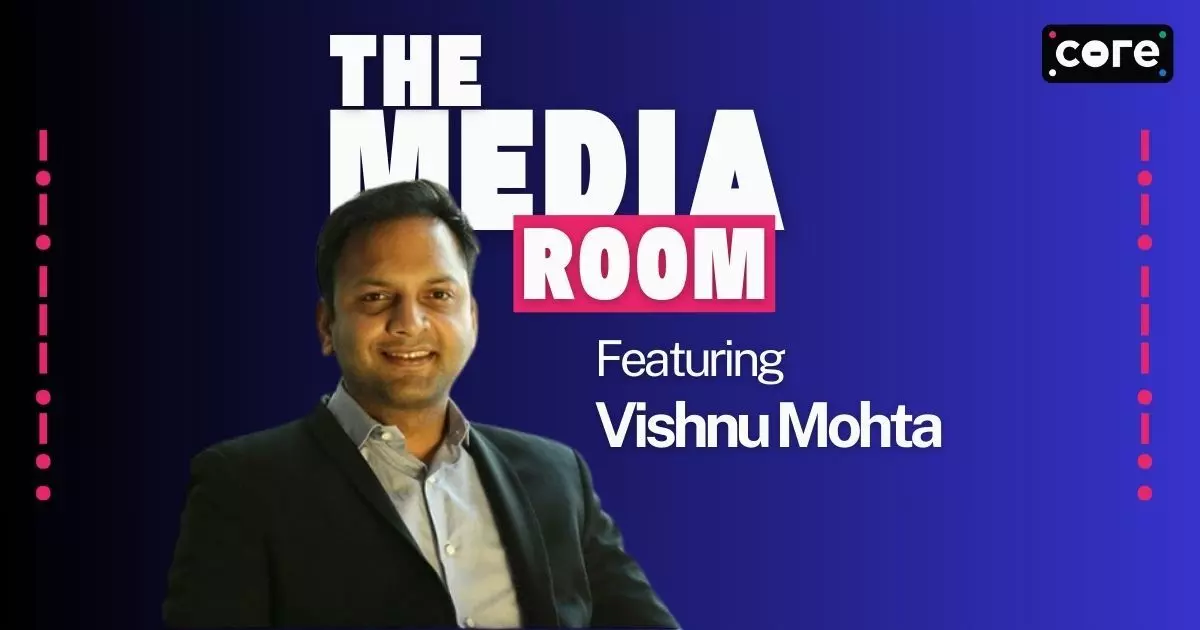
How Hoichoi Became India’s Most Profitable Regional OTT
- Podcasts
- Published on 30 Jan 2026 5:00 PM IST

Vishnu Mohta on Bengali Streaming & Scale
In this episode of The Media Room, host Vanita Kohli-Khandekar speaks with Vishnu Mohta, Co-founder of Hoichoi and Executive Director at SVF Entertainment, about building one of India’s most successful regional OTT platforms. The conversation traces Hoichoi’s journey as a Bengali-only streaming service and how a deep focus on one language and audience has enabled sustainable, profitable growth.
They discuss why Hoichoi backed a subscription-first model early, how it reached profitability ahead of larger platforms, and what makes the Bengali market unique across India, Bangladesh and the global diaspora. The episode also explores Hoichoi’s scale of original production, genre trends, the role of SVF’s 30-year legacy, and why creating viewing habits matters more than chasing blockbuster hits.
The discussion touches on experiments with TV-plus formats, micro-payments, audio storytelling, micro-dramas and the use of AI in content creation, alongside candid insights on regional OTT economics, IP ownership, monetisation challenges and why disciplined growth beats rapid scale.
Register for India Finance and Innovation Forum 2026
NOTE: This transcript is done by a machine. Human eyes have gone through the script but there might still be errors in some of the text, so please refer to the audio in case you need to clarify any part. If you want to get in touch regarding any feedback, you can drop us a message on feedback@thecore.in.
—
TRANSCRIPT
Vanita Kohli-Khandekar: Hello and welcome to the media room. Hoichoi is an unusual streaming app. It's a Bengali OTT which launched in 2017 and is profitable, unlike many of the larger versions.
Also, it is one of the few language OTT apps, I think, along with Aha and Stage, which have built a sustainable, robust subscription business focused on originals. So, it does a lot of its parentage, which is part of SVF, which is a 30-year-old film production and distribution firm based out of East India. And it is this strength which Hoichoi has used to build a sustainable streaming business in Bengali.
There is talk about it doing other languages, etc. But to understand where Hoichoi was coming from, what are its strengths, how does it operate, and how is the Bengali market different from other markets, I had a long chat with co-founder of Hoichoi and the Executive Director for SVF Entertainment, Vishnu Mota. Hi Vishnu, welcome to the media room.
Wonderful to have you here.
Vishnu Mohta: Thank you, Vanita ji. It's an absolute pleasure to be talking to you.
Vanita Kohli-Khandekar: Vishnu, you know, we've spoken about Hoichoi very often over the years and I wanted this conversation of ours to talk about how a non-Hindi, not a platform like Netflix or an Amazon, but we are talking about a local homegrown platform which deals with the Indian language and only one particular Indian language on its journey. So, first of all, just let us tell my viewers what is Hoichoi all about and also the fact that it is born out of SVF. So, I think that connection also I wanted to come through for the viewers and then I'll ask more specifics.
Vishnu Mohta: Sure. So, Hoichoi is an OTT platform which is entirely focused on Bengali as a language and, you know, there are two large regions that speak Bengali, there's obviously India and there's Bangladesh, which as a country only speaks Bengali. So, we forget that part of the equation sometimes, but collectively this language is spoken by about 250 million people globally.
It's the sixth or seventh spoken language in the world and, yeah, we started Hoichoi in 2017. I started working on it in 2016. So, we were very early, relatively very early on trying to think about having an offering in the OTT space.
At that time, it was a little bit of a crazy strategy, right, to think only regional and then to only think pay and, you know, to understand the story of Hoichoi, you have to a little bit understand the story of SVF, I think. This is a company that has focused on this entertainment in this language for the last 30 years. So, from 1999, exactly 30 years and, you know, we are an end-to-end content production company starting with films and television content and, you know, music and IP syndication and host of businesses within that.
So, it was our way of thinking about it's an opportunity for us as a content house to go direct to consumer and that was the initial thinking about, you know, we have a great opportunity in this third form of storytelling. So, there's films and television and this is like a third wave of storytelling, if you like, which has got a mix of elements of films and television. So, it requires the quality of film but the discipline of television in some way and it allowed us to, that was the idea behind Hoichoi, if you like, to go direct to consumer and to do something in this emerging form of storytelling.
Vanita Kohli-Khandekar: And you're what, eight or nine years old now, if I'm not mistaken, right? A hundred crore in top line, roughly, and have you hit profitability because that's what I find fascinating, many language OTTs are about to hit profitability while the large ones haven't yet.
Vishnu Mohta: So, I mean, Hoichoi has been marginally, I would say, marginally profitable for the last four years, in fact.
Vanita Kohli-Khandekar: And you've not sought capital elsewhere, you know, again, I find that fascinating because some of your other sort of peers in the same space and other languages have sought investment.
Vishnu Mohta: Yeah, we've had some strategic discussions but nothing that has happened and that's fine, because we're happy doing it our way. Although, I've been told from the day I started Hoichoi, almost about, you know, you're almost creating this to spin it off or to sell it off or whatever in nine years. Just as excited.
Vanita Kohli-Khandekar: Fantastic. But, so give me a sense of the texture of this market, Vishnu, how is Bengali different and then you operate within India and Bangladesh also. I'm assuming that's a large portion of your traffic.
Some sense of traffic and how is this market different compared to, say, a Hindi or compared to, let's say, you know, in our heads it's always Netflix or Jio or Amazon when we think of OTT.
Vishnu Mohta: So, you know, the community, let's just call it Indian Bengali community to start. As you know, it's a very versatile community which has a very strong legacy of, you know, literature and music and stories and books and things like that, right. And that lends itself very, very nicely to films and television as an art form.
And in a lot of ways, this is a community that gives you a lot of leeway for experimentation. You get a lot of marks and a lot of love for trying to try out new concepts and new stories and new ways of telling the story, if you like. And from that perspective, it's a very challenging, yet it's a very rewarding journey to create content for this community.
Like I said, we've 30 years and we still are excited just as much about what we're going to do in hopefully the next 30 years, if you like. So, from that perspective, you know, it's a very unique community. It's a very intelligent, intellectual community.
Vanita Kohli-Khandekar: It's good like Malayalam or Bengali, would you, I'm sorry, Malayalam or Marathi, I would, you know, those are the two genre, the languages where I'm familiar, yeah.
Vishnu Mohta: Absolutely, but for sure, and I think we look at each other with a lot of reverence and respect. Similar, a lot of respect, smaller sizes compared to the rest of the cohorts of language. Although, you know, in a way, Bengali television is immensely huge, yeah, back of various things.
But yeah, I mean, so that's Indian Bengali. In Bangladesh, while we are, you know, two countries and two communities that speak the same language, culturally, we have trained or we come from a very different place altogether. But at the same time, there's a lot of common love.
Because, you know, there was a time that the two places were actually combined into one before the partition, you know. So, there's a lot of cohort of love and respect for each other. And, you know, we, when we started in Bangladesh about five years back, we started that as an independent office with an independent team and independent state of court.
Because we can't profess from India to think, you know, we'll understand whatever we create here, we'll be passing over very easily there and vice versa. So, the idea was to...
Vanita Kohli-Khandekar: No, no, please, idea was?
Vishnu Mohta: Idea was to, you know, to create content from both the regions and to make it for each other and the rest of the world where there's a big diaspora of audiences from both the places, actually. So, that's the...
Vanita Kohli-Khandekar: What are the top shows in India, in Bangladesh? I mean, how do they differ? What is a big top show, what people are watching in India and Bangladesh and for rest of the Bengali speaking world?
And of this, sorry, there are lots of questions here. Of this 250 million, how much is India and Bangladesh? How much is rest of the world?
And what it seems to work in each of these sort of pockets?
Vishnu Mohta: So, there is a, I mean, in India, obviously, the diverse genre of content works. I mean, every year we come out with anything between 20 to 25 shows every year by the clockwork, where we've done about 200 shows till date from Kamba Hoi Choy till now. So, there's a diverse set of genres.
Obviously, there are the classics of the detective shows, which are a big draw. We've done what is considered to be TV plus content for the last five to seven years. It's been a mainstay for us as an important part of customers.
Horror is very well off late for the last two years.
Vanita Kohli-Khandekar: Yeah, so genre is taking off now, horror, even cinematography.
Vishnu Mohta: Yeah, yeah. So, it's, I mean, I think it lends itself very well for OTT. It attempted that very early on.
The first, one of the first shows that we came out with when OTT launched was called, a show called Cartoon, which I personally really loved, a horror show, but it did not work at all. So, it worked for the next three, four years, but then we attempted it again three years back and it went very well. In Bangladesh, again, it's a, it's a little bit more male skewed in a way.
It's more thrillers that work really well over there. There's one over there called Takbir, which does extremely well. There's a show called Mahanagar, which does extremely well, very character driven.
Karaghar, so various shows that have done very, very well over the years. Very strong, you know, takers in the local market, because in a way we were, we were shaping the country's economy in a way from a content economy point of view, because they were in a very bad state and television is literally non-existent. So, we had to almost create an ecosystem of content creators and infrastructure.
Vanita Kohli-Khandekar: So, you have locals from in Bangladesh, you shoot locals in Bangladesh.
Vishnu Mohta: Oh yeah, yeah. We, it's entirely done by the team there. I mean, we have, except for reviewing things, we, that operates like a completely independent team and the content that is created there.
Actually, we've created about anything between six to eight shows over there every year. And that's entirely created by the units and team in Bangladesh, because very difficult for us to really understand the milieu of what people want in that country and in that diaspora. It's very, we have, we've made a, you know, very clear from the beginning that we have to act very local and unlearn almost before we learn actually.
Vanita Kohli-Khandekar: Yeah, because you've used to running SVF here. So, to do, you mentioned, can you share some sense of how big Hoi Choi is in terms of uniques and subscription versus ad, some sense of the shape of the business?
Vishnu Mohta: Yeah, so, I mean, okay, so let's put this way, population wise, the other question of yours was 250 million people, how does that get made up? So, obviously, Bangladesh as a country has about 180 million people. It's one of the most populous countries in the world, obviously, but very early on in its digital transformation as a country, if you like.
So, maybe a decade back, maybe. India has about 60, 50 to 60 million, Bengali speaking as a population, roughly about you know, I think 2 to 3 million diaspora overall. For us, the revenue split is 60% India, 10% Bangladesh and 30% rest of the world.
And we are only, we have zero money we make off advertisement, there is no in-stream advertisement. Okay, so it is subscription driven? It's subscription driven and I would say what we call as branded content.
Hoi Choi freemium is, you know, we got a lot of enquiries from people, from brands who wanted to reach out to our audience. And we wanted to stay strong, the fact that we did not want to have in-stream ads on the platform. We wanted to do that is we wanted to create a bucket of free content for our customers and have that paid by the content partner, by the brand partner, if you like.
And content has got, you know, strong in-content placement of the brand's message and things like that. But at the same time, we retain the entire creative control on that content, if you like.
Vanita Kohli-Khandekar: So, what is the content?
Shows or films?
Vishnu Mohta: So, it's a 4 to 5 episode show, shorter in, it's about 10 to 15 minutes per episode. So, it will be, let's say, 50, 60, 70 minutes of content, if you like.
But the strong brand's message presence in that content, but at the same time, independent is a good show in its own right, also. But we make it available free on the platform. So, in a way, the customer is happy because it helps, I mean, we are happy because it helps us create a funnel of free customers that become paid customers.
You know, in a way that if the person is watching that particular content, the registration for the brand is a lot higher because you're not being interrupted in that experience. And you've sort of been imbued that brand's message as part of that watch that you were already doing. And yeah, the customer is happy, they did not have to pay for that content for that matter.
Vanita Kohli-Khandekar: So, I've seen this in TV, I've covered media for more than 20 years and I've seen it in TV. Scaling up within a language or two languages is always tough. Eventually, you need to either ally with a larger partner like MaaTV went to start or AsiaNet went to start.
Or I don't know how else or you expand geography but you are already targeting the biggest population of Bengali-speaking people or you expand into languages. And for now, of course, that pressure may not be there on Hoy Choy. But your scale of producing shows is something else.
I remember, correct me if I'm wrong, Netflix earlier this year in January, it announced a slate of 26 shows nationally. You do 25 shows in one language in a year. How do you have that kind of scale?
Is it because it's subscription driven? Because I don't see other language services having that kind of scale.
Vishnu Mohta: So, I mean, very early on one of the things we realised is that this is a subscription business. So, television gives original content in a way every day. Few hours per channel, original content every day.
You could at least do something every week, if not every day. There needs to be some excitement for the customer to look forward to every single week. That could be across various buckets of content.
It could be an original show that's created either in India or in Bangladesh. It could be a television or digital premiere of a film, SVF or that matter on the other weeks. And there could be a legacy important content in some weeks, maybe five to ten weeks, which we resurface, we rehash somewhere or the other and try to make available.
So, roughly 40 to 50 weeks in a year, we try to create something of excitement for the customer, if you like. And that's why I think business, I mean, at least the way we think about it is that we do not have the opportunity to go very wide in terms of the languages and things like that of the content. We at least wanted to go very deep in the offering of content that we have, so that at least when a customer thinks about entertainment in Bengali as a language, we should be the default.
And that's our mission, actually, to be the default content destination for people who speak Bengali.
Vanita Kohli-Khandekar: I got derailed by how many uniques do you have and how many subscribers do you have? I know subscribers is a number you can share easily.
Vishnu Mohta: No, I don't know share those numbers and I've never done that.
Vanita Kohli-Khandekar: Uniques also?
Vishnu Mohta: I haven't shared any of them.
Vanita Kohli-Khandekar: But okay, so coming back to scale then, how do you grow from here? How do you grow from here? I mean, it's a question I'm sure you've asked yourself also.
Vishnu Mohta: Yeah, so fair question. And so a couple of things, I think there's enough headroom to grow within Bengali as a language also. I see between India and especially Bangladesh, you've got 10-15 years of headroom, of course, because I don't think we've scratched the surface of what is possible in terms of making a customer pay for content on the internet.
That's one, if you like, thread which continues to happen. But at the same time, we've been experimenting, like you mentioned about TV Plus as a segment that we've been talking about for a few months now. There is actually again, it's an experimental format where we are saying, okay, you know, one of the bigger cohort of probably experienced OTT is going to be people who transition from television.
Can we do something that's more than 5 to 10 episodes, but less than 1000 episodes, let's say. And it's, I don't know, 40, 25 to 50 episodes. And we bring that up over four to five weeks of releases to build a little bit of a habit and repeatability in the customers.
Vanita Kohli-Khandekar: As a weekly, you're thinking weekly or you're thinking of a daily drop, weekly drop?
Vishnu Mohta: For now, yeah. I think television has a phenomenal job of just the pace at which they put out content, right? And our teams within that also they do an amazing job within that.
Vanita Kohli-Khandekar: And making money from it.
Vishnu Mohta: And making money from it.
Vanita Kohli-Khandekar: They do a phenomenal job of making money from that daily content, which I think streaming has mastered yet.
Vishnu Mohta: And that cycle is insane. So, I mean, that's aspirational. Look, for OTT, everybody in the OTT business will always aspire to have the reach and the base of a television broadcaster.
Yeah, please now. Yeah. So, I mean, TV Plus is a time to say, okay, you know what, can we do something in terms of length of content?
Can we do more television-ish content, which has a flavour of web? It is more television, if you like. But at the same time, to introduce that customer to a pay ecosystem, can we make it, let's say, I don't know, 50 episodes, can we make 15 or 20 episodes free to build a habit?
And thereafter, you start charging for it. Thereafter, when you start charging for it also, can you actually, instead of subscription, can you charge on a per episode or a per season level? Micropayments.
Micropayments, et cetera. So, I don't know whether it'll work or not, but...
Vanita Kohli-Khandekar: You haven't rolled it out. Have you rolled out Micropayments? Not yet.
Vishnu Mohta: I mean, I think we are lagging behind. We've got one show which is complete and ready. The second one is going to shoot very soon.
But I think from a technology standpoint is where we are stuck. It's not the content standpoint where we are stuck. To enable that Micropayments, Rail of Payment, because that requires a different kind of entitlement structure from a technology standpoint from our internal CMS's point of view.
It's not the content side, I think. Yeah, but we'd love to do, I think by April or May, we would love to do three of them. So, we have some data to go by about what worked, what didn't work, and then build out that from there.
But yeah, that's a, if you like, an experiment. The other experiment we're doing is with FM, which is basically audio stories. And again, in a lot of ways, we think of it as a funnel, right?
Because we end up making only 25 shows, but we end up wanting to make a lot more maybe sometimes. So, that could be a great way to test out quickly enough, whether there's an appetite for a particular story from the customer. So, that's something we've been at for again a while.
And hopefully, we'll launch that soon. The third is Microdramas, which I think everybody is doing now. And we've chatted about that.
Vanita Kohli-Khandekar: You've launched Microdramas? Or you're planning to?
Vishnu Mohta: Yeah, no, we've launched that. It's called Super, S-Double-O-P-E-R. It's a beta launch.
I mean, in a way, it's very quiet.
Vanita Kohli-Khandekar: Where's the money in Microdramas, Vishnu? Where's the money? Tell me.
Unless you're subscription-wise, you use Microdramas as a funnel for subscription. I don't see the money in Microdramas.
Vishnu Mohta: I think you're absolutely right. And I think what we're looking for is the first big success. What I'm also on the lookout for, and one of the reasons we are going slow on this, it comes as a part of FOICHO itself, is what I want to see is what is the first Microdrama success out of India.
Because that will give us an idea about what customers want to watch. Or a large percentage of people want to watch. Once you have watch time, once you have a big enough allegiance for a particular story, or a particular thread, and the stories, then I think monetise becomes a lot easier.
I think we haven't even tried that first. So, I'm almost going to see what others are doing, and seeing whether success is from them. Let others make those mistakes.
And I always believe in doing things at the right pace. I mean, no rush, no land grab, no vanity in being the first or the largest in this respect. And that's again in Hindi, for that matter.
So, we make content in Hindi. We're making it in Bombay, out of our Bombay's office, in fact. Because if you're in Bombay, you might as well go out to the largest language, because it's not as expensive to make that content, to be very frank.
Vanita Kohli-Khandekar: I'm going to come back to language. But first, I just want to go to HOICHOI TV for a minute. And micro payments.
How is the pricing different from regular HOICHOI there, when you talk about micro payments? I mean, if I was to take HOICHOI for a month or a year, what does it cost me versus? Because are you trying to go below that to the bottom of the pyramid?
I'm assuming that's the idea.
Vishnu Mohta: Absolutely. Middle of the pyramid, tier 3, tier 2, tier 3. In fact, more deeper, more wider.
Definitely, that's the whole idea. And if you're a HOICHOI subscriber, for that matter, you get this content for free. You don't have to pay extra.
That's first and foremost. That becomes part of your bundle, if you like.
Vanita Kohli-Khandekar: What are you paying as a HOICHOI subscriber?
Vishnu Mohta: So, HOICHOI is about 1299 a year now. 1299 would be not cheap. I've never been cheap, actually.
So, again, I've always believed that.
Vanita Kohli-Khandekar: I'm very glad.
Vishnu Mohta: No, that's the reason to exist as a business. I mean, to remain a little bit profitable, if you like. Because otherwise, it never made sense to me to spend 300-400 rupees acquiring a customer and then getting 350 rupees from that customer and then talking about long term value.
It's always about money and money and very money in that respect. So, cash in, cash out. So, if you talk to me about, you know, you talk about all these metrics, right?
I mean, the one that matters to me is what is the cash in, what is the cash out? At the end of every month, every year. That's what you've done for 89 years.
That's what will enable us to survive. And a business goes out of business because it runs out of money, not because it is profitable or not profitable. It's also ideas or whatever.
Vanita Kohli-Khandekar: So well said. That's so well said. I remember just before COVID, Ajay Bijlee had said this.
Just when COVID hit and I was speaking to him about something and he says, you know, we just raised money for something else. But now, it's a matter of how has how much petrol. Yeah, yeah.
And he said, we have fixed costs. We just have to pay them.
Vishnu Mohta: Yeah, yeah. So, till that point, you're independent to answer your question. You know, you're asking me about, you know, you're independent and not aligned to any larger media play at a national level, etc.
As long as we're independent, we'll pay the bills. I don't think we have to really worry for that unless something changes.
Vanita Kohli-Khandekar: But science, you see, the whole, like you said, the ambition is to make money. The ambition is also to grow. So, as you grow other languages, other markets, is that something on your slate or you are okay with this being the play?
Vishnu Mohta: No, no, fair question. So, again, I mean, we're only talking about Hoi Chahiye, but as an overall company, SCF has been making content in other languages to expand volume also, right? We've been making content in films and TV content and web content better in other languages.
And we continue to do that very, very aggressive manner. So, that's our way to, if you like, in some cases, we play the platform business. In some cases, we play content business, right?
And we do that on a case by case basis, depending on where we see the gaps and where we see our ability to be able to make a big enough 10. If you'd asked me, you know, even a few years back that, yeah, would you attempt a Hindi OTT or any other language OTT, I was like, we don't have the wherewithal to do it. And I don't know how we'll make money in that business.
I don't know if we have that magic formula to make that happen. But yeah, if you talk to me about some other regional languages, maybe there's something we can make happen.
Vanita Kohli-Khandekar: Is that on your mind?
Vishnu Mohta: No. No. So, I mean, it's always been on my mind.
I mean, I always respect, I was, you know, maybe not known so well, but I was a small part of Aha when they started, in fact.
Vanita Kohli-Khandekar: Yes. You told me this.
Vishnu Mohta: Yeah. It was a conversation with, can I not take the name, but yeah. I told him he'd sold off, you know, Starma and, you know, and I told him, sir, this is the new Starma if you want to do it, you know, and it's a lot tougher to do.
It requires a lot more energy because you're beyond just content, you're doing technology, you're doing marketing, you're doing customer service. You have to learn a lot about the, yeah. So, yeah.
So, I mean, that's where it started and I was initially a part of that team to help launch. So, I want to talk about, you know, this and I still remain, this is an open opportunity even now. I don't think there are many regional only OTT platforms in various languages of India, as many languages of India.
And there is an opportunity for that to happen in a very big way. And I'm talking about from an original content creation standpoint, not just from a film standpoint.
Vanita Kohli-Khandekar: But, you know, you've touched upon something which I wanted to bring up, actually. Why are we not seeing more action in all and especially in South Indian languages? I'm seeing Karachi, which is the state I am a part of.
Bengali, I'm seeing. I'm not seeing stuff enough in Malalam, in Tamil. Why are we not seeing more coming up?
Is it because cable penetration is very high in those markets? What is the play here?
Vishnu Mohta: I don't know. I would love to do it. But the point is that this is not an easy thing to pull off, right?
If you see, we've always believed that a language audience is a language audience, right? And each India is a country with many countries, right? Within it.
And each of them are a hundred in population. So you can't keep this because I understand I've done this. So I've done this and I've catered to this also.
For each of them, that's what at least we believe that you have to create content excitement every week for that community, if you like. That to happen, you have to think about 25 shows, 30 shows in some cases. Plus, you have to have the ability to acquire movies.
So it's not an easy, it's not for the fate hunted, for sure. So it requires the ability to create content and this ability to acquire content, ability to do technology right, the ability to do customer experience right, the ability to do branding right. So various skill sets as part of that thing.
So not many people have been able to get all of it right.
Vanita Kohli-Khandekar: So I will disagree here a bit.
Vishnu Mohta: Sure.
Vanita Kohli-Khandekar: I will not disagree. I will just point out that regional television already, the work of clearing the ground is done very well by regional Bengali, the Zees and all the other broadcasters have done totally clearing the ground, creating an ecosystem of creators, writers. So then is it still tough to get cracking in this space?
Vishnu Mohta: I personally think so because I think it's not.
Vanita Kohli-Khandekar: It's a different, it's a terribly different broadcast. Forget the technology but I'm saying are the business dynamics terrifically different.
Vishnu Mohta: It requires the quality of films with the discipline of television. That's how I think about it. That is true for streaming.
That's true for streaming, absolutely. You know the reason we are able to do it is because we've done both of them as a company. So I think OHO exists because of the 20 years preceding it right, not in isolation.
If we'd never be doing OHO and I'd never be talking to you in you know eight years on.
Vanita Kohli-Khandekar: I think you've hit the nail on the head there it requires the quality of film and the discipline of TV. I think not all markets have film quality abilities or talent on both systems.
Vishnu Mohta: And you know in some cases, okay so in some cases some of the television markets are very very low per episode cost markets. So very very low. I mean you'd be surprised in some cases you know at 50,000 rupees an episode and all of that so it's right.
So those kind of quality this thing you have a different ecosystem of creators that get you know and for OTT you're asking them to you know to to spring into something and film creators have their own way of doing things right. So they don't have that ability to maybe make five shows in a year or six shows in a year for you for your provider. So I think in a way it's I'm absolutely saying it is possible but I think it requires a lot of you know long-term thinking and a lot of ability to to shape an ecosystem, shape a community, shape a language, shape a industry if you like and that's a lot of hard work and a lot of yeah.
Vanita Kohli-Khandekar: But if what would your what would your two bits be to a new player coming into this space whether whichever language and are all languages extremely different as markets to operate in or are there rough principles which apply you know if you are for example going to Bhojpuri or you know going to Telugu or Malayalam or going to Marathi. Are there other lessons that Hoi Choy has learned are they applicable elsewhere or they'll be completely exclusive to Hoi Choy and the Bengali market?
Vishnu Mohta: No, no there'll be a lot of lessons to a lot of learning to to carry forward but the same time their own nuances you know you mentioned a few markets an example like say Bhojpuri it has a problem monetization challenges in terms of pay, pay as a market it will be a massive challenge because of the and I'm being a very gross cross generalisation here but I think from an income spread standpoint it might be on the lower end of the spectrum overall and you need a healthy base of you know middle and high income groups to be a pay market for that matter. Coming to another market let's say let's say Punjabi for that matter that television system that underpins OTT to some extent does not exist at that level not a lot of broadcasting there is not a lot of television content that gets created every day so in some of the other markets you'd find that the television market is too small and the film market is extremely big so what that means is that it's almost unaffordable to approach a film creator or film producer to to make an OTT content for you because they believe in IP ownership and they're you know they're looking for that.
Vanita Kohli-Khandekar: Which market is on your mind when you're talking about this?
Vishnu Mohta: No, Telugu is one example of that market.
Vanita Kohli-Khandekar: I'm thinking South Indian, South India may be a bit more.
Vishnu Mohta: Tamil and Telugu both both operate at that level right because they are very very large film but as compared relative to that television is not small but the per episode cost of television relatively is lower you know right but the film market is humongous right so so you want someone in the middle to be able to do OTT I guess right so because and you need to have that ability for that for that producer to people which are not two to three shows for you every year because otherwise 30 shows you know you can't deal with 30 producers it's too you can't make that happen yeah so I mean it's possible they have their own challenges there are a lot of learnings this I personally very firmly believe that it has to be done to answer your question or what would be some suggestion from my end it has to be originals led which is the harder part because if you're only film content you're just dependent on the next person coming along and buying content at a higher cost you don't own the intellectual property and ultimately it's an intellectual ownership business that's your defensibility that's your mode if you're able to do that right which is the harder part then you have something that is unique to you that nobody else can take away from you no matter how much competition and I think the mix is powerful but without original content it doesn't work very well in my opinion.
Vanita Kohli-Khandekar: You know one of the most interesting speaking of original content that I find and because you're part of SVF in fact I would ask you a question that how much of Hoi Choy's success comes from the fact that it is mothered by SVF and this whole thing of doing films based on Hoi Choy IP Eken Babu is the only one I know of I'm sure there are others you may be thinking of some but is that I mean I don't know if I've seen that very often I've seen games and you know books going either way but I haven't seen it with OTT series becoming films.
Vishnu Mohta: Oh it's happened not sure you'd have the example of like Sherlock Holmes etc so characters that just transcend beyond a level and people just want to come again and again in every format to look at that character and ultimately you know like you mentioned Eken Babu is a great example of that to happen we've done eight seasons of Hoi Choy of Eken Babu and three movies of Eken Babu each of them have done exceedingly well right because it's a franchise in itself right and I think even there are examples of Marvel content Marvel shows which would have yeah
Vanita Kohli-Khandekar: maybe I'm talking more of India I don't see that much potential.
Vishnu Mohta: We would love to do more of it I mean we want to we plan to as Hoi Choy Studios also which is our film division if you like where we release in theatres also we would love to do the other characters that we have on television on theatres you know for that matter because why not because it's a great way to expose you know newer audiences to that to that character to that personality to that to that world if you like which may or may not be done easily through OTT also and it's a new avenue for revenue right also it does two of them Eken Babu does exceedingly well in theatres to be very frank so you think of that as a an additional revenue source if you like you know in Covid there was a conversation around we make theatres also so it's not it's not we are getting married to the idea
Vanita Kohli-Khandekar: no I have used an SPF example I think in I don't know umpteen podcasts Vishal you were mentioning
Vishnu Mohta: if I can answer you you just asked me how much of Hoi Choy's success or how much existence because your mother and by SPF yeah as I said without SPF Hoi Choy doesn't exist and I'm being very frank about it because without that all that learning all that experience and all those mistakes of making those content pieces that did not work and being you know manically focused for for 30 years for that one language one community is is what it
Vanita Kohli-Khandekar: maybe to to really be able true for all uh all huge forays not just Hoi Choy but other languages are that like a studio backing or a larger uh sister mother what I mean I mean it in terms of a Chhatra Chhaya so
Vishnu Mohta: is that important what it does take is to understand where your customer is okay there is no there's no alternative for that to happen it's just taken us 30 years right and we continue to be excited and I think I think it applies to every language every person otherwise it's it's got it's got to be a fluke right I mean you put out something and it starts okay great but you're making it for someone right and that person if you don't understand who you're making it for and what they want and what their content choices are and what they like how are you going to meet success right so that's what it takes
Vanita Kohli-Khandekar: you mentioned something on an AI project uh do you want to take us through that you want to talk about it
Vishnu Mohta: yeah yeah so I think again it's a it's a new baby uh it's an experiment for the last two years of we've all seen bunch of things happen from an AI content generation standpoint from a video standpoint also um and uh it's going to a point where in a lot of cases we're not able to make a difference between whether it is shot in real life or it is air generated as a footage um we made experiments if you like early on by using various uh parts of as a company also and as a content creation exercise also so as an example we we completely generate all our subtitles with with AI for the last year or so uh we started experimenting with dubbing as an example we started using we created a promo where we used a lot of AI footage and you know an example that promo that we created which had AI footage there was no comment on on social media that said oh this is AI generated or what is this etc and how so but it was a mix of of real you know uh you know footage that was shot and footage that was AI it was very well what for us is that yeah the audience is not really materially affected by whether it is entirely shot on AI or entirely shot on uh real real life or whatever so started experimenting with that for the last year year and a half we're doing a bunch of stuff for that for super a lot of the content is actually AI generated because I think you were asking me how do you make money in uh micro dramas maybe the way to make money is actually to not invest so much money is to is to save some money and and and maybe create content with AI but maybe that yeah okay it's a storytelling medium I am not saying that guarantee success all I'm saying is allow to experiment for a lower cost I mean I'm only professor instead of making five shows you'll be able to do 15 shows okay that's that's a great outcome right for that same amount of that's that's good enough for a theatre so yeah so I mean about early part of the year what we realised is that you couldn't be decent at it um and we felt we should take it to other creators uh and market it service as a production service one where you come with you know your story your script uh and we could help you you know use AI and the huge talent bank that India has for that matter and being able to create that content for you we're largely providing it to people outside India for now because the cost arbitrages are even more humongous there right in fact like like we were discussing in LA I was there just for exhibiting logline AI at at uh American film market and before that at Khan the response I'm getting is pretty pretty amazing right because uh a the the cost is cost delta is about is humongous be the awareness is humongous I mean we're talking 90 to 95 percent cost savings so
Vanita Kohli-Khandekar: I don't understand but then everybody can do it no that's the whole point it's still a
Vishnu Mohta: storytelling medium it's this is just a tool it's like saying okay I could use a computer I could do whatever it's it's a bicycle right ultimately okay great I'm getting into the nitty-gritty sorry we have a lot of actors in that and I don't profess to be the only person who's doing it or we are the best people to do it or again you're just putting the 30 years of experience and saying okay we know we probably know how to tell stories we probably know how to package them really well we can offer along with AI as a service to you you know what you what you want to do right we're going to help you enhance that with with generative AI etc really um the tools remain exactly the same but I think all the years of experience may come in handy when we're trying to trying to offer this and again in this very early days let's see if even if it it doesn't have a place in the world for other people we'd use a lot of that for our own content creation process uh in the years to come for sure
Vanita Kohli-Khandekar: you know I'm going to end with one question which I'm sure everybody then we discussed briefly in the beginning you are such a prime unit to be high rough to raise money you know and but I think if you were a standalone service you would have been picked up by now by somebody or the other the reason because you're part of SPF I think and valuation also I think becomes more difficult for people who want to buy but is that is that something you are uh prepared for or is that something I'm sure it's occurred to you but is that on your horizon at all as Hoi Choi or as SPF or what is your view on it I mean if someone comes and says boss I want to invest in this service a very good service and I think a hundred crore service in a Indian language which is continues to scale up is a very good
Vishnu Mohta: uh business okay so yeah I mean if okay firstly someone comes along and says I've got to give you money I'll say thank you and I'll take that money no to money I worry ultimately no to money there's a certain clip at which this industry will grow in my opinion or our business will it will be at 25 percent we can force it by 40 percent by increasing our cost by 10 so but yeah I'm in no hurry to like I said I'm in no hurry to sell this business off I mean I'm hoping to do this for the next 20-30 years you know I don't know what I got so I'm in no hurry to scale this fast and some somehow grab land and it's never been the case for the last three years so from that perspective I would say you know what I would do adjacent content categories in or I would do languages experiment if you like with that money because they're starting from zero and the ROI on that may be slightly higher does that make sense so yeah I would is going good why would you want to just pull it with more money and go whatever and spoil it
Vanita Kohli-Khandekar: so is that something that you've considered then is that something that has
Vishnu Mohta: I have pushing back svf to say you know we don't we should not put more money and there are teams and you know shikant and moni also we keep having chats about I don't see the ROI if you told me in fact if there was an exciting idea that I felt that the vision is being limited by the amount of money we had then I would understand but I don't think that is the case I'm right up thinking that there is a healthy growth and a profitable growth of 20 25 percent today and that's a good enough growth path you'll always say but it comes at a cost it makes the other metrics look bad which is not not not the not a great thing from a long-term perspective because I'm in no hurry you're a good Bengali I think
Vanita Kohli-Khandekar: you're honorary because you're not a Bengali Bengali in that sense you're a motor but
Vishnu Mohta:I'm a Marwari and Bengali at the same time let's put it this way great when I have to become a my worry when I have to spend the money I become a little bit spend the money you become I'll become a little bit more stingy when I have to take the money
Vanita Kohli-Khandekar: very good thank you so much Vishnu this was lovely nice talking to you.


