



 Newsletter
 Search
Global Markets Turn Nervous
- Podcasts
- Published on 19 Nov 2025 7:10 AM IST
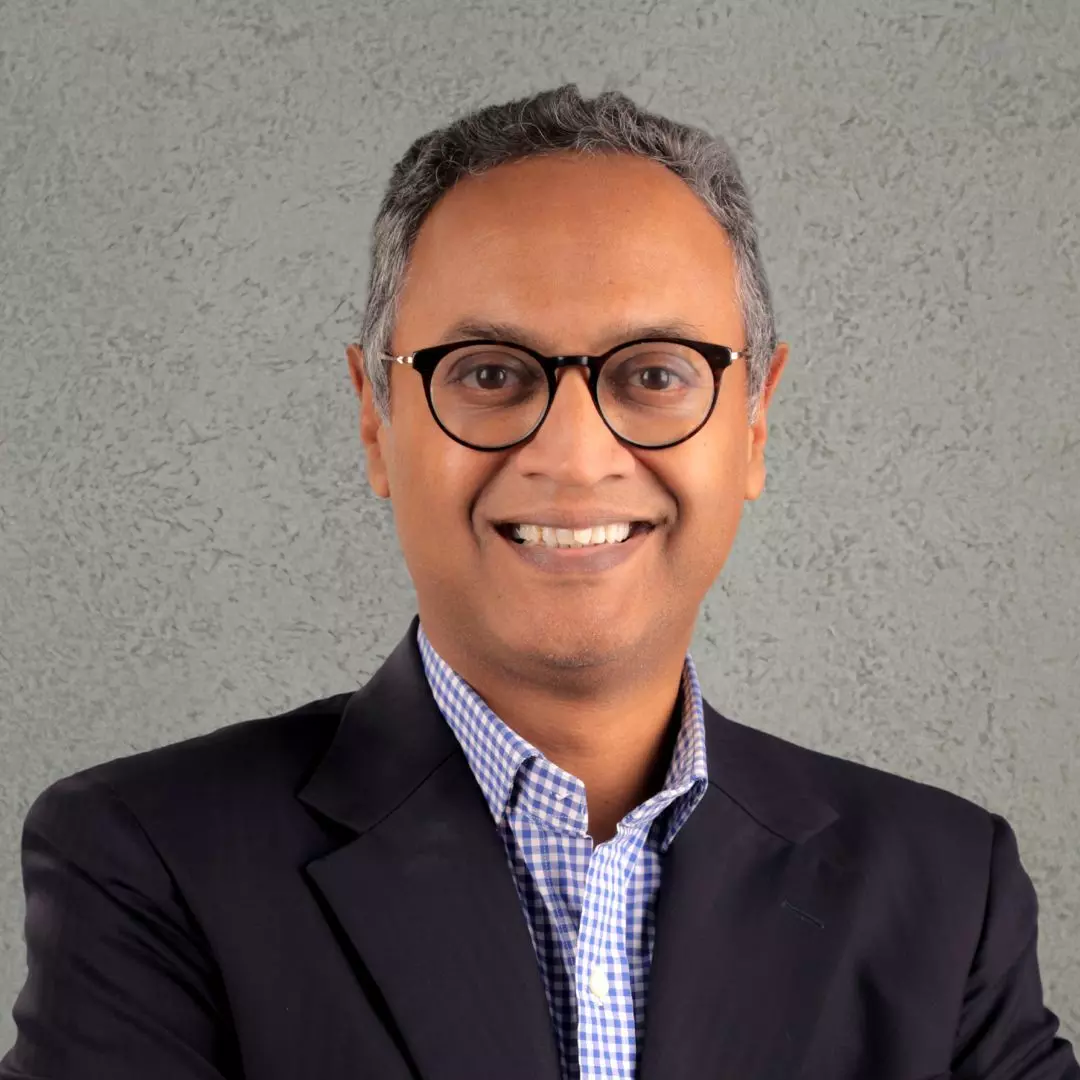
Google CEO Sundar Pichai has warned users not to blindly trust everything artificial intelligence tells them
On Episode 729 of The Core Report, financial journalist Govindraj Ethiraj talks to Ashish Nanda, Chief Digital Business Officer, Kotak Securities.
SHOW NOTES
(00:00) Stories of the Day
(00:55) Global markets turn nervous even as tech leaders downplay the AI boom.
(02:04) Outgoing Meta AI chief blasts LLMs
(04:38) Morgan Stanley updates and upgrades India outlook to 107,000 on Sensex in a year
(08:31) Algo trading is now becoming a retail product. How it works
(17:48) Cloudflare goes down
Register for the 3rd Edition of the Algorand India Summit
https://algorand.co/india-summit-2025
NOTE: This transcript contains the host's monologue and includes interview transcripts by a machine. Human eyes have gone through the script but there might still be errors in some of the text, so please refer to the audio in case you need to clarify any part. If you want to get in touch regarding any feedback, you can drop us a message on feedback@thecore.in.
—
Good morning, it's Wednesday, the 19th of November, and this is Govindraj Ethiraj broadcasting and streaming weekdays from Mumbai, India's financial capital.
Our top stories and themes…
Global markets are nervous now, even as tech leaders downplay the AI boom.
The outgoing chief of Meta, AI blasts large language models.
Morgan Stanley updates and upgrades India's outlook to 107,000 on the Sensex in a year's time.
Algo trading is now becoming a retail product. Here's how it works.
Cloudflare goes down, taking with it a host of websites and platforms, including Twitter.
The Big Question
The question for India's markets to really ponder on is if and whether an unravelling of global markets, as it may happen, will affect India.
Global markets are weak right now, and we don't know whether they will fall further and how much. But if that happens, what does that mean for India? Before we come to that, let's pick up on the latest utterances in the AI universe, which are quite important for everyone. Google CEO Sundar Pichai has warned users not to blindly trust everything artificial intelligence tells them, adding that the current surge in AI investment could lead to a bubble burst that would affect every company.
Speaking to the BBC, Pichai, who runs Alphabet, Google's parent company, said AI systems are still prone to errors and that users should treat them as just one more source of information. He also stressed the need for a rich information ecosystem so that people do not solely depend on AI tools. This is why people also use Google search and we have other products that are more grounded in providing accurate information, he told the BBC.
You could, of course, counter that by saying Pichai is obviously standing up for Google and making a sales pitch, but there are others who are also joining in that chorus. The man who edited Meta's AI push has argued that current large-language models or LLMs like ChatGPT are fundamentally limited because while they learn from vast amounts of text, they lack a deep understanding of the real world. This is Yann LeCun, the 65-year-old ex-Meta head of AI and also New York University professor who just left the company or leaving the company for a startup and as quoted by Business Insider.
LeCun also argued that true intelligence requires an internal world model, a mental understanding of how the world works which allows for reasoning, planning and predicting the consequences of actions which LLMs cannot genuinely do. In a critique which also sums up what LLMs actually do, he says that they produce plausible sounding but incorrect or nonsensical answers, also known as hallucinations. They are excellent at manipulating text and data but not at true reasoning or common sense.
His point, there has to be a new architecture for AI that is objective driven and this AI, he says, would learn by observing the world like a video, building its own world model and using it to plan and take actions to achieve goals. He also advocates for a major shift in AI research away from simply scaling up LLMs and towards building systems that can learn these models of the world which he believes is the only path to human level machine intelligence. And that brings us to the markets.
Global equities fell on Tuesday over rising concerns of inflated valuations ahead of NVIDIA's earnings that are coming this week. Europe, Asia including Korea and Japan and of course India were down. Indian equity indices that's the SENSEX and NIFTY snapped a six-day gaining streak to close lower on Tuesday ahead of key US economic data that may affect the Federal Reserve rate cut or the possibility of a Federal Reserve rate cut next month.
The SENSEX was down 277 points to 84,673. The NIFTY 50 was down 103 points to close at 25,910. In the broader markets the NIFTY mid-cap 100 index which as we said was at a lifetime high yesterday was down 0.59 percent and the NIFTY small cap 100 was down 1.05 percent.
Elsewhere in all of this churn two things are happening. Brokerages are upping their India targets again and second almost all of them including the one we're coming to are unanimously suggesting that the India-US trade imbroglio will get resolved in a few weeks. Now that seems to be the consensus view amongst others outside brokerages including voices from the government.
The only problem is that we've heard some of those voices before but just putting everything together it does seem things look like they're heading for some kind of resolution right now. Analysts at Morgan Stanley have updated their outlook for the Indian markets and now projecting the SENSEX to hit the 107,000 mark by December 26 in a bull case scenario which is a 26 percent jump from current levels. Earlier they had projected the index to hit a hundred thousand by June 26 to which they are attached to 30 percent probability.
India is ending 2025 with its worst relative performance versus the emerging market since 1994 Morgan Stanley said. They also said that relative valuations have corrected meaningfully and possibly troughed in October 25 that's right now according to business standard. India their analysts said for a positive growth surprise in coming months and the markets have a case for re-rating.
For the index to rally to 95,000 mark which is their base case for the SENSEX by December 26 Morgan Stanley expects continuation in gains in macro stability via fiscal consolidation increased private investment and a positive gap between real growth and real rates. Elsewhere the rupee ended flat on Tuesday thanks to modest portfolio inflows and intermittent dollar sales from state-run banks which also helped cushion the impact from weak global equities and regional currencies Reuters reported adding that the rupee closed at 88 rupees 60 paise against the dollar almost the same as its previous close of 88 rupees 63 paise. Gold prices fell to their lowest in more than a week on Tuesday on fading bets on that interest rate cut by the federal reserve which obviously reduced demand ahead of other US economic data releases expected this week.
Spot gold was at about 4041 dollars per ounce on Tuesday morning it hits its lowest since November 10th at this point or rather has hit its lowest since November 10th at this point. Silver is emerging as one of the most compelling tactical opportunities in the precious metal space according to NK wealth management which is projecting a sharp rebound in global prices and highlighting strong outperformance by silver exchange traded funds and funder funds over physical silver. MK says silver is poised to bounce back to 52 to 53 dollars per ounce in the near term potentially going to 58 and 62 dollars thereafter silver is currently at about 48 dollars 80 cents and we've been seeing extended drains all over the country including in Mumbai where I live and that has some benefits too farmers are set to expand wheat acreage by about five percent to a record high thanks to higher returns in October's untimely rains which improved soil moisture and encouraged a shift from rain-fed crops to the cereal according to officials who told Reuters.
The higher planting is expected to help India which is the world's second largest wheat producer boost output ease local prices and also permit limited exports of wheat flour. All of this would also mean that wheat sowing and production could surpass all previous record highs according to industry experts who spoke to Reuters so India's key wheat growing northern western region was inundated with 161 percent more rainfall than average in October which also contributed to the country's overall 49 percent surplus in the month that's surplus in rains. Elsewhere in energy oil prices steadied on Tuesday and gained ground after losing in early sessions as traders weighed off the impact of western sanctions on Russian oil flows against the projections of a surplus and a glut in the coming year.
Crude was quoting at about 64 dollars 32 cents on Tuesday morning while West Texas Intermediate was at about 60 dollars.
Algo In Your Hands
At the simplest level algo trading is about allowing you to write programs which will determine how to buy or sell a stock.
For instance the computer could automatically put a buy when prices of a stock fall below a certain price and conversely sell if it goes above a certain price. That way the emotional attachment with the stock is taken out and this facility is increasingly being sought after and used by sophisticated individual investors and stock brokerages are launching products tuned to these pro investors. One such product is Kotak Neo which conceptually and otherwise allows you to trade programmatically and automate your strategies.
I spoke with Ashish Nanda president and chief digital business officer of Kotak Securities and I asked him to explain to us how this would work in the real world.
INTERVIEW TRANSCRIPT
Ashish Nanda: Retail algos or APIs as the case may be, the way we call them, I think is not for an absolute retailer. It is not for the last person on the ground. It is for slightly professional traders who understand coding.
More than coding, they understand options. If you do not understand options, do not understand Greeks and do not understand how options operate, I think it will be difficult for you to use APIs. It is for a professional trader only, not for all retailers as the case may be.
You individuals can use it, but I think it is not for all. That's number one. Just to explain to you how it works, I think when you trade or any investor trades to a broker, generally uses the broker's interface.
He uses a broker's mobile phone or he uses a app or he uses a website. Largely people use that or some people also use a terminal, which is also an EXE. API is the fourth way, kind of, where a customer can interact with broker and place his order.
These are pipes which a customer can take and write his own program. So if he wants to write his own algo or he wants to connect through his Excel, he can use these pipes and connect with the broker system. That is what APIs are.
And this is what we are offering. This is what we are kind of talking about.
Govindraj Ethiraj: Tell us about what a typical transaction could be. I mean, not a very sophisticated one, but let's say the kind maybe you expect many of your future relatively professional investors to do.
Ashish Nanda: So I think anything can be done from APIs. APIs, you can put one trade. You want to buy, say, 100 shares of a script, you can buy through API as well.
There's a programming language in which you fill all the fields and send it to a broker. Broker will execute that order. But real use case of an API is when people want to write their own programmes.
So they want to say, if this situation happens, if X crosses Y, then generate a buy order. Or if a Y crosses X, generate a sell order. These are programmes which people want to write.
And why this is done is, generally, you are very emotional. If the price is going down, you will cut the stock. This takes away the emotion from your programme.
Otherwise, when you are trading manually, you will say, while there is a signal that you have to sell, you probably may not sell because you think, let it come a little up. This will remove emotions from your trading. And you programme it and the programme will run the way it is.
So it is generally for a slightly advanced trader who wants to programme his trading. And it can be in any segment. It can be in cash.
It can be in futures. It can be in commodities. It can be in any segment.
Wherever you want to trade, you can programme your trading.
Govindraj Ethiraj: Right. I mean, it's also called quant trading, I guess. What is the kind of sophistication of investor that you're seeing in India today?
Not necessarily numbers, but how many are potentially likely to do these kind of trades?
Ashish Nanda: See, in our understanding, Govind, I think the penetration is a little less at this point of time. I think two to three percent of the trades in the market would be coming from algos or from APIs. You definitely need some amount of understanding of coding language.
In our case, we provide REST APIs. We also provide Python SDK. So, for example, you should know how to write a programme in Python.
That is one way of doing it. Some understanding of programming knowledge and definitely complete understanding of how you want to trade, what is the real trade that you want to put. If you're trading in options, you should understand Greeks.
You should understand everything before you get into API trading. Having said that, these days there are a lot of fintech providers as well. And the semicircular very clearly says that the fintech providers need to now register with exchanges.
That date is about 31st of March. So, what retailers can do is that if they understand what they want to do, they can connect with these service providers. And probably from there also, the orders can come into a broker and they can trade through APIs.
But I'm saying at the end of the day, it is for slightly arrived professional traders, I would say. It is not for the last person on the ground.
Govindraj Ethiraj: Right. If you were to look at the last year, and I mean the calendar year, we've also seen a lot of investors retreating from the market. It may not have happened to you, but it's definitely happened to a lot of other brokers.
So, what's your sense on that?
Ashish Nanda: See, if you talk about the larger market, what you've seen is that in the market, there were about 5 crore traders, 50 million traders that they have reduced to about 47 million. So, there's a reduction of about 3 million traders largely in the market. If you see the 12-month active traders data, what I generally believe is there are two reasons to it.
The first reason is that the cash market has been kind of subdued from last September till date. Market was at 26,000 levels. Today also, it is around less than 26,000 levels.
So, we have not reached one and a half years. One year in about three months, we have not reached a new high. So, I think since the returns are not coming, there are clients who are waiting on the sidelines, not trading.
And the second is also SEBI guidelines, which reduce a lot of traders from the F&O market. The F&O market had about 50 lakh annually trading users, which has come down to about 30 lakh. So, these are the two reasons why you see less activity in the market.
But I think this reduction in trading will go about for another three, four months because all these guidelines of SEBI in terms of F&O, they all happened between November and April last year. So, I think you will see this impact for another three, four months after which I think this number will again start increasing. This is just that once the bull market comes, it's a phenomenon.
When the markets are rising, investors come in. When the markets are kind of subdued and going a little, I think, on the downside, I think investors kind of don't trade.
Govindraj Ethiraj: Right. So, the Gen-Z audience, which is one of your key target areas, even including your own division, is obviously an active investing class. But tell us about how this audience or this category or cohort has behaved in the last couple of years and how you see them, let's say, evolving or shifting or changing in the next few months into 2026.
Ashish Nanda: If you will see, the total number of investors in the capital markets were about 50 lakhs in year 2020. Total number of DMAT accounts was 50 lakhs. In 2020, the number has grown to 20 crores as we speak.
So, this number has grown many, many fold. Rather in 2024, there were many, many months where the number of investors that came into the market were around 40 to 50 lakhs. So, we got in one month what we got from the start of capital markets till 2020.
And large part of these new investors who have come from which have made this number 20 crores are millennials and Gen-Z investors, which have contributed to this number. So, if you see a lot of numbers, which is published by NSC in their Pulse magazine and BSC as well, you see large part of these investors are under the age of 30. So, I'm thinking they came into the market in 2020 and kind of four years post COVID, we saw kind of a linear bull run.
So, I'm thinking these people all made money, whether it was mutual funds or it was direct equity. I think there was money in the market to be made. Last one year is the first time they've experienced that market can go down as well or they can be kind of not always the market keeps going up.
So, the activity levels have come down. But I think this is a normal phenomenon. Once the market starts moving up again, I think all these investors will come back.
But yeah, as of now, if you ask me, I think the number has kind of reduced to some extent for sure.
Govindraj Ethiraj: Last question. So, is there any single theme or trend that you're now in a way looking out for or riding upon in the next few months?
Ashish Nanda: There's a lot of fear about whether weekly expiries will go away or not. I think a couple of comments from SEBI chairperson and from finance minister, I think that they've said that they will look at data before they take any further action. So, that has brought some calm into the market.
But I think at the end of the day, retailers losing money, I think is a concern that a regulator will always have. Time will tell. But I think on the cash side, we again see, I think there is a lot of interest.
Over the last couple of months, there was a lot of interest in gold and silver. Primarily because gold and silver had kind of really done well. Through the month of October and November, I think we are seeing interest in precious metals.
And I think that is a kind of an industry trend. The number of, again, I think the AUM of all ETFs on the gold and silver side has been going up. You also see mutual fund, some money coming into the mutual fund on the gold and silver funds.
So, I think that is one trend that we have seen over the last couple of months. But otherwise, I think the markets are okay. Volumes are coming back.
So, markets are good.
Govindraj Ethiraj: Good note to end on. Ashish, thank you so much for joining me.
Ashish Nanda: Thank you, Govind. Real pleasure talking to you.
Cloudflare Is Down
Internet infrastructure company Cloudflare was hit by an outage on Tuesday knocking several major websites offline for global users and that includes by the way the core website that's www.thecore.in so hope to see you back there later.
OpenAI's ChatGPT and Elon Musk's Twitter or X appear to have been affected by Cloudflare 2 according to a down detector which itself could not be accessed for some users according to CNBC and that's something that we saw right here in India as well. X stroke Twitter was not available on Tuesday evening. A Cloudflare spokesperson said they saw a spike in unusual traffic to one of its services on Tuesday morning East Coast time and they did said that they did not know the cause of the spike in unusual traffic but they were trying to figure it out.
Now Cloudflare's software is used by many businesses worldwide for managing and securing traffic. Amongst the services it provides are that it guards against distributed denial of services attack which are used when malicious actors attempt to overload a website system with so many traffic requests that it can't function according to a CNBC or rather the CNBC report.


