

Auto Part Exports Rise 9%, But Tariffs Could Put Future Orders At Risk
Indian auto component exports rose in H1 FY26, but US tariffs, stalled new orders and rare-earth shortages pose growing long-term risks despite stable near-term demand.
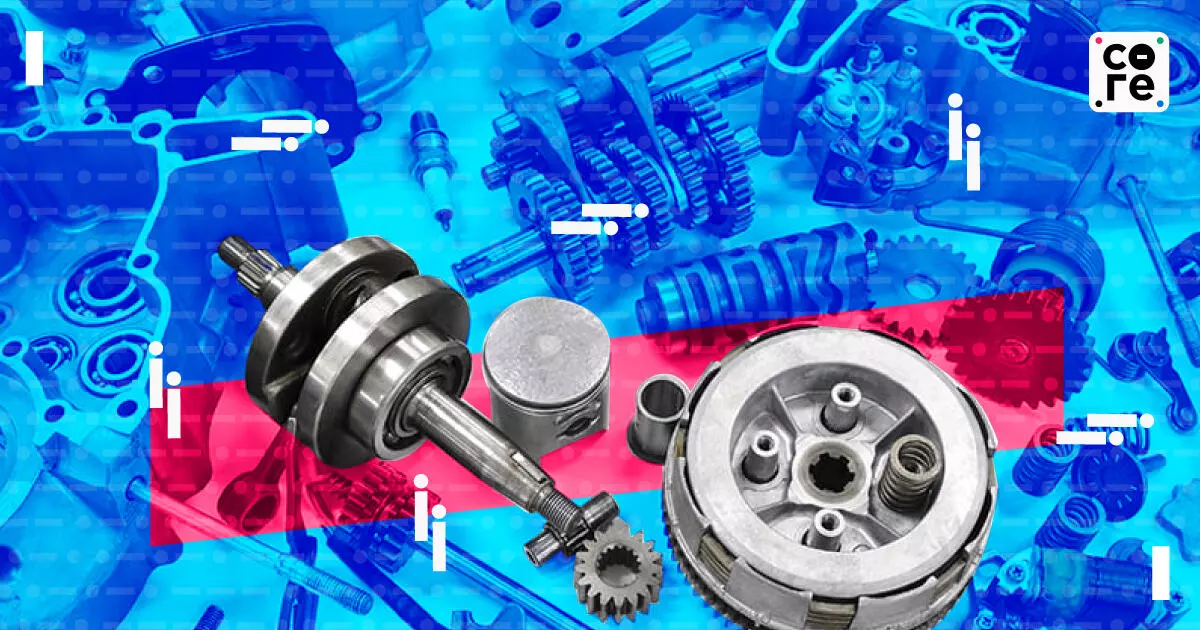
Auto component exports from India rose 9.3% to USD 12.1 billion in the first half of FY26, with the US and Germany remaining among the top destinations. Shipments to the US were flat at about USD 3.64 billion, even as exports to other markets grew about 10%, reflecting caution over longer-term commitments amid tariff uncertainty, the Automotive Component Manufacturers Association of India (ACMA) said on Wednesday.
Vikrampati Singhania, president, ACMA and managing director at JK Fenner (India) told The Core that near-term trade with the US may remain largely stable as original equipment makers have long validation cycles, making it difficult to replace Indian suppliers already embedded in supply chains. Over the longer term, however, Indian manufacturers risk losing ground as new programmes, parts and product lines are being deferred due to tariff-related uncertainty.
Earlier in the current fiscal, the US increased Section 232 tariffs on roughly 55% of India’s auto component exports. Additional reciprocal tariffs imposed from September 2025 affected commercial vehicle and off-highway parts, lifting duties to as much as 50% in certain cases. These higher levies were subsequently withdrawn following a clarification issued on November 1, with all Indian auto component exports to the US now facing a uniform tariff of 25%.
Singhania said sweeping US tariffs have made companies in the US and the North American Free Trade Agreement (NAFTA) region hesitant to award new projects to Indian suppliers. He added that India faces a disadvantage as some countries have secured more favourable terms under the US Section 232 regime.
Given thin margins, even a 10 percentage-point tariff difference can materially shift trade flows, he said.
ACMA director general Vinnie Mehta said the impact of Trump-era tariffs is expected to be felt more in the second half of the year, as they only took effect in September.
Rare-Earth Risks
The shortage of rare-earth magnets remains a huge challenge for the industry, even as some two-wheeler makers have shifted to magnet-free motor technologies to manage supply risks. The limited availability has pushed procurement costs sharply higher, adding pressure on manufacturers, Mehta said.
“Wherever people have been able to manage, the costs have gone up very significantly, sometimes even more than ten times,” he said.
In December, the Centre notified the Scheme to Promote Manufacturing of Sintered Rare Earth Permanent Magnets (REPM) with an outlay of Rs 7,280 crore. It aims to create a complete domestic value chain for converting rare earth oxides into sintered NdFeB magnets, a key input for India’s strategic and industrial sectors.
Mehta said it would take time for the scheme to translate into actual supply. With gestation periods of 18–24 months before production begins, near-term solutions will be critical to bridge the gap.