



 Newsletter
 Search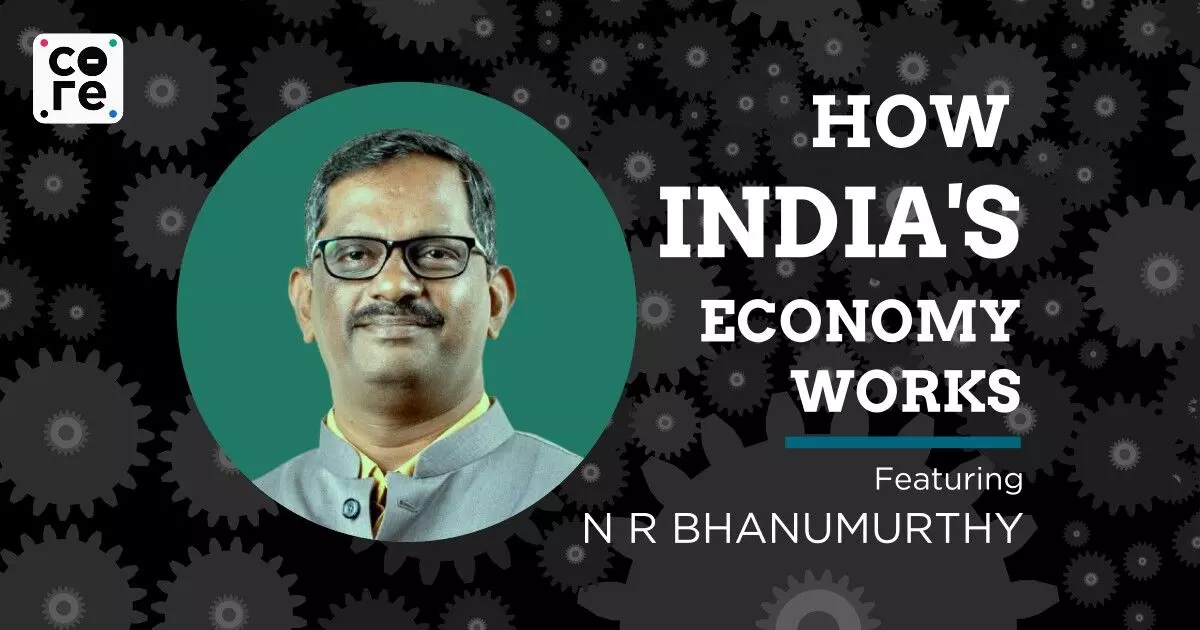
Cash Transfers For Women Is Sound Economics
- Podcasts
- Published on 17 Dec 2025 5:00 PM IST

Insights on how welfare can be redesigned to advance gender equity
In this episode, journalist and author Puja Mehra speaks with economist N. R. Bhanumurthy about the rise of women-focused cash transfer schemes and what they reveal about India’s social policy priorities. Drawing on his evaluations of early pilots in Madhya Pradesh that shaped the Ladli Behna programme, Bhanumurthy explains why cash outperforms kind transfers, how implementation improved with better beneficiary identification and payment systems, and what the evidence shows about nutrition gains for women and children.
He also addresses concerns that these schemes are becoming political tools or crowding out spending on health and education, arguing instead that the real issue is the lack of rationalisation across hundreds of overlapping state schemes. The conversation highlights why mobility remains a major barrier for women, why free bus travel could have long-term economic benefits, and how India’s current gender budgeting framework must shift from accounting to outcomes. Tune in for insights on how welfare can be redesigned to advance gender equity.
(00:00) Introduction
(00:14) How Cash Transfer Ideas Began
(01:00) Early Schemes in Madhya Pradesh
(04:04) Lessons from Ground Evaluations
(04:47) What Worked and What Didn’t
(06:40) Cash vs Kind: Key Findings
(07:54) Misuse Concerns and Realities
(09:24) Are Schemes Becoming Political?
(10:16) Welfare, Politics, and Gender Gaps
(12:44) Cash Transfers vs Public Services
(13:28) Do Transfers Reduce State Effort?
(15:03) Fiscal Risks and Scheme Overlap
(15:32) Why States Must Rationalise
(17:16) Free Bus Travel for Women
(19:05) Short-Term vs Long-Term Impact
(20:36) Mobility, Culture, and Labour Gaps
(21:32) Women’s Work and Growth Potential
(23:59) Rethinking India’s Gender Budgeting
NOTE: This transcript is done by a machine. Human eyes have gone through the script but there might still be errors in some of the text, so please refer to the audio in case you need to clarify any part. If you want to get in touch regarding any feedback, you can drop us a message on feedback@thecore.in.
—
TRANSCRIPT
Puja Mehra: Professor Bhanumurthy, thank you so much for coming on this show.
N R Bhanumurthy: Yeah, thank you. Thank you, Puja.
Puja Mehra: Professor Bhanumurthy, what is now called the Ladli Behen scheme, which is cash transfers for women, is something that you originally worked on, I think, in the state of Madhya Pradesh, from where this whole idea started, initially very well-liked and appreciated by economists, as well as everybody else. But increasingly, we find that there are some concerns about the use of the scheme across states that are being expressed. So I wanted today to talk to you about cash transfers for women and how you first came up with the idea, how it was adopted in a particular state, the story about it, and then, you know, how things have progressed from there.
N R Bhanumurthy: Yeah, thank you. A small correction. Actually, even before Ladli Behen scheme, there were many small schemes, cash transfer schemes, focused on smaller segments of the population, particularly women.
Among the women also, it was concentrated on smaller segments. It was already being implemented in the state of Madhya Pradesh. At that point, we were asked to look at whether the scheme is doing very well and whether the intended outcomes are coming out of the scheme.
One of the schemes that was implemented, particularly for the tribal women in the Madhya Pradesh, was Aahaar Anudhan Yojana, basically to supplement the nutritional requirement at the household. Government of Madhya Pradesh has initiated this scheme. So we looked at the scheme and before that, there was one other smaller scheme, which was called as Mukhyamantri Shamik Seva Prasuti Yojana, okay.
That's called MMSS PSY, slightly longish scheme name, and that was basically focussing on women in the unorganised sector. So these are the two schemes that Madhya Pradesh was already implementing. We did an impact evaluation study type and wherever we went, both the schemes are actually doing better compared to other transfer schemes.
When was this? Which year? This was in 2021, just before Madhya Pradesh elections.
Both the schemes were implemented, one by the tribal department, another one by Ministry of Health. So wherever we went, since it is a cash transfer scheme, we found that both these schemes are actually much better implemented at the ground level. And also that the intended objective of those schemes were actually visible at the ground level.
Of course, there are issues which we highlighted in the report and we have told to the government to really look at whether we can improve that scheme. And thankfully, under the chief ministership of Shri Suraj Chauhan, he was very proactive and took that report very seriously. And then they brought in some changes the way it has been implemented.
That was the time this proposal was there and we could provide intellectual support to the Ladley-Bena scheme, which was coming up immediately after the report was submitted. And then we also did support them It was a 100-day scheme initially, it was as a pilot scheme. So we were asked to help them in terms of evaluation whether the Ladley-Bena scheme is implemented well at the ground level.
So we provided a kind of a questionnaire, a draft questionnaire to them and then later their own government missionaries looked at it and I think it has been scaled up across the state. So in that sense, before the Ladley-Bena scheme, we had two similar but smaller schemes that we looked at.
Puja Mehra: What I want to ask you is that, is it correct to say that the Ladley-Bena scheme was fine-tuned to take on board the recommendations that you gave, number one? Number two, what were the plus points or what was the success of the earlier schemes that you studied, that you saw on the ground? And what were your recommendations for a new scheme to be launched, which eventually became the Ladley-Bena scheme?
So essentially, what I'm asking you is, what did you find on the ground and if it was aligned with what an economist would want such a scheme to be like? And then if what was then in the next avatar when the scheme was rolled out, if that was taken on board?
N R Bhanumurthy: I can tell you a little bit more about Aha Ramdhan Vajana. It's again, as I said, it's meant for the tribal women. Three tribal groups of Madhya Pradesh have been the targeted group and also they limited to only three districts.
So what we did was, we looked at the similar tribal groups across other districts, which is adjacent to the districts where this is implemented and basically we followed what we standard way we do in economics. We followed that treatment group versus basically two groups, where the group which is getting the benefit and the other one which is not getting the benefit. So we found that between these two groups, the group which is actually getting Aha Ramdhan Yojana, the nutrition levels not only among the girl child, particularly children within the family, but also the women in the family was better compared to the group which is not getting those benefits.
And then there were very minor issues when it comes to identification of beneficiary and linking cash transfer to the accounts. And then in terms of providing timely information with regard to the money being transferred, all those issues were actually at the ground level. There were also limitations with regard to grievance redressal.
So we highlighted all this and suggested the tribal department to relook at all those issues. And my hunch is that I think these recommendations, plus some of the best practises that is already there in the ground level, must have led to the larger scheme, which is more of a universal scheme across the state, across all the groups. So the Lovely Banner scheme is, in my view, just an outcome of the best practises, as well as some of the recommendations that we made on the existing schemes in Madhya Pradesh.
Puja Mehra: So you're saying that it was implemented well and it was also good economics, both go hand in hand.
N R Bhanumurthy: And in fact, there is also a small issue that came up during that period within the government missionary as well as bureaucracy, whether the government should go for a cash transfer scheme or a kind transfer. There were also some suggestions about providing hot meals and providing fruit basket. So those issues were coming up back and forth when we were doing the study.
And we took a very intensive exercise in terms of whether the cash transfer scheme is better or the kind transfer. So again, based on our own observations at the ground level, and also in terms of given the kind of implementation challenges that we might face at the ground level. And we looked at the cost benefit analysis of this, and we suggested that cash transfer is much, much better compared to kind transfer.
Of course, there were some opposition for that, but I think Underwood Chief Minister actually went with the cash transfer scheme. We have seen that it's very easy to implement and very fast to implement. And also you can track whether these benefits have actually reached the beneficiaries.
Puja Mehra: No, because you know, a lot of listeners will write in comments that cash gets misused or men in the family would take the cash away from the women and those kinds of things. But you didn't see that on the ground when you did your ground checks.
N R Bhanumurthy: See, as an economist, I do believe that the biggest challenge for the government is reaching the benefits to the real beneficiary. Now, what they do with that benefit, what they receive from the government, I don't think government can really look into it. So in that sense, if the government can ensure that money reaches the beneficiary, is something in my view, is the biggest achievement for the government or public policy.
Now, you don't know what happens with the kind transfer. You don't even know whether it has reached the beneficiary, right? So I think we have experimented with this kind transfer for a very, very long time, and we have seen how it has its own challenges.
So imagine hot meal is something, it needs a huge machinery to implement, right? And you know, there are questions raised, why our public policy keeps pushing rice to the beneficiaries? I mean, why are we forcing people to eat more rice?
So I think given all this, let us not get into the impact in the consumption pattern at the ground level. Let them decide. Let them decide what they would like to for improving the nutritional levels.
Puja Mehra: Yeah, and if they want to consume more proteins and not so much cereal, well, that will be very good. But now, a lot of concerns are raised, including by economists who say that increasingly, schemes such as the cash transfer schemes for women, which is now being replicated in several other states, are becoming a political tool. Although nobody has done a study to say this, but they do express concerns and they do say that it should be examined if these are now just vote catching schemes and less for welfare purpose.
Have you studied this? And what is your view on the way? A second set of, in fact, concerns that is raised is that politicians are finding it very easy to just give cash and not take responsibility of providing other public goods, such as health and education, which they must.
So on those two sets of concerns, what are your views?
N R Bhanumurthy: We economists should keep this politics away from our discourse. You know, any policy that benefits women, I think needs to be supported in my view, especially when we rank 131st in terms of whatever the indicator that you look at, gender gap index or gender inequality index that we have. I think it's a very, very long way for us to really narrow that gap.
And I don't think economists should get into this issue of politics. You see, any money that government spend can be politicised. So we should not get into that.
And I would strongly suggest that government need to do much more. In fact, I have many more recommendations, particularly when it comes to ensuring gender balance. So I don't think that is the way one should go.
The second one is, he said that they don't provide other public services and all that. Again, they are not substitutes. Cash transfer to women and health and education, they are not substitutes.
In my view, they complement. I would say that if we have a better gender balance, the outcomes of health and education expenditures of the government would be much better than what we are getting right now. I think they only complement each other.
Having said that, the states or the governments which are actually going for cash transfer scheme, it also need to look at other schemes. You need to rationalise. What I'm trying to say is that you need to rationalise schemes such a way that there is no duplicacy between what they are doing in terms of cash transfer compared to other schemes.
At the state level, in my view, some of the states that I looked at, they're absolutely a messy affair when it comes to social sector schemes. There's so much of duplicacy, there are so much of overlapping. In fact, there are many schemes which you don't see a sunset clause.
So I guess the rationalisation of schemes at the state level is a big area where we can save more public resources. In fact, central government has done in a very big way. We have seen there are many schemes in the past, but now we have a small set of schemes which is focused and I think they are doing extremely well.
So I know one of the states, in fact, they have schemes more than 1,800 schemes. These are the areas where you need to really focus if you want to really rationalise the kind of expenditure that we have at state level.
Puja Mehra: So that's a point well taken, Professor Pandemurti. But I think the point that the economists who are raising these concerns, the point that they make is that, of course, nutrition is best for the consumer to decide, but public goods such as health and education are best provided by the state. And if the state develops a sense of complacency in terms of winning elections, if they feel that just by giving cash transfers, they can win elections and therefore they don't need to work hard on providing other public goods because the results of those become known and are felt over a period of time which outlasts the election cycle, then these kind of schemes could, the risk is they could create a sense of complacency. They are already noticing that. What do you think of that?
N R Bhanumurthy: As far as I'm concerned, there is no data that supports the cash transfer schemes are crowding out the schemes under health and education. I don't think so. I mean, there may be a growth rate of allocation may be an issue, but I don't think there's any where we have an example to say that because of cash transfer, there is a decline in health and education expenditure.
In fact, there are some schemes where I've been arguing that if you can implement better, you should see that allocation should come down, you know, but we don't look at how those resources are spent. In fact, one of the area of my research for the past six, seven years is how to improve the public expenditure efficiency at the state level. That is something economists completely ignore.
We talk about only outlays, but we really don't talk about how that is implemented at the ground level. So in that sense, I always argued that why should you see increasing allocation on all the schemes all the time? Does it mean that, you know, the gap is increasing over a period of time?
So I would argue like one of the schemes which is the best practise for us is MGNREGS. Why do every time we expect that, you know, allocation should go up? It's a demand driven programme.
Now, if you say that, you know, compared to last year, this year, we have reduced the allocation. It is because you have much better non-MGNREGS jobs available at the rural area. So I think our obsession towards the trend growth in all the allocations, I don't think that is the right way.
Puja Mehra: Yeah. And the third set of concerns that I read is about fiscal implications of these schemes, which you partly already answered. If more and more states begin to make these allocations for such schemes and not cut out the duplication like you're suggesting and not rationalise overall expenditure, are there going to be any fiscal implications that should concern us?
Are you already seeing any such thing or things are so far going well?
N R Bhanumurthy: The states I looked at, there is no effort to really look at rationalisation of the schemes. Particularly, I looked at Madhya Pradesh. I mean, in fact, that's one place where I looked at it more carefully.
But I'm talking about some three years back. I don't know whether they have done any effort. I also looked at states like Karnataka.
There are also a number of schemes or so many and there are many schemes which are just about less than 10 crore allocation. So these are the schemes I would hope the state governments will look at it. Maybe I think it should become a conditionality for the states to really look at until then you don't get some of the support from the central government.
So until then maybe they don't look at it. So I have been writing on this that state governments should rationalise those schemes. In fact, some states they don't even know that how many schemes they have.
In my view, there are low hanging fruits at the state level and it is doable. When centre can do, why not state? So I think that area is very, very important.
See, the demands of the people are very different from the past and I guess we need to adjust to that kind of demands and relook at it. Of course, there are some schemes even at the central level, I keep saying, they need to have sunset clauses. So until we don't have sunset clauses, we economists keep thinking that allocation has come down for a particular thing.
One classic example I can give you is a rural housing scheme. Now once you exhaust the number of applicants, obviously, you need to close it. And if you say that, oh, this scheme is closed, that is the way it should be.
Puja Mehra: Since you also mentioned Karnataka before this, Karnataka has this whole scheme for free bus rides for women, which tends to generate a lot of discourse. What do you think of that scheme?
N R Bhanumurthy: Irrespective of which government is implementing, one of the major challenge for reducing gender gaps in this country, both practically and also in terms of we look at literature also, is the hindrance to mobility. I think that is something one needs to really recognise. And I would say, I would argue, in fact, in one of my recent reports, I've argued that this particular scheme should be nationalised.
And the fruits of this scheme will not be known right now. It may take 10, 15 years. But I can tell you that this particular scheme with the minimum allocation that we do at the state level will have a huge repercussions on how we are going to see the improvement in the female labour force participation.
As it is, market distinguishes between male and female when it comes to wages as well as incentives. This is the area where the government should come front and support female workforce so that you reduce that gap in the wages. And I think the mobility is one major area.
In fact, the states which are implemented it, you are going to see a huge transformation. And that's my very strong belief that it will have a huge transformation. And I urge the central government to make it as a core scheme.
In fact, in my study for recently for the WCD, I have argued that it should become part of the gender budgeting where this free bus service to the women should be part of gender budgeting at the national level.
Puja Mehra: Professor Bhanumurthy, it's very interesting you're saying this because of course, all of the states that have implemented this scheme, Delhi, Karnataka, etc., they've been seeing increase in budget allocations for the scheme because the scheme is very popular. But I did read a World Bank survey and study of the scheme's implementation in Delhi and a couple of other states. This was about more than a year ago.
I had in fact requested the authors of the World Bank report to come on the show also, but I haven't as yet managed to persuade them to do that. But their findings were very interesting. Their findings were, and perhaps like you say, it's because in the short term, these are the findings over the long term, it may change.
They found that the scheme did not actually lead to any increase in women getting jobs. It did lead to an increase in women going out to look for jobs, because it makes it easier for them to look for jobs and that does get included in the way the women's participation is estimated. But it did not necessarily result in them managing to bag those jobs.
What it did result in is that a lot of the things that men in the family were doing earlier, for instance, taking children to school, that work was now also uploaded in women. So their overall work that they do in the family, the unpaid work that they do in the family actually went up without their wages going up. So I just wanted to point out that that was sort of an odd finding, but perhaps because in the short run.
N R Bhanumurthy: Yeah, I think they are looking only the economic component of this. We have to look at socio-cultural and economic component. And I think even political, like if you look at the gender gap index that we see, women participation in politics is where we have really deteriorated over a period of time.
So if you look at socio-economic, political and cultural aspect, if they look at all these four issues, I'm sure even they will come out with a positive outcome. So in the medium term to long term, even in economic terms, I think we should be having much better outcomes, particularly in the female labour force participation. We have a gap of almost 30% between male and female.
I mean, you cannot have a fast growing economy in the world with 30% gap between male and female participation. I think we need to look at it very seriously.
Puja Mehra: And as economists such as you keep pointing out, one way of increasing GDP growth is to make sure that more women begin to work. And that sort of is one of the economic imperatives also.
N R Bhanumurthy: Actually, I did a study on gender budgeting recently. Now, what we have is not really gender budgeting. I think it is static, exposed and it is an accounting framework.
I have argued that we should have a completely new framework where you look at place to outcome. Right now, I was telling the other day that WCD is waiting for some ministry or line department to do some programme and then they take from there and put it in their gender budget. See, it should be other way around.
You initiate the programme at the WCD level, ask the line departments to implement. It should be other way around. So, I was talking about a simple thing.
You are talking about street lighting. Not just street lighting. Yeah, in a way, but initiative has to come from WCD, Women and Child Development Department.
So, one of the things I was asking is that the big scheme in the country, I mean the old scheme, old and big scheme in the country is SIGs, Self Help Groups. Now, we call it NRLM and all that. So, the seed money, seed grant of 10,000 rupees was fixed when Dr. Angarajan was the governor. I do not know when, but how many years back. That 10,000 rupees, even today you say 10,000 rupees. Now, how do the women start anything if they want to be?
So, I just gave one example. So, there are many things like this where we do for the sake of doing. So, I think if we are very serious, we should triple it or maybe four times increase that 10,000 rupees.
Maybe you should bring it to 50,000 rupees so that women start something very serious. Despite that, even 10,000 rupees also we are seeing wonders at the Self Help Group movement in this country. These are the small, small things one really trigger such a way that we will see much better outcomes.
Increasing 10,000 to 50,000, will it be a big thing for a banking sector? But for women, it is going to be a big thing. And I am saying that this was signed by Dr. Angarajan in 1993 or 94.
Puja Mehra: Professor Bhanumurthy, a lot of people do not even understand what gender budgeting means. Many of my listeners will not know. If you could explain please.
N R Bhanumurthy: Gender budget right now is that within the total budget, gender budget contains the resources that is going for the women, directly to the women. That is what they define it. But right now, except one or two schemes which are implemented under the Ministry of Women and Child Development, the rest of the schemes have been implemented by line departments.
I will just give you one example, Prime Minister Avasthi Yojana, Gramini. Whatever the Rural Development Ministry spends, a part of it will come under the gender budget, right? Now, only recently after we did the study, they brought Jal Jeevan Mission.
You know, Jal Jeevan Mission, we took so long to understand water has a very gender specific character. Now, only last year, they brought whole Jal Jeevan Mission expenditure under gender budget. So, like that, you know, right now, out of the total budget, about 8.8% is coming under the gender budget. That means 8.8% is directly going to the women. So, that is what we are doing right now. But my argument, it is a simple accounting framework, you know, that you do not need economists to really look into that.
So, what I am suggesting is that we should be having a completely different gender budgeting where it is a demand driven. It has to come from the ground level. What is the requirement of the women, if at all you want to see that, you know, they are part of the whole growth process.
I gave you one example about free bus service. Now, free bus service has to be initiated by the WCD and let the Ministry of Urban Transport or whatever that surface transport ministry, we implement that and you put it under the gender budgeting. So, it should be other way round.
So, we are right now, we are basically just waiting if some big scheme come, you see what is the general component and then you put it in the gender budget. So, I think it should be a dynamic process and we also need to understand what happened to that allocation under the gender budget, what are the outcomes of that, has it led to improvement in any of the components of the gender inequality index or gender gap index that we have and if not, what is that we need to do. So, you come back to that issue from the next budget, not just looking at only what is happening in the past.
So, we want to continue the same.
Puja Mehra: Right, right. Thank you. Thank you, Professor Bhanumurthy.
N R Bhanumurthy: Thank you so much.


