



 Newsletter
 Search
Are Slowing IPOs Restoring Sanity In The Markets?
- Podcasts
- Published on 19 Feb 2026 6:00 AM IST
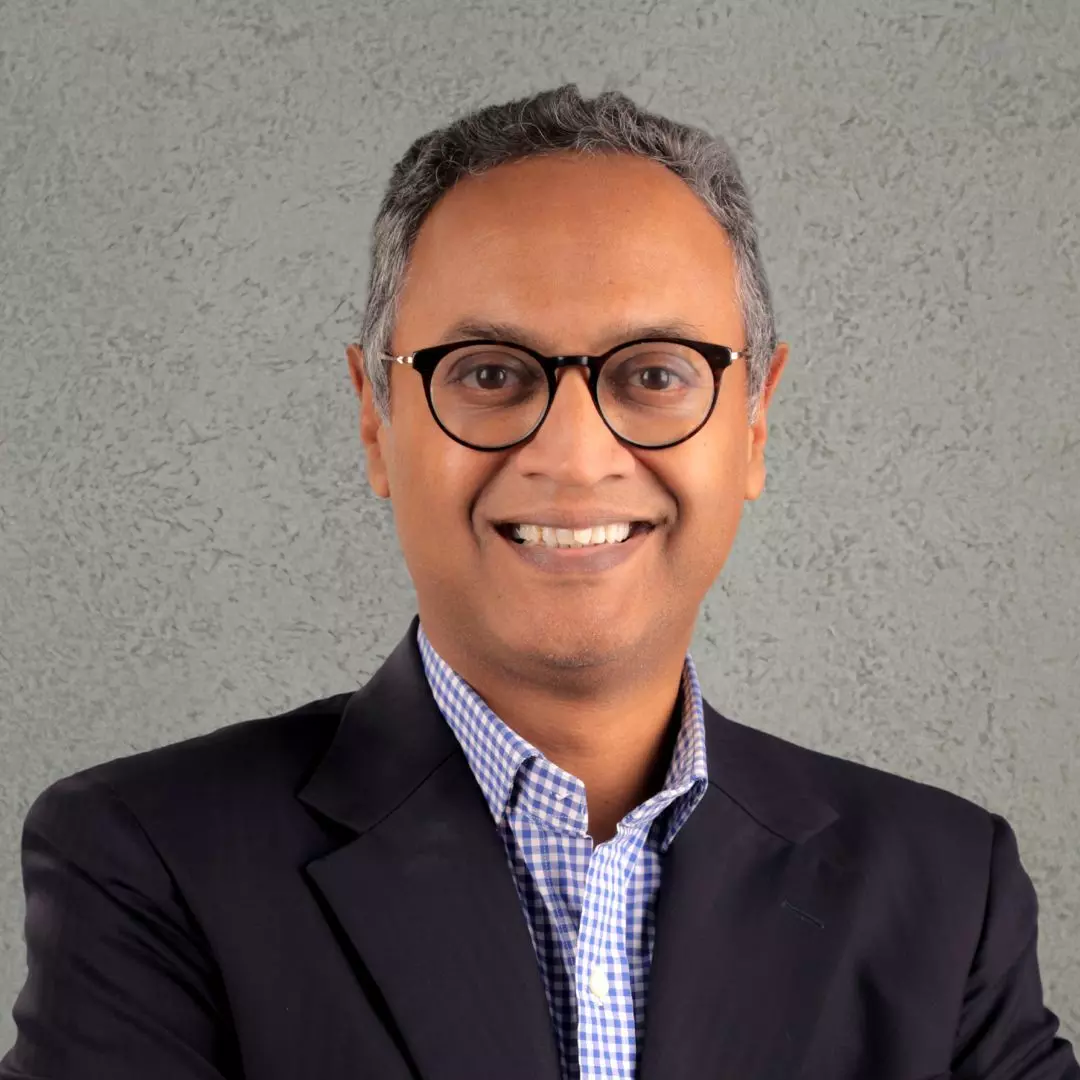
A slowdown in IPOs has been a factor for the markets seeing a strong upward push
On Episode 802 of The Core Report, financial journalist Govindraj Ethiraj talks to Akhil Chandna, Partner – Global People Solutions Leader at Grant Thornton Bharat.
SHOW NOTES
(00:00) Stories of the Day
(00:41) Are slowing IPOs restoring sanity in the markets?
(04:39) Google to build new fibre-optic cables into India
(06:23) Maruti finally launches a new electric car
(07:01) Guess what adults and kids in India are buying up like there is no tomorrow
(09:17) New labour code comes into effect in November this year
Register for India Finance and Innovation Forum 2026
NOTE: This transcript contains the host's monologue and includes interview transcripts by a machine. Human eyes have gone through the script but there might still be errors in some of the text, so please refer to the audio in case you need to clarify any part. If you want to get in touch regarding any feedback, you can drop us a message on feedback@thecore.in.
—
Good morning, it's Thursday the 19th of February and this is Govindaj Ethiraj broadcasting and streaming weekdays from Mumbai, India's financial capital.
Our top stories and themes…
Are slowing IPOs restoring sanity in the markets
Google to build new fibre optic cables into India
Maruti launches a new electric car finally
and guess what adults and kids are buying up like there is no tomorrow.
Markets
The markets are clearly seeing a strong upward push and one reason at least right now could be a slowdown in initial public offers or IPOs which had been sucking out a fair amount of liquidity from the system and in many cases and quite predictably have performed badly.
There have been only five IPOs so far this year according to a business standard article which says that after a record-breaking 2025 which saw 373 IPOs including 103 main board and 270 SME which is the smaller one and raising about 195,000 crore rupees the primary market is showing visible signs of fatigue. This is also evident in either lower levels of subscription or the fact that listings have been tepid. One contributor to this overall phenomenon are the so-called new age companies.
An interesting article in Mint newspaper a few days ago leaning on data from IPO and market striker prime database shows that of some 30 new age companies that have listed since 2020, 19 of them were loss making prior to listing. Nothing wrong in that but 11 of them showed a notable improvement in their bottom lines in the year before the IPO either by cutting losses sharply or turning profitable but for these 11 companies most of them high-profile ones the losses widened after listing as they returned to earlier spending patterns. Now most of these names or many of these names are literally well known and you can find out but these companies appear to have followed a fairly time-honoured tradition in Indian markets of dressing up their financials ahead of IPOs.
Now they may not have done anything technically wrong but there is I guess some scope of not representing accurately or representing out of context. Also you have to remember that many of these companies were not even profitable to start with the regulator that's the Securities and Exchange Board of India relaxed the requirement some years ago but brought it back for SME IPOs last year which means that they had to show some profitability. Now the boom and bust IPO cycle is not new to Indian markets but it also seemed quite sadly that nothing much has changed.
The fundraising of the last couple of years does deserve careful scrutiny if nothing else for academic understanding of how money is raised for what it is used and what we can learn going ahead in terms of companies who get the opportunity to raise capital from essentially small investors like you and me whose interests must be protected at some level. Also as G Chokhalingam the market analyst told us yesterday about 50 percent of the funds raised last year were from companies and 50 percent were from promoters and founders so that money is really not gone into the companies. And coming to markets equities did turn around in a late session rally on Wednesday rising for a third consecutive session the Sensex was up 283 points to 83,734 and the Nifty 50 was up 93 points to 25,819.
The broader markets were up to the Nifty mid-cap 100.5 percent and the Nifty small cap 100.52. On Wall Street US stock futures were up as dip buyers stepped in after a spell in which concerns over AI drove sharp swings in equity markets according to Bloomberg adding that gold was back up above the $4,900 per ounce mark. Europe's stock 600 hit a record high following a slate of positive earnings and Brent crude was heading for its highest level in a week according to that Bloomberg report which also said that after months of gains fuelled by optimism over AI equity markets have turned cautious amidst a clash between disruption fears and doubts that heavy spending will yield meaningful returns. And the rupee was nearly flat on Wednesday after drifting in a narrow range through Wednesday and closed at 90 rupees 66 paise very close to 90 rupees 67 paise in the previous session that's on Tuesday.
Google’s Fibre Optic India Build Out
There is much stuff going on around the India AI Impact Summit with much attention focused or diverted on Wednesday to how a university based near Delhi tried to pass off a Chinese robotic dog as its own invention at a stall. While this is unfortunate the event as a whole obviously has suffered from poor strategic choice in mixing some pretty good AI policy discussions and speakers with a desire to draw large crowds including students into parallel exhibitions without the infrastructure or the processes to manage the bulge.
Elsewhere staying on the AI Impact Summit week though this is more infrastructure rather than AI itself Alphabet that's the parent of Google unveiled several new initiatives to support its expansion in India including new fibre optic routes that will connect India with the United States and other locations in the southern hemisphere according to Bloomberg. Alphabet said the latest push the America India connect initiative will deliver new fibre optic lines to improve speed and reliability of connectivity between India and other countries and they've already been building subsea cables in the Pacific Africa and around Australia. A few months ago Google said it would invest about 15 billion dollars building an AI infrastructure hub in the south but mostly Andhra Pradesh and it also said its capital expenditure as a company would reach as about 185 billion dollars this year.
Google also announced another 30 million dollars from its philanthropic arm google.org to improve public services with AI and another 30 million dollars to support researchers using AI for scientific breakthroughs. Google AI's deep mind is also establishing a new partnership with the Indian government and local institutions to expand the use of its frontier AI for science models.
In Other News….
Here's some news we missed after holding out for a few years Suzuki on Tuesday launched its maiden electric vehicle in India and is also offering customers a battery rental plant to lower upfront costs.
The eVitara SUV developed with Toyota under a global model sharing partnership has been built in India since August last year with 13,000 units exported to 28 countries in 2025 according to a Reuters report. The base variant of this SUV has been launched at about 11 lakh rupees and has been accompanied by a battery rental plan that will cost about 3.99 rupees per kilometre and amongst other news I found interesting and I could not pick up yesterday in all the AI news Danish toy maker and family owned Lego plans to open 50 stores in India in the next four years ramping up investment in what a senior executive at the company said is one of its fastest growing Asian markets. Now here's the interesting part the reason for this is of course rising incomes and demand but also a play on screen free time.
Parents rising willingness to spend on screen free play and strong demand from adult hobbyists have apparently helped drive Lego's popularity in India which has been apparently growing at about 50% or more than 50% annually according to Lego's India country manager. The most successful Lego set so far in India has been the Formula One teams and they've been a standout with demand exceeding expectations and placing India amongst top Asian markets for that range last year according to the Lego official. Lego currently operates about four branded stores in Gurgaon, Bangalore and Chennai and plans to prioritise major metros for further expansion according to that Reuters report.
Online is about 50% of sales and quick commerce is just over 10% said the company.
India’s Grid Digitisation
The global energy alliance for people and planet is seeking to raise about 100 million dollars by 2028 to finance the digitisation of India's electricity grids and will approach development finance institutions including the World Bank and the Asian Development Bank according to a report in Reuters. GEAPP is a philanthropic body backed by the Rockefeller Foundation, IKEA Foundation and the Bezos Earth Fund.
So the proposed fund would follow an initial 25 million dollar deployment by the alliance to digitise grids in the states of Rajasthan and Delhi and then support a broader nationwide rollout of the project according to an interview with Reuters at the Mumbai Climate Week which I also had the opportunity to attend yesterday in Mumbai and it was good to see the fairly deep mix of subjects and themes and also of course the important fact being that it is held in Mumbai as opposed to other places.
India’s New Labour Code
Last month Tata Consultancy Services or TCS disclosed a 2,100 crore rupee hit on its profits from India's new labour codes. A report in the Mint newspaper says of India's top 30 companies, 25 have reported an impact of the amended labour code regime and have taken a nearly 12,000 crore blow to their December quarter profits.
The rules mandate higher social security contributions from both employers and employees and also increase retirement benefits. The Mint report says while the provisions stemming from the labour code account for only about 8 percent, the 25 companies aggregate Q3 profit but this will not be a one-time cost. Consulting firms are cautioning that wage bills are set to increase even as India Inc's margins are under pressure.
So the collateral damage could be that we could see lower salary hikes in the upcoming appraisal season as companies obviously try and bring it all under a single cost to company figure. The report also says IT majors like TCS, HCL, Technologies Infosys and Tech Mahindra accounted for about 39 percent of the total hit from the labour code in those 25 companies. Now this obviously adds to the list of problems faced by the IT companies.
In an analyst call in January, TCS offered a breakup of the impact recognised in their financial statements saying that 1,800 crores was earmarked for graduity and 300 crore rupees for leave liability. I reached out to Akhil Chandana, partner in Global People Solutions at Grand Taunton Bharat to understand where the increase in costs were coming from and what could be the impact in future for both companies and employees.
INTERVIEW TRANSCRIPT
Akhil Chandna: As you know, there are four codes, Code on Wages, Code on Social Security, Code on Industrial Relations and OSH and Working Conditions Code, which are in force, effective 21st of November, consolidating 29 laws. So just to give you a perspective before coming to a specific question, yes, this reform, it's a need of an hour, because if you see there are 29 central acts, which are getting subsumed and becoming four codes, this law in our country is a concurrent subject, central and state, both define and have their rules and the law in place. Having said that, the overall theme and the essence and the rationale was to standardise the definition of wages, as you must have heard about 50% rule, Biden's social security coverage formalised working hours, leave, pre-wrap industrial relations, a one decade reset for payroll, HR and shop floor operations.
So this is the opening theme, which I want to tell you. Now, let me come to the question that what's the cost impact on employers? There are a few things which are impacting the P&L of employers.
You must have seen a lot of listed companies coming out with their quarter three results where they have taken huge impact. It's in the public domain. But the first change which is coming out of this law is a change in definition of wages, which obviously, you know, lifts the base on which all the retirees are computed, like PF, gratuity, bonus and overtime.
Just going back to bring more clarity, till date, there are different basis or salary which has been used under different law to compute gratuity, PF, ESIC or leave in cash for that matter. However, what government has done, they bring in the consistency. They want to use one definition of wages on which all the retirees need to be provided for.
What has changed because of this new definition of wages? They have come out with the 50% rule where clearly said that wages is including everything, less specified exclusions, and those specified exclusions are mapped to 50%. They cannot be more than 50%.
So, basic TA retaining allowance, less exclusions, there are 11 exclusions which are specified, but those exclusions are capped to 50%. So, in any case, the retirees which has to be provided for has to be provided on the 50% of the total remuneration or CTC, which, you know, we agree with our employees.
Govindraj Ethiraj: Akhil, can you break that down? Suppose, let's say the salary is 100. What was it earlier and what would it be today?
Akhil Chandna: So, how 100 is bifurcated in the ANNC, you know, 30% is basic, then 50% of basic is typically considered as HRA. Then there are some allowances like conveyance allowance, leave travel allowance, and balancing regulatory special allowance. So, if I break 100, how the structure, which company generally follows is that 30 to 35% goes into the basic, then 20 rupees into HRA, which makes it 50, then 20 into leave travel allowance, which makes to 70, 30 is a balancing figure.
So, in our example, earlier, the gratuity used to be provided only on 30. However, after this 21st of November, when all the four codes become effective and it's implemented, the difference is 100, to start with 100 is the wages and there are two exclusions in the structure we have, which is HRA and LTA. So, 100 minus 20 is HRA, minus 20 is LTA.
So, 60 is the new wages on which all the retirees need to be provided. So, you can see the difference. Earlier, it's only basic salary, which we used to provision for gratuity or make the payments to other retirees.
But now, it's 60, which is almost double. So, that's where it's impacting the P&L for all the organisations. And it's increasing the employer cost, sometimes lower take-home, but higher savings for employees.
Govindraj Ethiraj: So, that's the overall impact. Right. And gratuity is something that is obviously going into your own account, which you can avail of at a much later stage in life.
Yes. So, my question is really, if there is a higher payout to you, which is actually not going directly to you, because it's in the form of gratuity that is basically being credited to your long-term savings account, in a manner of speaking, are companies also likely to adjust the overall salary or cost to company then?
Akhil Chandna: So, as I said, though it's impacting the employer's cost and the take-home for the employers gets reduced, ultimately, the retirees are getting increased and employee will get all the benefit when they are leaving or departing from the company. What companies at large are doing, they are re-looking into the structure, they're trying to rationalise and take the advantage of whatever exclusions are provided by the ministry, by the government, so that the impact is not that much. But still, firm 30 in our example, they have to contribute to earn 50, the minimum they can go down and gain the benefit of 50 as an exclusion, which we discuss in detail.
The second point where, you know, the cost impact on employers is coming is a leave encashment. As you know, under OSH code section 32, workers get, you know, one day earned leave, first 20 days working, if you're aware about this. So, but the law has changed and, you know, carry forward of the leaves were always depending upon the company policy.
But now, the law has restricted the carry forward only to 30 and employees are not allowed to carry forward more than 30 leaves to the next year. Whatever leaves are getting lapsed, they need to be encashed every year. So, earlier, we've seen if the policy says that you cannot carry forward more than 30, that the leaves used to be lapsed if the people have not availed the leaves.
There was no concept of encashing those leaves. And then encashment only happens at the time of termination or leaving the employment, processing the full and final. However, under the new law, every year employees has a right to encash their leaves if they're going beyond 30.
So, there is no possibility of carrying forward more than 30. And whatever is lapsing, we have a right to ask the employer and that has to be encashed. And encashed on the last wages, which we'll discuss.
So, there, the cost of the employers is going high because every year, they have to shell out and pay their hefty leave encashment to the employees, which can be a one-month salary as well, which was never the case before. So, that's the second, where the employees are getting impacted. The third is social security expansion minus coverage.
As you know, the coverage has increased and the contribution we discussed about it. Because fixed-term employees is again a big hit, which employees are getting on the penal. They are eligible to get statutory after one year of completion of service, which was not a concept before.
So, employer has to honour that, which is a big impact. And that's, we've seen one of the listed company, TCS, has taken an impact of 2100 crore in their quarter 3 results. And the biggest impact, because TCS hires fixed-term employees project-based and they have to account for tax fee to be paid to them, which is the biggest.
ESIC coverage will expand because till date, the ESIC coverage was dependent upon the gross salary, which is CPC. And most of the people gets out of that. Though the limit is still the same 21,000, the limit will change because for PF and ESIC, the government has given a transition period of one year and they have not increased the limits.
So, limit will increase in the future to align more with the new social security codes. However, till date, this is the case. But now, 21,000 has to be looked into from the wages side of it, when it comes to the matter of coverage.
So, there the coverage will increase because today, it's gross salary is the CPC. But when we look into the wages, it can be 50% of the CPC. If people are getting less than 21,000 as per the wages, then the coverage will increase.
Then that's a big impact on the employers. As you know, gig workers, platform workers are recognised. And though the scheme has to follow, we have to see the blueprint, but they will get covered without these add new participants pools and steady state contribution cost over the time.
Last but not the least, which is making an impact is the system and governance spend. As you know, when you have to do all these changes, employers need to update their payroll system, HRMS, internal controls, and diagnostics to model impact and survive audits, and immediate OpEx and CapEx head. So, this is what it is, combining all these four, five broad categories, which I've just mentioned, it's cumulatively having a big impact on the P&L of employers.
Govindraj Ethiraj: Right. It appears to me that leave travel and cashment could be a significant contribution and that too, will typically hit at the end of the year or at a point where which we perhaps not seen affecting companies profit and loss as of now. Is that correct?
Or would that be correct? No, I think leave and cashment is an every year expense now.
Akhil Chandna: Earlier, it used to be at the end of the employee, but now as explained, there's the concept of lapse and employees are allowed only to carry forward 30 leaves. So, if the people have, you know, leaves of 200, they've been carrying forward for years. Now, they will not allow to carry forward to the next year.
So, 170 leaves are getting lapsed, which employee has a right to ask to the employer to encash and the employer has to encash those. So, that's where the impact is coming and that's year on year now. Employer is not required to encash only at the time of resignation or termination for that matter.
Govindraj Ethiraj: Right. Of course. And the encashment, as you said, was happening earlier as well.
So, which is the head that will have the bigger impact in terms of, I'm talking about financial head, amongst all the categories that you mentioned?
Akhil Chandna: So, I think there's a change in the definition of will have a huge impact and gratuity leave encashment will be the biggest because you have to provide for the provision on gratuity every year. That will have a huge impact on the P&L, both for the permanent employees and for the fixed term employees. Have you seen the fixed term category is a new category, which has been, you know, emphasised upon.
Second is leave encashment we talked about. Right now, PF and PSI, other things, they've given the transition period, they've not increased the limits. So, there's a lot of breather to the employers on that side of it.
But the moment they will increase the limit on that, the wages will come into the play. There also, you will see the impact. But most of the time, what we've seen employer and employee share of PF is a part of the CTC of the employee.
So, that impact will go to the employees, not the employer for that matter. And over time, you know, maternity benefits, bonus, everything has to be on wages, the impact will be there.
Govindraj Ethiraj: Right. Akhil, thank you so much for joining me.


