



 Newsletter
 Search
A 14-Month Wait Is Coming To An End
- Podcasts
- Published on 21 Nov 2025 6:00 AM IST
India's main benchmarks came close to record highs on Thursday, thanks to a strong showing by Reliance Industries
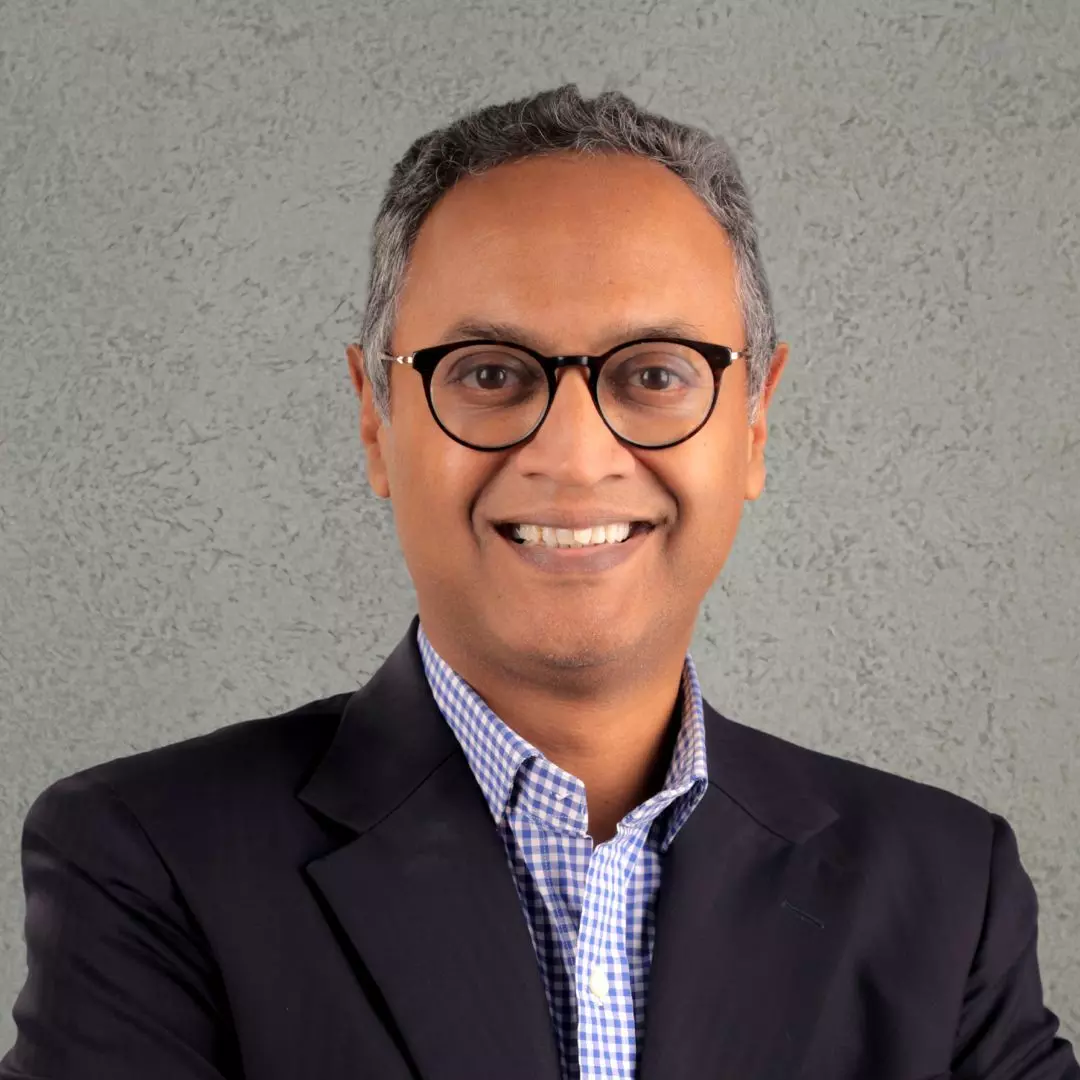
On Episode 731 of The Core Report, financial journalist Govindraj Ethiraj talks to Anil Rego, Co-founder and Fund Manager at Right Horizons PMS as well as Pawan Bachwal, Vice President, Head of Financial Services at Ericsson.
SHOW NOTES
(00:00) Stories of the Day
(00:50) A 14-month wait is coming to an end as markets inch close to all time highs
(03:22) Wall Street is back on buy AI stocks mode after Nvidia results
(04:31) RBI governor says demand for USD is responsible for a weak rupee
(16:34) How Ericsson is powering India’s fintech play at scale
Register for India Energy Week 2026
https://www.indiaenergyweek.com/visit/visitor-registration/
Register for the 3rd Edition of the Algorand India Summit
https://algorand.co/india-summit-2025
NOTE: This transcript contains the host's monologue and includes interview transcripts by a machine. Human eyes have gone through the script but there might still be errors in some of the text, so please refer to the audio in case you need to clarify any part. If you want to get in touch regarding any feedback, you can drop us a message on feedback@thecore.in.
—
Good morning, it's Friday the 21st of November and this is Govindraj Ethiraj broadcasting and streaming weekdays from Mumbai, India's financial capital
Our top stories and themes…
A 14-month wait is coming to an end as markets inch close to all-time highs.
Wall Street is back on AI stock mode after NBD results.
The Reserve Bank of India governor says demand for US dollars is responsible for a weak rupee.
And how Ericsson is powering India's fintech play at scale.
The Countdown, Or Rather The Count Up, Is On
India's main benchmarks came close to record highs on Thursday, thanks to a strong showing by Reliance Industries. The Nifty, 50 and Sensex gained about 0.5%, making them now less than 0.5% away from all-time highs reached in September 2024. More specifically, Nifty is now less than 100 points shy of its all-time high of 26,277 on September 27, 2024, while the Sensex is about 300 points short of its peak of 85,978 recorded on the same day.
So it's very likely, though not necessary, that these levels could be crossed today. We have more market views coming up in a bit where we ask whether there is a sustained rally up ahead, but the larger factors driving the upswing is of course stronger corporate earnings, recalibrated valuations and increased flows, including foreign portfolio investments which have bumped up. And of course, it's been a 14-month wait so far.
Elsewhere, more upward ratings are coming in. HSBC expects India's Sensex to rise about 10% by end 2026, setting a target of 94,000. And it also is saying that domestic stocks offer value compared to China, according to Reuters reporting on that.
Indian markets have lagged their Asian and emerging market peers this year, thanks also to heavy foreign selling and of course the attraction of AI and other categories of stocks in other markets, including China. Foreign portfolio investors have sold about $17 billion worth of Indian equities in 2025 so far, and that also brings it on course for a record year of outflows, though the selling has slowed down now. As of the start of last month, that's October, FIIs or FPIs have invested about $1.3 billion net.
Reuters quoted a Citigroup statement saying that company results for the September quarter were slightly ahead of expectations and consensus earnings forecasts are stabilising after a prolonged period of downgrades, something that Kotak Institutional Equities Managing Director Sanjeev Prasad also told us at the core report just last week. The Sensex, after hitting an intraday high of 85,801, closed finally 446 points, higher at 85,632. Reliance, like we said, was a big leader, so was HDFC Bank.
Of the indices, the Nifty 50 closed up 139 points to 26,192. The broader markets were somewhat mixed. The small cap 100 index was 0.05% lower, so barely lower, and the nifty mid-cap 100 index was also slightly lower.
Wall Street has tentatively resumed the party after pausing for a few days. I say tentatively because while it seems to have recognised NVIDIA's strong performance and growth and demand for its AI chips, it continues to grapple with high valuations. NVIDIA delivered a surprisingly strong revenue forecast and it expects sales of about $65 billion in the January quarter, which is roughly $3 billion more than what analysts had predicted.
It also said that there's a half a trillion dollar revenue bonanza due in coming quarters, which may be even bigger than anticipated, according to Bloomberg. He also said that CEO Jensen Huang in a conference call with analysts that there has been a lot of talk about an AI bubble, but from our vantage point, we see something different. Well, the upbeat commentary, of course, led to stocks going up in early trading on Thursday before markets opened in New York and they'd already gained, or rather they have already gained, about close to 40% this year and taking the company's market value to $4.5 trillion.
Back home, the rupee depreciated about 23 paise to close at Rs. 88.71 against the US dollar, that's on Thursday, thanks to a strong US dollar. Speaking of which, Reserve Bank of India Governor Sanjay Malhotra on Thursday said the central bank does not aim for any specific value of the rupee and that its recent fall against the US dollar is mainly driven by higher demand for the US dollar.
He was speaking at an event at the Delhi School of Economics and he explained that the movement of the rupee is a result of market forces. We do not target any level. Why is the rupee depreciating? It's because of demand.
It's a financial instrument and there is a demand for dollars and if demand for dollars goes up, rupee depreciates. If demand for rupee goes up, the dollar comes down and then it appreciates, he said in a report quoted in Business Standard.
Looking Ahead for Stock Markets
With the stock markets coming in touching distance of all-time highs, how does the journey look till here, or rather what's the journey been like till here as we look back and look forward in terms of what is standing out at a time like this including sectors and whether valuations will continue to hold.
I spoke with Anil Rago of Right Horizon PMS and I began by asking him about the journey so far.
INTERVIEW TRANSCRIPT
Anil Rego: I guess, you know, the last one year has been almost like a whole market cycle, right? If you went a little before one year, we were at highs, mid and small caps were in momentum, then they all, you know, gave way. Of course, mid and small caps corrected into right from say October to say March in a very significant way.
And interestingly, now we are back closer to all-time highs. I think it's been good because having a correction like this becomes a time correction, right? And if you're saying that a whole year, well, you know, you have earnest growth and you have sort of a period where, you know, you are where you were, say a one year back, if you look at it that way, it basically helps you on valuation.
So if you actually look at now, mid and small cap valuations, they are dropped significantly from, you know, the levels that were there, say a year back. So what makes it good from here, and I think we are back to either, you know, earnings growth averages or in some cases, depending on where you look at it, if you look at, say, a five-year, you may even be lower in some cases in terms of it, you know, a 10-year possibly closer to averages. So I think earnings is likely to also pick up in our view.
So I believe that we are at a good place and hopefully we'll break out from highs and the icing of the cake will be, you know, if you have a trade deal. I think market has a way of sensing things. I won't be surprised.
That's also around the corner. Something like a trade deal will also give it a bit of a bump as in when it happens.
Govindraj Ethiraj: Right. One of the things that's been holding the markets back, obviously, including from the point of view of foreign portfolio investors is valuations, which they seem to now feel or many of them seem to now feel are a little more under control. How are you seeing this?
Anil Rego: No, definitely. I think we are comfortable with valuations at this point of time. See, typically, if I just look at the Nifty and if you look at, you know, very long term cycles, when you come closer to 20, sort of on, you know, Nifty, it's a buy on the P ratio.
Right. And if you hit somewhere 28, 29, etc., then, you know, it's definitely a sell. What is interesting is before the COVID form, right, we were there.
We were at 2019, December, we were something like, you know, 28, 29. Right. So for today, if you look at it, despite the market having gone up from there, we are at a decent place in terms of valuations.
And of course, what is a little elevated and maybe close to averages or a little higher than averages is the mid and small caps. But typically, sometimes you can see when the cycle plays out in mid and small caps, valuations there actually get obscene. We must keep in mind that, you know, there's very good domestic flows coming in and a lot of them where SIP is coming into middle small caps because those, you know, categories did very well.
So I believe that from that standpoint, again, till we see a turnaround in terms of domestic flows, I would be not too cautious. And I think hopefully you'll see any corrections as, you know, level one corrections and not a cycle attorney corrections. But yeah, actually more than Indian valuations, I'm more concerned about what if there's a turnaround on the global side.
Some of the valuations are global on the AI, etc. are going to crazy levels, though I don't expect the cycle to end so early. Okay, but that's something to watch out for.
Because whenever that cycle turns, then you possibly see a collateral damage out here. And possibly when you see impacts on that side, a cycle turning falls, and they go much more than a 15% like a fall on the nifty. So that's my point on valuations.
Comfortable with domestic. I think if earnings growth are there, then we should see that also much more comfortable. Yes, watch out for global side.
Govindraj Ethiraj: Right, you said if earnings growth are there. So the general feeling seems to be that we've now begun to turn around on earnings growth, particularly from the last quarter. So are you sharing that optimism that this will continue into the next and the one after or you would still wait?
Anil Rego: I'm comfortable with earnings growth. In fact, one gave a bit of a contrarian call from last quarter itself, saying that we believe that earnings growth will sort of stabilise and start moving up, right? It could take some time for it to really get to peak levels.
I would believe somewhere right from now to FY27. I think earnings growth will be on the rise and possibly I'll watch out for it peaking out in FY27. We'll have to still wait and watch and see how things are panning out.
But definitely in the short term, earnings of let's say the nifty companies has already started recovering. So also for the mid cap index companies, how the small caps has been a little bit of a lag. But that also I expect possibly from the next quarter, the JFM of the next year, we'll probably see earnings growth also pick up on the small cap side.
That's a bit of a lag which is there and hopefully we should see again, you know, that cycle turn very strongly on earnings growth, including on the small cap side.
Govindraj Ethiraj: Amongst the sectors you said that you are liking presently, they include wealth management and value fashion retail. So what's the larger theme here? And are you seeing an upswing in consumer demand and therefore that driving some of this, including in when I say consumer demand, I mean also in investing in stocks and so on?
Anil Rego: The primary driver for all of this in my view is demographics. I think as Indians, if you see the curve of it, go a little higher up income levels and the asset levels. So I think that is going to be a large move.
The second aspect is about a little bit of penetration, also keeping in mind where the economy is. So when you see an economy moving from two to five trillion, you see a few things change there. We think that that's also going to be there for India.
I would believe that penetration also will start coming in. Like for India, I think value is also interesting. By value, I'm saying like value retail is also sort of interesting, as well as the premium side of it also as the wealthier thing, the component of people start moving up.
That's also sort of very interesting for us. The lower chain also with a lot of technology, with distribution and stuff like that come in thanks to the various internet ventures. That's something which is creating a completely new reach out there.
For example, I'm saying on wealth management, say 25% of household savings is financial today versus say a 70% plus in the developed markets. And secondly, 15% is professionally managed in India versus again, 70% plus. So I'm just saying that some of these factors are going to work, not just about equity broking and stuff like that.
I'm seeing the broader wealth management themes is also what one is sort of looking at, not just on the reef.
Govindraj Ethiraj: As you look ahead, I mean, next couple of months, given or rather assuming that most of the factors are at a constant, which is domestic inflows, steady foreign portfolio investment inflows, which is at a slightly lower ebb. Do you see markets staying where they are broadly inching up or racing ahead?
Anil Rego: I believe sometime we'll break out and whenever you break out, typically it races ahead. So I would see one burst coming there. But then at least let's say a 15% type of up move is what I would think over the next six to nine months is what I would expect.
Govindraj Ethiraj: And that's pretty much in line with or somewhat similar to what some of the bigger brokerages have been saying as well. Anil, it's been a pleasure. Thank you so much for joining me.
Anil Rego: Always happy to be on this show. Thank you.
TCS Data
Last month, Tata Consultancy Services, India's largest IT services company, said it would foray into the data centre space with an aim to build about 1.2 gigawatts of capacity and about six and a half billion dollars of investments to do that. The TCS stock price fell after that, pretty much the opposite of how a similar piece of news would have been greeted on Wall Street.
Indian investors clearly prefer the services revenue and profit flow that IT services companies have delivered over the last few decades and presumably don't want these companies to take any aggressive bets including in the context of AI, at least in the context of AI hardware. Now, news is that TCS has raised about a billion dollars from private equity group TPG for its AI data centre business HyperVault. Both companies will invest about two billion dollars in HyperVault over the next few years according to Bloomberg and TCS will hold a 51% stake.
HyperVault will build multiple data centres with gigawatt scale AI ready infrastructure. A few weeks ago, Google and Adani announced a 15 billion dollar investment in a data centre or data centres in Vishakhapatnam on the east coast of India. TPG earlier partnered with Tata Motors electric vehicle arm and Tata Technologies.
Our India Energy Week segment for today…
India's solar module manufacturing industry is headed for consolidation over the next three to five years as over capacity and rapid technology shifts squeeze smaller players according to a report from rating agency ICRA quoted by Reuters. India has authorised about 110 gigawatts of module capacity under its approved list of models and manufacturers but only 70 to 75 percent of that can adapt to newer technologies like Topcon and bifacial modules.
While India's module production capacity is expected to increase to 165 gigawatts, India's solar project installations are likely to be around 45 to 50 gigawatts leading to potential over capacity. Bifacial modules can absorb sunlight via both front and rear surfaces while modules made with Topcon cells have improved electron flow and lead to lower losses. ICRA said in that report quoted in Reuters that the manufacturing segment requires scale and integrated presence across the value chain which is technology and capital intensive.
And moving on to oil and gas, most of the oil and gas world is really watching the United States right now. Oil prices were up on Thursday thanks to better than expected or bigger than expected draw in U.S. crude stockpiles and the general risk asset market rally according to Reuters which also said that Brent crude futures were up at about $64.08 so around $64 while West Texas intermediate crude futures were at about $59.95 almost $60. Reports also suggest that the United States was renewing its push to end the Russia-Ukraine war and has drafted a framework for it which could mean more Russian oil being released into the market so that's the optimistic piece of news going into the weekend.
Ericsson and Fintech
My last visible memory of Swedish telecom giant Ericsson's brand is in the form of a mobile phone which I used of course many many years ago. It surprised me somewhat to hear of Ericsson's advanced role in India's fintech revolution apart from the infrastructure which we know drives India's high-speed telecom networks and we found this out when my colleagues met with the company at the recently concluded global fintech festival in Mumbai. Now the background is this India has over 270 million 5G subscriptions which represents the highest data consumption globally.
India is already a global front-runner in 5G and has also seen the world's fastest nationwide 5G deployment with more than 90% 5G coverage to date. Now Ericsson has about 22,000 employees in India and also happens to constitute its largest workforce. Ericsson set up the first switch in India in 1903 and has been a key partner in India's telecom growth and digital transformation more recently and that of course includes going from 2G right down to high-speed 5G.
While Ericsson is working on the telecom infrastructure side with most major Indian telecom players, its work extending into fintech and financial inclusion is interesting. I reached out to Pawan Bachwal, vice president and head of financial services for Ericsson based out of Stockholm now and I began by asking him to tell us about Ericsson's presence in our telecom life.
INTERVIEW TRANSCRIPT
Pavan Bachwal: You're right that Ericsson has been in the telecommunications space and is one of the biggest players for many a decade. We did have an offering on the devices side, but a little known fact is we did a lot of work on the back end, which we still continue to do with respect to some of the telecommunications infrastructural assets that we have in India and globally. Today, more or less every second 5G call is actually getting processed on an Ericsson equipment and infrastructure.
Govindraj Ethiraj: Right, you know you talked about 5G networks, so give us a sense on what is the 5G penetration right now in India and before I come to how 5G is powering many of the things that we are doing or want to do again in the context of fintech and other applications.
Pavan Bachwal: I would say more or less majority of the traffic today is actually working on 5G. Understanding how I used to transact when I would visit India, how my parents used to transact say just a decade ago, you know, to how things are transacting has everything to do with connectivity. Okay, the mobile has become a central usage no matter what kind of wallet service you're using, no matter what kind of banking service you're using.
And there connectivity comes to the core of it with respect to how people have changed the way experience in terms of financial transactions are carried out in India and globally.
Govindraj Ethiraj: Right, give us a sense on what Ericsson is exactly doing at the back end. Once again, this is all invisible to users and I'll come back to the fintech part and in a moment once again.
Pavan Bachwal: So what typically happens from a broader company point of view, right, that all of the equipment that is needed in order to create a mobile telecommunications ecosystem, whether it is on the radio access network side, whether it is on the core side, whether it is on the antenna side, whether it is on the postpaid or prepaid side, all of these assets need hardware and eventually software. And that is what the larger company actually is doing for many a decade for many a customer. And on that note, me and my organisation is working on the fintech assets with respect to how we can take this software in a B2B mode to our customers, no matter it being a CSP, no matter it being enterprise, no matter it being a bank or for that matter a financial institute or a government institute to leverage the capability of financial services in the ecosystems and jurisdictions in which they operate in.
Govindraj Ethiraj: Right, so give us an example or I mean if you could illustrate that in the case of a bank or a non-bank finance company and how your system would work and where it would work to accelerate digital payment adoption.
Pavan Bachwal: So if you see, right, when you use your mobile device and you open any given app, okay, and it could be a banking app or it could be one of the wallet app provided by one of the enterprises, okay, what you are actually doing is just the user experience or the user interaction piece. The balance that you see on your screen, the transaction history that you see on the screen, the payment that you want to scan or initiate from your phone is actually going to a back-end system through some means. Let's call that through APIs.
Now that basically would result in accounting management, it would result in know your user or know your customer management, it would relate to some kinds of limits that are applied with respect to the regulatory restrictions or regulatory guidelines and boundaries in the country in order for the transaction to eventually be debited and credited to the respective parties if it is a transfer or if it is a payment as an example.
And then you actually see the end result that you have initiated the transaction which has successfully gotten concluded and the B party has eventually received whatever transaction was initiated and now you can either leverage the service that you have paid for in the case of payments or you have fulfilled an obligation in an event where you have transacted and paid out to a B party and all of that functioning is eventually processed by a back-end technology which in this case could be an Ericsson fintech platform or the other such solutions out there.
Govindraj Ethiraj: Right, so you're doing a lot of work in the startup ecosystem, you've worked with IIT Kanpur and you did a fintech hackathon, so tell us about as you look ahead what are the things that you're working on and what are the problems that you're trying to solve in the payment ecosystem in India?
Pavan Bachwal: Thank you, yes you are right that we are trying to see how we can bring in innovation but at the same time leverage knowledge out there especially from all of the premier institutes in India vis-a-vis the IIT Kanpur's and the likewise organisations right and with respect to initiatives on hackathon engagement collaboration on the developer ecosystem what we want to understand is how the technical assets of the Ericsson solution is eventually translating into business user or consumer user friendly transactions or use cases that will help achieve not only digital adoption much faster real-time transactions but also create new use cases that haven't happened. If you look back of the evolution right when digitalisation of transactions happened it started with transfers payments it went into remittance today we are looking at a new era with respect to digital lending, digital insurance, digital buy now pay later right and it is there where as we go on on different initiatives you know it will become more and more necessary to see what is the new horizon of digitisation and innovation and that is the purpose of how we want to kind of collaborate with different industry stakeholders to identify what is the problem to solve what is the innovation to address.
Govindraj Ethiraj: And from your own point of view what are the cool things that you've seen recently or are looking out for in this journey?
Pavan Bachwal: I would say that you know the consolidation of different elements into the same single interface is fascinating to me and that would mean that you know you don't need to rely on transfers payments on one interface and look to remittance and lending on another interface and then look into mutual funds or investment related portfolio on other interface all of that is getting consolidated and while that is getting consolidated you know it's not only about the fiat currency that we're talking about but with initiatives in India like the digital rupee and other initiatives with respect to digital assets that will get regulated hopefully with respect to all of the decisions that are ongoing you know globally.
We will see that eventually everything gets consolidated in one interface and no matter what kind of instrument type you use it becomes so convenient for anyone transacting to use that same interface and carry out any kind of lifestyle related or transaction related use case that is out there.
Govindraj Ethiraj: A lot of the payment ecosystem is really serving ordinary people in India for example again and the work that you're talking about including in AI is let's say cutting edge at all so tell us about how these two worlds meet I mean how is AI or likely to help or if not helping already ordinary people in India you know benefit in terms of either transaction speed or transaction let's say transaction integrity or other things that you're working on.
Pavan Bachwal: I will take an example of you can say fraud mitigation you know where I think the use of AI is tremendous you know especially in relation to you know how people in their busy day lives might or might not want to think about the other side when they are transacting and it is there where if we can mitigate fraud from taking place as an example that identify that you are on a call with someone while you are initiating a financial transaction try to ask do you really want to go ahead with this it could be suspected transaction and I think examples of these would be really benefiting the large segment of users that want to adapt to digital transactions in India but also in the world in order to mitigate fraud and AI is a fantastic technology and means to achieve such
Govindraj Ethiraj: kind of blockers and protect consumer value. Right last question Pawan so what is a good illustration of something that has worked well in India or has been germinated and scaled in India which has or is going overseas or is being or likely to be replicated elsewhere.
Pavan Bachwal: I will draw on two elements right one is that the central piece with respect to how technology can really consolidate different ecosystem actors UPI is a great example of that when it started off it started off with some parties interacting with UPI but today it's a whole ecosystem that has taken its own evolution you know so I think that is something that is already in place by the good work happening in India and how I see today in different countries with collaborations with tie-ups with opportunities the use of UPI is becoming predominant. The second element would be I would say cultural slash personal in nature you know I see my own parents who have transacted differently in 2016 versus how they do today where they also teach me what kind of digital transactions they are carrying out and I would say that a lot has to be learned as to how quickly a generational change can occur with respect to cash slash card based transactions to now fully digital transactions and therein lies the element of what that would mean globally and how India could be used as an example of transitioning from legacy to digital. That's a good note to end on.
Govindraj Ethiraj: Pawan, thank you so much for joining me.
Pavan Bachwal: Thank you, Govind.


