



 Newsletter
 Search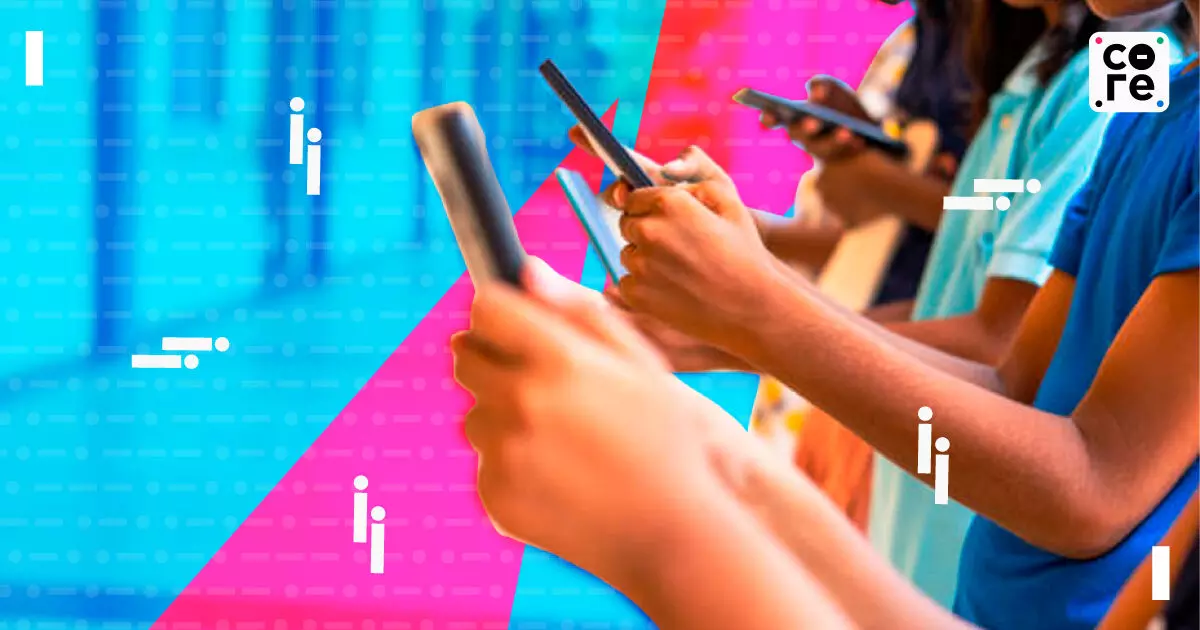
Restrict Phones, Save Young Minds: Can India Learn From American Politicians?

New Jersey’s new governor’s bold reforms—price freezes, phone bans, anti-social media moves—spark US debate and echo urgent questions for India.
The Gist
The recent election in New Jersey highlights the challenges faced by parents and educators regarding technology use among youth.
- Mikie Sherrill, the newly elected governor, plans to address high electricity costs and mental health in schools.
- The debate on banning cellphones in classrooms is gaining traction, with experts warning of the cognitive impacts of excessive screen time.
- India faces similar challenges with smartphone usage among its youth, prompting discussions on moderation and regulation in educational settings.
The state of New Jersey in the United States which houses a fair number of Indian immigrants, legal and sub-legal, elected a democrat governor yesterday.
At the same time Indian origin Zohran Mamdani won his election as New York city mayor.
But today’s focus is on neighbouring New Jersey.
53-year old Mikie Sherrill, is also a helicopter pilot who graduated from the United States Naval Academy in 1994. She flew missions as a Sea King helicopter pilot in Europe and Middle East.
After serving in the navy for around a decade, the mother of four children studied law at Georgetown University and subsequently joined the U.S. Attorney’s Office in New Jersey.
So what could someone from such a background promise to work on being elected?
Admittedly, it is a rhetorical question since we are far away but here are some of her promises.
Freeze the state’s high electricity costs by declaring a state of emergency on her first day in office in January.
Get cellphones out of classrooms and hire more mental health counselors for schools.
Using data gathered through a new “social media addiction observatory,” she said her administration will take on digital platforms that use algorithms to lure in children and teenagers.
Could these promises be relevant to a regional or national politician in India ?
The answer could be no because our issues are different and our politicians could rightly be focused on livelihoods, jobs and the other big trend of late, cash transfers to women voters.
But could these be additional issues?
Lets skip electricity, though it is a burning issue in many parts of the United States. Tariffs are rising sharply, also due to the proliferation of energy hungry data centres. Retail power prices in New Jersey were up 19% in August from a year earlier, a Wall Street Journal article said.
But admittedly, high power costs do not surface so much as an election issue in India also because of subsidy responses.
Let's examine the other two issues, getting phones out of classrooms and the fight against algorithms.
The fight against algorithms is a larger one and may appear more distant so lets put that aside too.
In the last week, several prominent voices, including Michael Bloomberg, former mayor of New York and owner of Bloomberg news made a strong case against children using Artificial Intelligence as a tool or aid in their education.
Bloomberg starts off by saying elected officials are finally waking up to the educational harms of mobile phones in public schools. As more districts ban them, the reports are highly encouraging—though hardly surprising, given the positive results we saw in New York City when we removed them from schools nearly 20 years ago, he says.
Yet, he laments, that even as phone bans spread, elected officials and Silicon Valley executives are trying to open classrooms to a technology that could set students back even further than mobile phones have: artificial intelligence (AI).
An NYT article by Anastasia Berg who teaches philosophy at the University of California, Irvine says higher education aims to create cognitively mature adults, which in turn requires us to ensure students learn to read, think and write all on their own.
But she says, “Our students are about to turn subcognitive.” At stake are not just specialized academic skills or refined habits of mind but also the most basic form of cognitive fluency.
Her argument: To leave our students to their own devices — which is to say, to the devices of A.I. companies — is to deprive them of indispensable opportunities to develop their linguistic mastery, and with it their most elementary powers of thought.
This means they will lack the means to understand the world they live in or navigate it effectively.
Now, arguing against AI is not the same as arguing against cellphones in class but there is obviously a link since cellphones or devices to extend Dr Berg’s and Bloomberg’s analogy are the primary gateway.
In many Indian households, the smartphone is also the only computer in the house as was evident during Covid when many children attended classes via their parents’ cellphones.
This is a much longer discussion but there is little doubt that overuse of cellphones are now causing damage to a host of neural and cognitive abilities.
There is also little doubt that you can’t educate your way out of this problem if you are to think of today’s youth as a harbinger of tomorrow’s bright future.
China offers some insights into tackling this challenge worth looking at. While replicating China may not be the best recourse, given that this does come with some caveats, there are threads worth picking up.
A report in the Information Technology and Information Foundation, a Washington DC based non-profit, quotes the Cyberspace Administration of China’s (CAC) “minor mode initiative,” a series of requirements for mobile device settings that give parents more control over their children’s online experience.
The report says that while China’s overall approach to digital policy is known for being authoritarian, censorial, and privacy invasive—an approach democratic nations should avoid—this customizable, device-level solution to children’s online safety can serve as an inspiration.
The proposed plan included daily usage limits, blocking non-essential applications between the hours of 10:00 PM and 6:00 AM and reminders to take a break from the device every 30 minutes among other things. Parents can customize these settings, and all settings require parental verification to change or remove.
It is clear that parents and educational institutions have to work today to ensure there is moderation in use and exposure to social media.
India has over 750 million smartphones and for many youth, the smartphone is as much a means to connectivity, commerce and of course content.
The smartphones are also the gateway to slick apps to buy now and pay later for daily expenditure or trade derivatives in the stock market on the run and until recently, gamble on cricket scores.
You can’t stop a 25-year old from gambling their income, savings and maybe their parents as well by swiping away at their smartphones. But you can surely control their exposure in their teens when they are surely more vulnerable.
Parents and schools across India are already embarking on banning cellphones in classrooms. We may or may not follow the China model, given the logistical challenges of implementing it but there should be a midway between full and self regulation.
More importantly, while New Jersey may be far away from India, the issues that matter to us as a generation are coming closer.
Core.
Core.


