

A New Law And A Long Road For India’s Nuclear Ambitions
Nuclear power, which currently accounts for about 3% of India’s electricity generation at about 9 gigawatts, is targeted to expand more than elevenfold to 100 gigawatts by 2047.
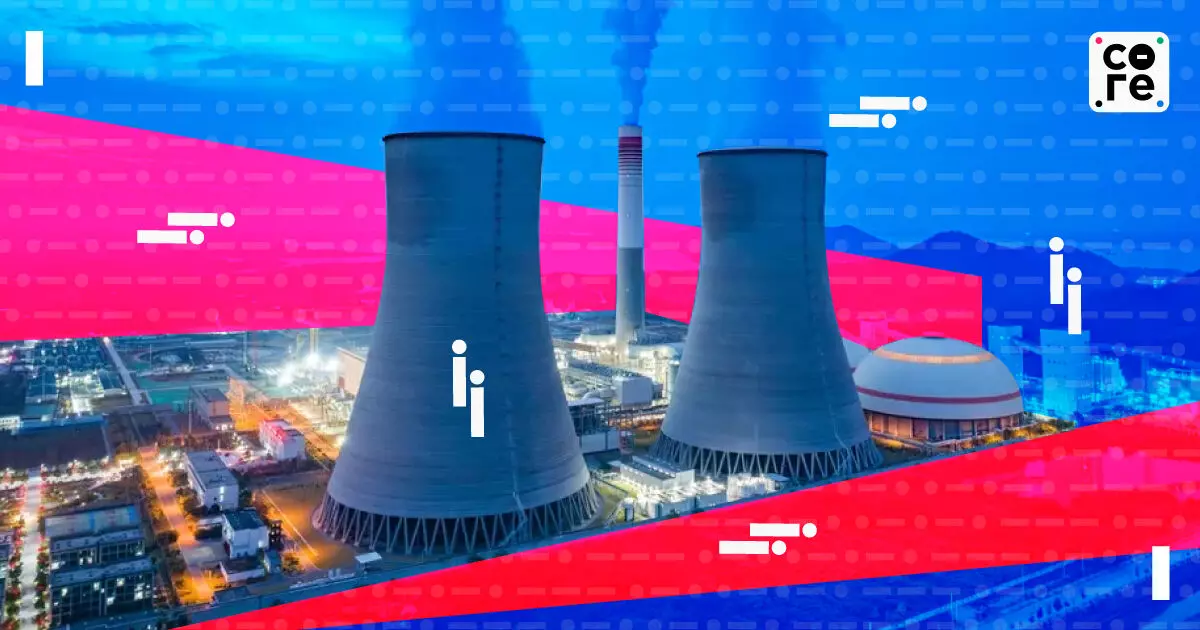
India has taken the most decisive step in years to change its nuclear power trajectory, opening doors for private ownership of nuclear plants, while easing liability rules for equipment suppliers. The bill, passed by both houses of parliament, is meant to make nuclear energy one of the pillars on which India meets its 2070 net-zero goal.
The Sustainable Harnessing and Advancement of Nuclear Energy for Transforming India Bill, 2025 (also known as the SHANTI Bill) aims to accelerate capacity additions at a time when nuclear energy contributes about 3% to the country’s electricity generation, or approximately 9 gigawatts (8,880 megawatts).
The government plans to scale this up more than elevenfold to 100 gigawatts by 2047. The key question, however, is whether the bill marks a genuine inflexion point for India’s nuclear ambitions or whether it remains more aspirational than transformative.
A Long Nuclear Runway
In the long run, nuclear power is expected to account for a meaningful share of India’s energy needs, gradually taking on the baseload role currently played by thermal power. The transition, however, is likely to be uneven and protracted.
Anujesh Dwivedi, partner at Deloitte India, told The Core that the proposed legislation marks only the first step in what will be a long and complex journey, with the pace of progress hinging on execution capabilities and the sector’s ability to scale safely over time.
The government will need to put in place a clear framework for nuclear power tariffs that balances investor returns with consumer affordability. Long gestation periods remain a key challenge: nuclear projects typically take about six years of pre-construction work and 12 to 13 years from initiation to commissioning, significantly raising execution and financing risks for private investors.
“It would be essential to set-up a Case-2 kind of framework wherein site identification, land acquisition and other project preparatory activities can be undertaken in a SPV’s name before a private sector player is selected for taking over the development of the project,” Dwivedi said.
In government-led infrastructure and energy projects in India, Case-1 and Case-2 bidding frameworks—widely used in power generation and transmission—define how project risks are allocated ahead of auctions. Under Case-1, developers identify land, secure approvals and shoulder development risk before bidding. Case-2, by contrast, sees the government or a state entity pre-develop projects by acquiring land and securing key clearances, before bidding them out to private players—reducing execution risk and typically drawing stronger investor participation.
Dwivedi further added that fleet mode (bulk mode) of ordering equipment to encourage localisation, would be essential to attract domestic or global OEMs to invest in creating adequate manufacturing facilities in the country to reduce import dependence for equipment required for scaling up nuclear power capacity in India.
Karthik Ganesan, fellow and director for strategic partnerships at the Council on Energy, Environment and Water (CEEW), called the proposed bill a “momentous milestone” for India, while cautioning that turning the vision into reality would require a long-term commitment to a technology with costs locked in for the next 50 to 60 years—uncharted territory for India.
PSUs To Lead The Way?
Since 1962, nuclear projects have been restricted to entities under the Department of Atomic Energy, primarily the state-run Nuclear Power Corporation of India (NPCI).
With the sector having remained closed until now, experts believe private players will need time to scale before making a meaningful contribution. In the near term, most capacity additions are expected to come from indigenous technologies, where incumbent public sector undertakings (PSU) have established technical expertise and a strong safety record.
“Such PSUs can play a handholding role in attracting private players to the sector through joint ventures (JVs) and technology sharing. In the longer run, especially once largely factory-made small modular reactors (SMRs) become prevalent, the private sector is expected to play a substantial role in nuclear power capacity addition in the country,” Dwivedi said.
Liability Reset
Two cornerstone statutes—the Atomic Energy Act of 1962 and the Civil Liability for Nuclear Damage Act of 2010—that long kept India’s nuclear sector under tight central control have now been repealed under the SHANTI bill.
Along with opening the sector to private players, the bill removes its biggest hurdle — a clause allowing operators to sue equipment suppliers over defects, which had deterred foreign vendors. By reducing legal risks and making insurance feasible, the change is expected to attract global technology and investment into India’s nuclear sector.
In turn, operators would require government licenses and safety clearance from the Atomic Energy Regulatory Board. They must also maintain liability funds ranging from $10.99 million to $330 million, depending on reactor capacity.
Compensation would be paid from operators’ insurance-backed liability funds, capped at 300 million Special Drawing Rights—an International Monetary Fund reserve asset—in line with international norms. A nuclear liability fund will cover claims beyond the operator’s liability, with the government stepping in if damages exceed the set limits.
Proposed Entrants
Conglomerates such as Adani Group, Reliance Industries and state-owned NTPC have publicly expressed interest in entering India’s nuclear power sector. By now, about 16 potential project sites across six states have also been identified.
Tata Power has also maintained a strong focus on exploring opportunities in the SMR space. "As the Government is looking for active partnerships with private players and the amendment to the Nuclear Power Act to set up nuclear energy capacity, we will take up the opportunities to set up small modular nuclear reactors," the company said in a filing with the Indian stock exchange.
Private Indian companies would be allowed to import and process uranium– which is the primary fuel for nuclear reactors– while foreign firms could form partnerships with domestic players. Global suppliers such as Westinghouse Electric and GE‑Hitachi from the US, France’s EDF, and Russia’s Rosatom have also shown interest in supplying technology and equipment for India’s nuclear projects.
Global Nuclear Expansion
The International Energy Agency (IEA) notes that global momentum for nuclear energy is accelerating, backed by strong market, technology and policy fundamentals. With electricity demand surging due to EVs, data centres, AI and higher cooling needs, nuclear is increasingly viewed as a clean, round-the-clock complement to renewables.
Interest is now the highest since the 1970s, with over 40 countries pursuing nuclear expansion. Simultaneously, innovation is transforming the sector through advanced reactor designs and SMRs, the first of which are expected to enter commercial operation by around 2030.
Uranium production prospects shifted rapidly after the pandemic as energy policies swung back toward nuclear power, investor interest rose and the Russia-Ukraine war disrupted supply access, the World Nuclear Association said. Output is responding through mine restarts, life extensions and new projects, though execution risks remain as demand accelerates.
Uranium is currently the only fuel used in commercial reactors, while thorium—about three times more abundant—can be used in select designs such as CANDU reactors but has yet to be commercialised.