

The India-EU ‘Mother Of All Deals’ Is Also A Geopolitical Message To Trump
The India-EU trade pact offers a $136 billion buffer against Trump tariffs, expands car quotas and defence ties, signalling a geopolitical shift despite pending legal details.

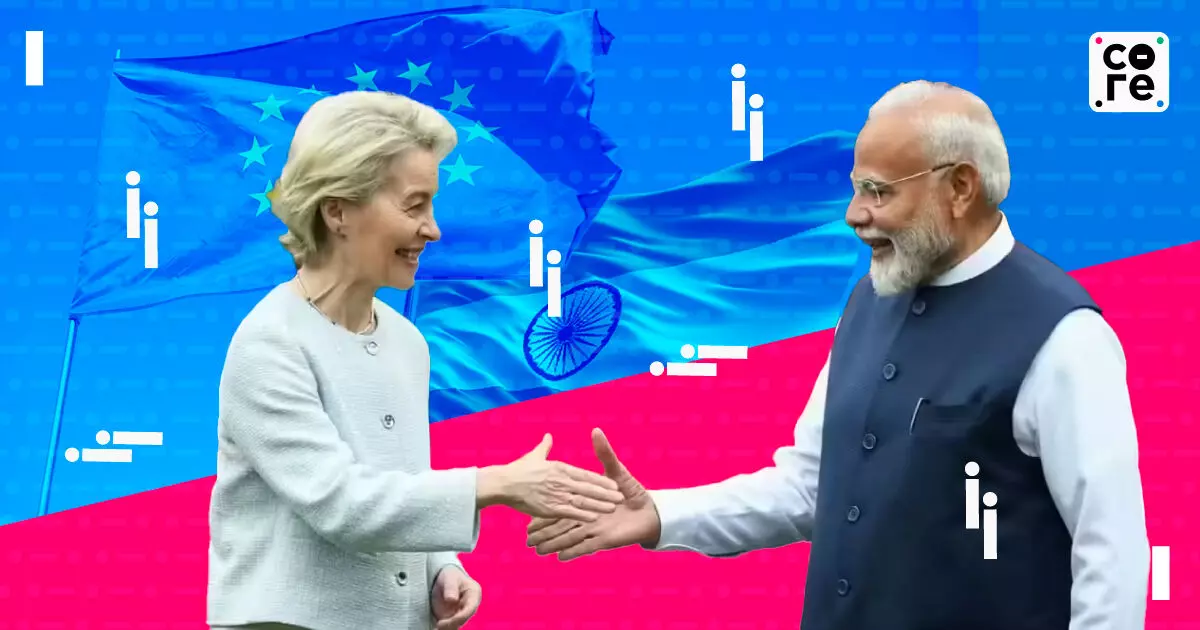
The Gist
India and the EU have signed a free trade agreement after 20 years of negotiations, but legal processes remain.
- The agreement could take another year for ratification by EU member states.
- This deal represents a significant political and economic move amidst changing global trade dynamics.
- India will significantly increase quotas for European automakers, marking a shift in trade relations.
India and the European Union (EU) have finally signed off on a free trade agreement after two long decades of discussions.
The deal may be signed, but even at this point, there is much legal scrubbing left to be done on both sides.
The whole process, including the ratification by various EU member states, could take another year, at least.
The timing is stark.
Both sides clearly want to cushion the impact of a new United States-led trade order where, increasingly, there is less order and more friction — at least regarding trade with Washington.
‘Mother Of All Deals’
The pact paves the way for freer trade in goods and services between the 27-nation EU and India, together representing a market of roughly 2 billion people.
While currently worth around $136 billion, bilateral trade is expected to surge under this "mother of all deals".
However, the agreement appears to be as much an immediate political signal as it is a long-term economic one.
Incidentally, the stockmarkets barely responded to the pact and were choppy and mostly indecisive on Tuesday. The reaction to a US trade deal with lower tariffs would have been quite different.
According to a trade lawyer who spoke to The Core, the non-trade components of the India-EU agreement carry more relevance.
The deal is anchored in a broader "Joint Strategic Agenda" that moves the relationship into the realms beyond where it is now.
Among key areas is Defence and Security, including a proposed formal Security and Defence Partnership — the EU’s first such move in Asia. Building on decades of technical collaboration, including the recent launch of the Proba-3 mission and leveraging the 2022 launch of the India-EU Trade and Technology Council to coordinate on digital and green standards.
As part of the deal, India will also give European automakers a quota six times larger than India has ever offered before.
The signals are being sent as much to the United States as they are to domestic audiences in Brussels and Delhi.
Washington Turns Testy
All eyes are now on Washington to see how it will react, and the first signs are far from positive.
US Treasury Secretary Scott Bessent has already criticised the EU for forging ahead with the deal.
“The US has made much bigger sacrifices than Europeans have. We have put 25% tariffs on India for buying Russian oil. Guess what happened last week? The Europeans signed a trade deal with India,” Bessent told ABC News Sunday.
The US ability to keep global and local nerves frayed is remarkable, though what this "maximum pressure" achieves remains unclear.
India’s Minister of Petroleum and Natural Gas, Hardeep Singh Puri, offered a cooler perspective to CNBC on Tuesday, stating he expected the US-India relationship to remain positive.
“I don’t know when trade deals will get signed... but everybody needs to chill a bit,” he said.
If only the Trump administration would heed that advice.