



 Newsletter
 Search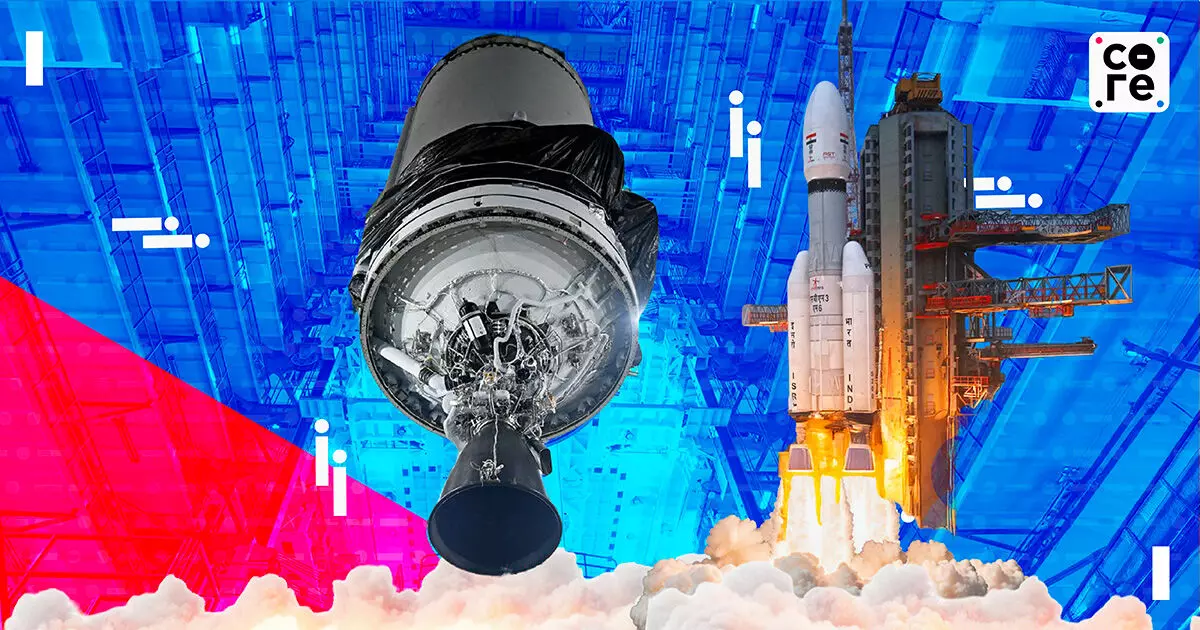
Beyond ISRO: India’s Space Sector Hits A $44 Billion Turning Point
 By Manish Pant
- Economy
- Published on 10 Feb 2026 6:00 AM IST
With ISRO guiding the next gen and startups set to cross $147 million in funding this fiscal, India must increase space spending as a share of GDP to secure critical infrastructure and long‑term strategic advantage.
The Gist
India's space sector has evolved significantly since 2020, with over 300 startups emerging and aiming for a share of the burgeoning global market.
- The sector's growth faces challenges from global competitors like SpaceX.
- Recent funding successes indicate rising investor interest.
- Calls for government support and policy changes to achieve a $44 billion space economy by 2033.
When Dr Subba Rao Pavuluri resigned from his senior post as a division head at the Indian Space Research Organisation (ISRO), the move was considered bold and unconventional. At the time, India’s space sector was a closed shop and an exclusive domain of the state. There were no private rockets, no venture-backed satellite constellations, and certainly no orbit economy.
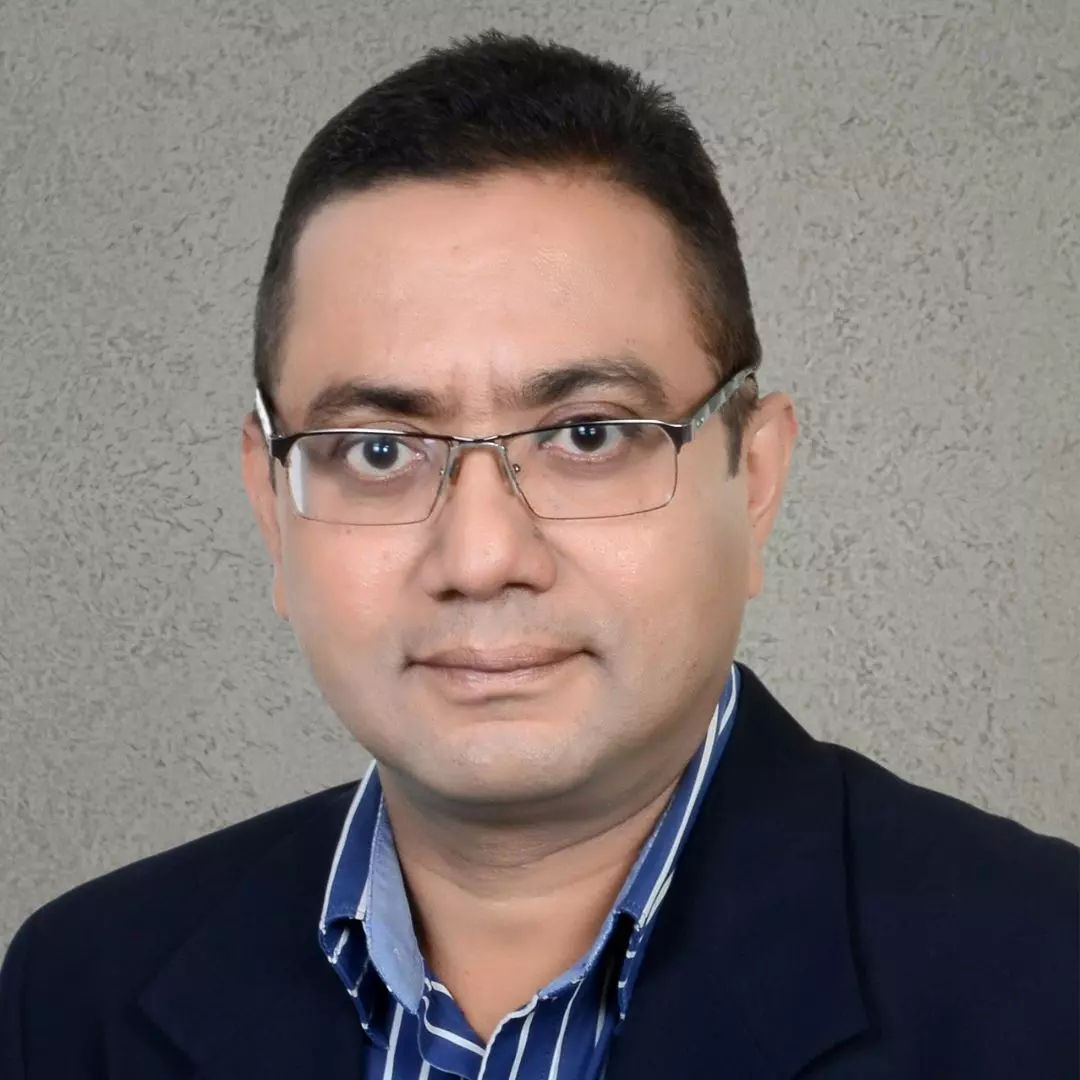
Pavuluri founded Ananth Technologies Ltd (ATL) in Hyderabad nearly three decades before the Indian government would formally invite private players to the table. Today, the septuagenarian is regarded as the grandfather of India’s spacetech startup ecosystem, a man who lived through the evolution of a sector that has suddenly found itself at a historic inflexion point.
“From secure communications and navigation to climate systems, launch infrastructure and disaster resilience, every layer of our national architecture now depends on space assets,” Pavuluri, chairman & managing director at ATL, told The Core on a recent afternoon in New Delhi. For someone who has lived the evolution of India’s space economy, the septuagenarian’s words carry a lot of weight.
“Granting space the status of critical infrastructure and decisively expanding public investment is essential if we are to match our strategic aspirations and secure our leadership in the Indo-Pacific,” Pavuluri added.
His remarks come at a time of both triumph and turbulence for India’s space sector. Just last December, India celebrated the resounding success of ISRO’s Launch Vehicle Mark-III (LVM3)-M6 mission, which hauled the world’s heaviest telecommunications satellite — the 6.1-tonne BlueBird Block-2 — into the sky.
The celebratory mood was, however, dampened in January when the Polar Satellite Launch Vehicle (PSLV)-C62 launch failed. Whether caused by a technical glitch or, as some speculate, sabotage, the loss was significant. The rocket was carrying the Anvesha (EOS-N1) spy satellite, a critical piece of hardware designed for strategic surveillance.
The varying outcomes of the two missions highlight the growing importance of the sector to the world’s fourth-largest economy.
The Rise Of The New Space
Since its founding in 1969, ISRO has been India’s single space giant, though it has created a robust ecosystem of 400 private companies to supply components and fabrication. Companies like Godrej & Boyce, Larsen & Toubro, Walchandnagar Industries, Alpha Design Technologies, Centum Electronics and Tata Consulting Engineers, besides Pavuluri’s ATL, have played an invisible yet integral role in India’s space missions. State-owned players in the sector include names such as Bharat Electronics Ltd, Bharat Heavy Electricals Ltd, Electronics Corp. of India Ltd, Hindustan Aeronautics Ltd, and Kerala State Electronics Development Corp. Ltd.
The year 2020 changed the sector’s trajectory when India opened its space sector to private participation.
Today, India boasts over 300 spacetech startups, the highest concentration in Asia. They are no longer content with being mere subcontractors. These companies are vying for a slice of a $450-billion global private space industry that is projected to hit $1 trillion by 2040.
India has set its sights on a $44 billion space economy by 2033, a massive leap from its current $8.4 billion valuation. But to get there, the industry is calling for a fundamental shift in how the state views the sector.
Lt Gen (Retd) Anil Kumar Bhatt, Director General of the industry body, Indian Space Association (IsPA), believes that while private players are making strides, the government must remain the anchor customer.
“If geospatial or space data is mandated for planning and operations, it will significantly boost the sector,” Bhatt said. He, like Pavuluri, argues that the space sector must be categorised as critical infrastructure to ease access to financing.
The Funding Challenge
In the last five years, spacetech start-ups have piqued investor interest. According to data services firm Tracxn, India’s space startup ecosystem attracted $70.6 million in FY2024‑25. The sector has already crossed $147.56 million in FY2025‑26 to date, with notable deals including $17 million raised by Chennai‑based AgniKul Cosmos, $50 million by Bengaluru‑based Digantara, and $20.5 million by Bengaluru‑based EtherealX.
But that’s just the tip of the proverbial iceberg. As existing players show success and new entrants join the fray, funding requirements are only intensifying.
For the founders, many of whom are first-generation entrepreneurs, this capital is the oxygen required to survive. Pawan Kumar Chandana, the Co-founder and CEO of Hyderabad-based Skyroot Aerospace, is one such pioneer. In November 2025, Prime Minister Narendra Modi inaugurated Skyroot’s second integrated rocket manufacturing facility.
“We plan to launch our rocket with a payload in 2026,” Chandana said, referring to the Vikram-1 rocket. “This will place us among the few companies globally with commercial satellite launch capabilities. We are also exploring the development of larger launch vehicles and initiating work on reusable rockets.”
Through The Clouds
While Skyroot is focused on rockets, Bengaluru‑headquartered satellite firm GalaxEye is set to achieve a major milestone with the launch of its maiden Mission Drishti satellite, the world’s first multi‑sensor imaging satellite.
“This satellite is going to deliver clear, reliable imaging anytime: day or night, rain or shine. Weighing in at 175‑plus kg, it will also be India’s largest private satellite. For us, 2026 isn’t just a launch year; it’s the moment we redefine what is possible in Earth observation and push the global industry into a new era,” Suyash Singh, Co‑founder & CEO told The Core. Powered by the firm’s proprietary Synfused OptoSAR technology, Mission Drishti combines optical and radar payloads on a single platform. The satellite is capable of detecting objects as small as a car, monitoring crop health in standing fields, and assessing fine-grained infrastructure with high spatial precision.
Similarly, Anirudh Sharma, Co-founder & CEO of space situational awareness firm Digantara, is looking to set up space surveillance systems and intends to scale both infrastructure and markets.
“We are preparing to expand our ground‑based surveillance systems and accelerate the deployment of our satellite constellation to drive higher data fidelity, broader sensor coverage, and more precise tracking across key orbital regimes. On the market front, we are deepening our engagement with stakeholders not only in India but also in the US and across the Asia-Pacific region,” Sharma told The Core.
This year, Sharma also plans to expand LEO (Lower Earth Orbit) to extend their capabilities into GEO (Geostationary Earth Orbit), XGEO (extended GEO), beyond the Laplace radius and the cislunar domain.
ISRO’s Pivot From Provider To Partner
As the private sector charges ahead, ISRO is undergoing an identity shift as well. It is moving from a supply-driven model to a demand-driven one, acting as a mentor through technology transfers and the shared use of its world-class facilities.
This transformation is overseen by IN-SPACe, the nodal agency that authorises and supervises private entities. The results are beginning to manifest in major Public-Private Partnerships (PPPs). In 2022, a consortium of L&T and HAL won the contract to manufacture ISRO’s workhorse, the PSLV rocket. Though the programme is behind its original 2024 schedule, the consortium is now targeting an early 2026 launch.
With space classified as a “strategic sector”, foreign direct investment (FDI) in sensitive activities requires approval through the Department of Space and IN‑SPACe, with restrictions on ownership and mandatory clearances required for defence‑linked projects.
In 2025, another landmark was reached when a consortium led by the startup Pixxel was awarded the race to build India’s first commercial Earth observation satellite constellation. According to ISpA’s Bhatt, these are signs of a maturing market. “The EO-PPP awarded by IN-SPACe is progressing well... They have secured investor support and are on track.”
The most significant handoff happened in June 2025, when HAL won the contract to manufacture the Small Satellite Launch Vehicle (SSLV) under a full transfer-of-technology agreement, a rare instance of a space agency fully transferring launch vehicle technology to an external firm. To support this, a new spaceport is being developed in Kulasekarapattinam in Tamil Nadu’s Thoothukudi district. This is aimed at expanding launch capacity and strengthening the country’s growing small satellite market.
All these efforts are part of ISRO’s strategy to retain India’s position as a low‑cost, reliable satellite launch provider.
SpaceX Shadow And Cost Of Ambition
According to Deloitte’s 2022 TMT Predictions series, the satellite internet market is projected to capture nearly 27% of the global space industry by 2040, up from less than 1% today. Parallel growth is expected in satellite manufacturing, launch services, commercial human spaceflight, and remote sensing. Importantly, the share of government spending, historically dominant, is forecast to decline from 27% 2021 to below 18% by 2040, with the private sector driving future expansion.
Despite the big leaps the sector has made, it faces a daunting global landscape. For years, ISRO has been celebrated as the world’s most cost-effective space agency. In FY2025, its budget was Rs 145 billion ($1.74 billion), compared to NASA’s $25.4 billion.
Now, the frugal crown is being challenged by the arrival of Elon Musk’s SpaceX. Its reusable Falcon 9 disrupted cost dynamics, reducing payload launch costs to as low as $2,700 per kg in LEO. With the still‑under‑development Starship promising costs as low as $10 per kg, global competition is intensifying.
India’s response is a focus on the SSLV and its own reusable rocket programmes. Till 2020, India held about a 2% share of the global commercial launch market, and continues to leverage its proven reliability and expanding private sector ecosystem to aim for an 8-10% share of the booming orbit economy.
“We expect ISRO’s budget to continue to increase,” saidSkyroot’s Chandana. “Likewise, IN‑SPACe, which plays a vital role in supporting private players by creating market‑making opportunities, should receive a higher allocation. A budget increase for IN‑SPACe will directly advance India’s space sector goals.”
While welcoming the enhanced investor interest, GalaxEye’s Singh feels much progress is still required. “There’s still huge untapped potential; more capital needs to flow in. Hitting $44 billion will take a strong mix of all three: policy support, industry delivery and financial funding.”
Demand from both government and private sectors is rising fast, with organisations realising how space‑based applications and intelligence can be utilised to improve their operations and projects. For instance, the Assam government has announced plans for its own satellite, exploring applications across disaster management, agriculture, and water resources. Similarly, the Ministry of Ports, Shipping and Waterways is firming up plans to launch a dedicated satellite for maritime governance, vessel tracking, and port management infrastructure.
New Support Incoming
Currently, around 85% of support to start‑ups comes from private venture capital funds. But the government is beginning to listen. In October 2025, the Union Cabinet cleared a Rs 100 billion ($1.2 billion) VC fund for the space sector. Separately, IN‑SPACe and SIDBI launched a Rs 10 billion ($120 million) fund and made its first investment in Orbit 8, a firm working on In‑Space Servicing, Assembly, and Manufacturing (ISAM).
Orbit 8 is developing futuristic satellite refuelling and maintenance capabilities, having tied up with a Japanese partner to plan experiments in orbit. This ‘maintenance from space, for space’ is akin to setting up a maintenance, repair and overhaul (MRO) facility for aircraft and ships on land.
Given the high‑risk, long‑gestation nature of such investments, ISpA’s Bhatt has sought tax holidays for start‑ups and space companies. “Further reductions in GST and the extension of PLI (Production Linked Incentive) to the space industry are also needed.”
Industry bodies like the Satcom Association of India (SIA‑India) are pushing for even more structured fiscal support. They are advocating for a hybrid PLI scheme to de-risk long-cycle and low-volume space manufacturing. The structure of the hybrid PLI is 25-30% output‑linked, with the remainder tied to capital investment, exports, testing and certification readiness, capability development, and intellectual property creation.
Anil Prakash, Director General of SIA-India, said that the body has suggested a phased increase in space spending from 0.06% to 0.12% of GDP to align with global benchmarks.
“The measures we propose reflect areas where India can secure long‑term strategic advantage with modest, targeted support,” Prakash said. At today’s prices, this would mean sequentially raising public funding of the space sector to about Rs396 billion annually to achieve the 0.12% target.
Geopolitics And The Final Frontier
India’s expanding space sector is also adding to its growing global clout. The compulsions of geopolitics and the dispute over trade tariffs may have divided India and the US, but the new space race has brought them together.
Within four hours and twenty‑two minutes of US President Donald Trump declaring a trade war on India, imposing a 25% tariff on its exports, space agencies ISRO and NASA launched the world’s most powerful radar satellite in a joint mission on July 31, 2025.
Most recently, India has agreed to help the UAE set up a spaceport, as part of a bilateral deal inked during the fleeting visit to New Delhi by Sheikh Mohamed bin Zayed Al Nahyan, the President of the West Asian country.
Then there is its role in ensuring India’s strategic sovereignty. Beyond the indigenously developed armaments, the homegrown space sector played an important role in neutralising terror training camps across Pakistan over three days in May 2025. Or as Pavuluri puts it, “Whoever controls Antariksha (outer space) will rule Prithvi (the Earth). Space technology today is no longer optional; it is central to securing our national interests.”
From this point onwards, India’s space sector requires a calibrated strategy to gain additional thrust.
Core.
Core.


