



 Newsletter
 Search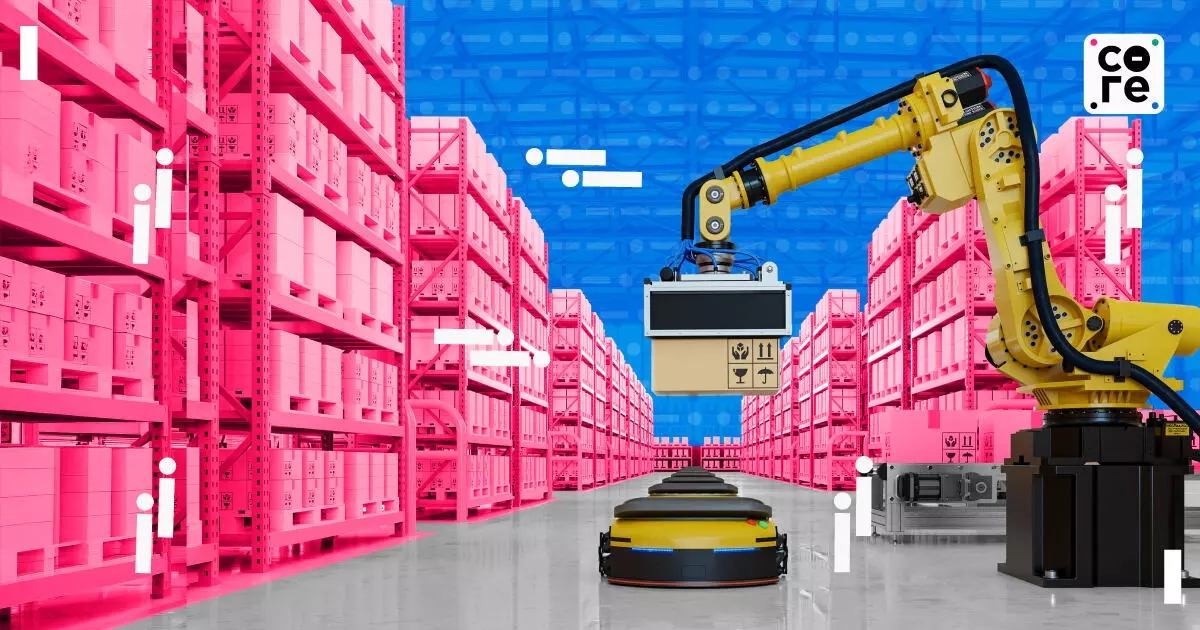
Young Indian Aspirations Give Wings To Warehousing Companies

India’s warehousing sector surges on e-commerce and quick commerce demand, expanding into tier-2 and tier-3 cities while grappling with rising land costs and moderating growth.
The Gist
India's logistics sector is experiencing rapid growth driven by e-commerce and changing consumer behaviors.
- Demand for warehousing space is projected to reach 1,200 million square feet by 2027, growing at 7.75%.
- The shift from tier-1 to tier-2 and tier-3 cities is increasing consumer demand and reducing delivery times.
- Investment in automation and infrastructure is transforming warehouses, enhancing efficiency and speed in order fulfillment.
India’s logistics business is thriving as quick deliveries and overnight orders have found great success among Indians.
Warehouses are the focal points that make it possible for e-commerce companies to deliver their orders with speed and efficiency.
The warehousing and logistics sector, not surprisingly, is seeing strong growth from 3PL players, manufacturing, as well as consumer goods and services, with ecommerce driving a large chunk of incremental growth.
As per a report by JLL, overall demand for warehousing space is estimated to reach 1,200 million square feet (including light manufacturing) by 2027, growing at a rate of 7.75%.
Shifting Of Sales Channels
Apart from favourable policies and the advent of GST, the shifting of sales channels due to e-commerce is driving a new era of growth for the sector.
Goods travel through multiple warehouses by the time it reaches the home — from a hub to a warehouse in the state, to a city, to urban logistics and a smaller hub in the area.
“When you order a Rs 300 product, it travels via four to five warehouses. So, the overall demand of the warehouse is increasing day by day. E-commerce demand is so high in urban logistics that the sky is the limit – especially with the way people’s behaviour is changing with the young generation, and the way they are ordering,” says Balbir Singh Khalsa, executive director of industrial capital markets and national director at Knight Frank.
Not all this growth is coming from the urban areas either. The Indian warehousing sector is also transcending from tier-1 cities to tier-2 cities. Also, tier-2 cities are accounting for a higher share of consumer demand.
The stock of Tier 2 and Tier 3 cities has grown to almost 100 million square feet over the last year, informs Yogesh Shevade, head of industrial & logistics business India of JLL.
“Aspirational young people wanting to buy more helped logistics companies and e-commerce companies to think beyond the top eight cities. They are driving consumption, and e-commerce companies or 3PL companies are going closer to customers and setting up distribution centres to bring customer experience,” Shevade added.
As warehouse nodes expanded from tier-1 to tier-3 cities, average delivery time reduced to one-third from nine to three days between 2014 and 2022, the JLL report adds. The smaller cities account for higher consumer demand, particularly in high-volume categories. Moreover, they are underpenetrated in terms of Grade A warehousing stock — providing companies with a huge opportunity.
This sector, with enhanced investments, also drove the transformation of warehouses from dusty and badly maintained godowns to automation-assisted Big Box formats, which is aiding all forms of industries.
Most e-commerce companies have also automated 20-25% of their operations, unlike in the US and Europe, as labour costs are lower in India.
QCom Drives Urban Growth
The dark store infrastructure is also growing extensively, thanks to the earlier 10-minute and now quick delivery options that consumers now expect.
Logistics players are also considering white-labelling dark stores to cater to the growing new-age demand. Developers, too, would gain from this trend.
Early on, players have been converting retail stores into dark stores and more such. But here too, newer models and designs are emerging.
Dark stores, in addition to storage, would also have to accommodate heavy traffic, adding speed and efficiency. This will force developers to rethink their intra-city strategies.
“Most developers are looking at creating floors for warehousing or developing in-city warehouses. Mumbai is also seeing some parks in in-city parks. I also believe there will be new infrastructure where new infrastructure will replace the old ones in one or two decades,” said Khalsa.
For in-city parks to develop, infrastructure and other factors have to evolve as quickly as possible.
Giving the example of established and emerging hubs of Bhiwandi and Taloja in MMR, Shevade said that the kind of goods matters.
Navi Mumbai-based Taloja would be ideal for imported goods as it’s closer to the port, while centrally located Bhiwandi might be better for goods that come in via the road.
This, however, is the ideal situation but the other factors play out better for Bhiwandi. “They have warehouses in Bhiwandi because that is where the ecosystem is; where they get the labour as well as transportation easily for further distribution. In Taloja, you only find people who are fully dependent on exports having or wanting to have warehouses there,” said Shevade.
Rents, Returns & Land Rates
While e-commerce has opened up new clusters and land parcels, initiatives like National Logistics Policy and Gati Shakti are also adding to the removal of hurdles for warehouse developers. GST has also made it easy for companies to set up warehouses on borders and move goods across states, which were previously uncomfortable with, before GST.
Even as e-commerce is booming, it’s not taking a chunk of the growth in traditional retail either, experts opine. “While it’s very difficult to measure, retail expansion is also happening and this pie is also increasing. The share of retail outlets and warehouses has increased in the last two years, and has not been weakened by e-commerce,” said Khalsa.
While most factors seem to be in favour of logistics sector growth at jet speed, there are as many drag factors as well.
According to a January 2026 press release by real estate consultancy firm Vestian on warehousing demand in 2025, there has been a moderation in the sector’s growth in 2025, which reflects the high base effect seen in 2022-24.
“Absorption in the warehousing and logistics sector moderated to 38.7 million square feet ft in 2025, following a sustained bull run over the past four years. The sector witnessed exponential growth post-COVID, owing to the rapid expansion in e-commerce, manufacturing, and third-party logistics (3PL) activities across the country. Absorption increased by 84% in 2025 compared to 2020; however, it was 14% below compared to the peak of 2024,” the report added.
E-commerce and quick commerce players are now prioritising optimisation of existing networks over aggressive capacity additions, Vestian opines. This is mostly on account of elevated land and construction costs, and regulatory compliance. Institutional capital deployment has become selective as well.
“I think investments have now matured after 7-8 years. They are more sensible, as the money is more while opportunities are lesser today. Land prices have gone up, while the rentals have not gone up, so there is a mismatch. Foreign investments typically look at 16-18% IRR and India is also competing with other APAC countries like Thailand, Malaysia or Indonesia,” said Khalsa.
This series is supported by Flipkart.
Core.
Core.


