



 Newsletter
 Search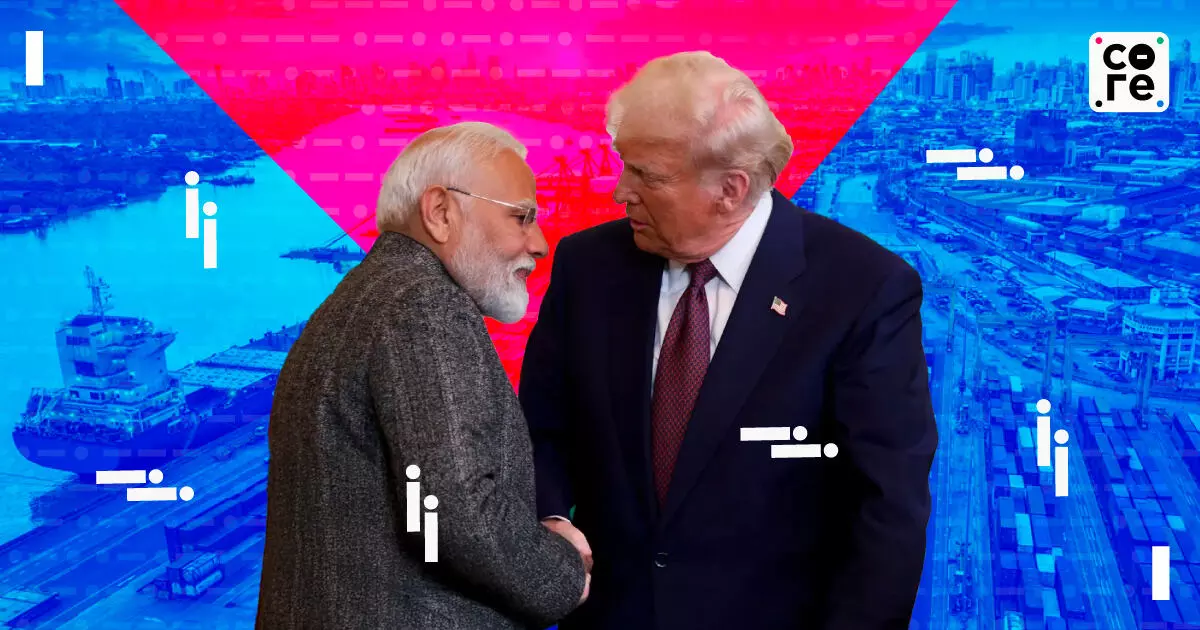
Sensitive Sectors Will Remain Protected In Trade Deal: Piyush Goyal
 By Zinal Dedhia
- Business
- Published on 4 Feb 2026 6:00 AM IST

India says agriculture and dairy remain protected under the US trade deal, even as tariff cuts are announced and key details await formal documentation.
The Gist
India and the US have finalised a trade deal aimed at benefiting various sectors while protecting sensitive industries.
- Commerce Minister Piyush Goyal highlighted the deal's potential for Indian exporters.
- Trump announced a reduction of tariffs on Indian goods to 18%, but details remain unclear.
- Opposition leader Rahul Gandhi criticised the government, alleging it caved to US pressure on agricultural issues.
Commerce and Industry Minister Piyush Goyal said on Tuesday that India and the US had finalised a trade deal, calling it an opportunity for Indian exporters while stressing that sensitive sectors would remain protected.
“Our farmers, marine exporters and textile industry were under pressure due to higher tariffs,” Goyal said on television. “India has worked to create more opportunities while protecting sensitive sectors, including agriculture and dairy.”
He said the agreement would benefit marine products, engineering goods, aircraft spare parts, textiles and small businesses.
Goyal’s remarks came hours after India and the US announced a trade deal on Monday, signalling a rollback of punitive tariffs. Trump said the US would cut duties on Indian goods to 18%, while claiming New Delhi had agreed to lower tariffs and non-tariff barriers on American products.
However, key details of the deal—including its scope, timelines and sector-specific commitments—remain unclear, with officials and trade experts noting that much of the understanding is yet to be formalised in writing.
“Trump said tariffs will come down to 18%, but people connected with the US Embassy and the White House have verbally indicated that duties were earlier close to 50% and are now being cut to 18%,” Ajay Srivastava, founder of the Global Trade Research Initiative (GTRI), told The Core. “Everything so far is verbal. Nothing is in writing.”
In his social media post announcing the agreement, Trump wrote that “effective immediately, we agreed to a Trade Deal between the United States and India…”, including the tariff cut to 18%.
Parliament in Turmoil
On Tuesday, the Lok Sabha was marked by sharp exchanges and procedural disruption as members attempted to discuss the trade pact and related foreign policy issues. Leader of Opposition in Lok Sabha, Rahul Gandhi, sought to speak but was repeatedly shouted down, preventing him from addressing the House at length.
Speaking to reporters outside Parliament, Gandhi accused Modi of caving to US pressure and “selling out” the hard work of Indian farmers. He framed the sudden finalisation of the deal after months of deadlock as evidence of external leverage, alleging political risk related to high-profile legal cases abroad — a claim unsubstantiated by independent reporting.
What Changed on Tariffs
Before trade tensions escalated this year, Indian exports to the US were subject to standard most-favoured-nation tariffs, generally below 10% depending on the product.
In early 2025, Washington imposed a 25% reciprocal tariff, followed by an additional 25% levy linked to India’s purchases of Russian oil, pushing duties on many Indian goods close to 50%. US officials now say tariffs will be reduced to 18% under the new understanding.
Zero-Tariff Claim Raises Questions
Trump has claimed India agreed to bring tariffs and non-tariff barriers on US products down to zero—an assertion New Delhi has not confirmed.
“Zero tariffs across the board are simply not credible,” Srivastava said. “India cannot open core agriculture or dairy even if it wants to. Industrial products are a different matter, but agriculture is a red line.”
Agriculture Likely Excluded
Agriculture—especially dairy—is widely expected to remain outside the deal. India has long resisted US demands for greater access to its farm market, citing the livelihoods of millions of small farmers.
"Indian farmers are dependent on these for their livelihood; it is not a trade issue for India but a livelihood issue for the after population,” Srivastava added.
Previous negotiations have stalled over dairy, poultry and genetically modified crops, with Indian officials consistently framing farm protection as a livelihood issue rather than a trade concession.
Energy Commitments Unclear
Trump also said Modi had agreed to stop buying Russian oil and increase purchases from the US and possibly Venezuela.
India has reduced Russian crude imports in recent months but has not announced a complete halt. Officials in New Delhi have made no public commitment to abandoning Russian oil, which India has defended on cost and supply grounds.
“Oil is a globally priced commodity,” Srivastava said. “India has not communicated any decision to stop buying from Russia. That claim has come only from the US side.”
Core.
Core.


