



 Newsletter
 Search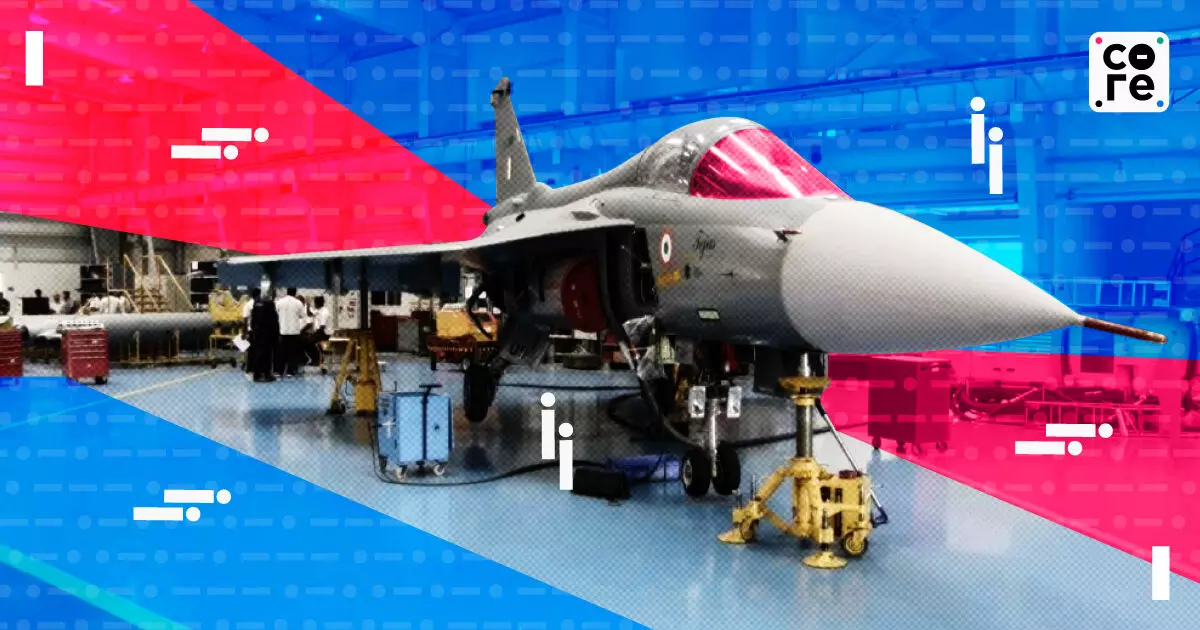
For India’s Defence Manufacturers, 2026 Will Be All About Execution

In 2026, success for the sector will depend on how quickly companies turn orders into deliveries, expand capacities, and stabilise supply chains under tighter timelines.
The Gist
- Analysts predict continued order momentum, with substantial capital investments expected to drive growth in the sector.
- Challenges remain in expanding supply chains and securing skilled manpower to meet rising demand.
- India's defence exports have surged, with the potential to double in the coming years amid global defence spending increases.
India’s defence manufacturers head into 2026 with order books fuller than ever, and with far less room for error. After a year of intense tendering activity and policy reform, the question is no longer about whether orders will come, but whether companies can execute them on time, at scale and if they can do so without stretching already tight capacities.
With approvals largely in place and capital allocations rising, defence procurement is set to remain elevated over the next 18–24 months. However, in 2026, success for the sector will depend less on new announcements and more on execution: how quickly companies turn orders into deliveries, expand capacities, and stabilise supply chains under tighter timelines.
The Story So Far
“2025 would be the year of reforms,” the Ministry of Defence declared at the start of the year. As 2025 draws to a close, those reforms have translated into a windfall of new orders, both for public and private defence manufacturers.
By October, the ministry said it had utilised Rs 92,211.44 crore or 51.23% of the FY26 total capital outlay of Rs 1.80 lakh crore. In comparison, it had spent Rs 1.59 lakh crore in the last financial year. Since FY21, the ministry has steadily strengthened the domestic industry by earmarking a growing share of procurement for Indian manufacturers — Rs 1.11 lakh in FY26 alone.
The impact of this push is evident in recent contract wins. In September, Hindustan Aeronautics Ltd (HAL) signed a Rs 62,370 crore contract to supply 97 Light Combat Aircraft (LCA) Mk-1A to the Indian Air Force. Bharat Electronics Ltd said it had received new orders worth Rs 14,750 crore in the current financial year up to October-end. Bharat Dynamics Ltd secured orders worth over Rs 4000 crore from the Indian Army over the past two months. In November, the Indian Army signed a contract with Larsen & Toubro to procure BvS10 Sindhu vehicles at an undisclosed value, developed in partnership with BAE Systems.
These wins have driven orderbook numbers of the public sector giants to record levels. For instance, HAL’s orderbook, one of the largest in India’s defence space, climbed to a reported all-time high of Rs 2.3 lakh crore, up from Rs 1.9 lakh crore in June. Alongside HAL, Bharat Electronics and Bharat Dynamics remain dominant players in the defence manufacturing sector in India.
Private sector participation, while still smaller in comparison, is also expanding.
According to Crisil, the combined order book of private defence companies is expected to rise to about Rs 55,000 crore by the end of FY26, from Rs 40,000 crore in FY25. Larsen & Toubro, Solar Industries and Bharat Forge lead the listed players, with unlisted firms like Tata Advanced Systems and Adani Defence and Aerospace.
While PSUs continue to dominate high-value platform contracts, competition from private players is increasingly viewed as a long-term structural shift. The easing of entry barriers, greater use of consortium models and technology partnerships are expected to intensify this competition in the future.
Order Momentum Likely To Continue
Most industry watchers expect the current order momentum to continue well into 2026 and beyond. Executives at Mazagon Dock Shipbuilders, for instance, have guided for a Rs 1 lakh crore+ order book by the end of FY27 from the current modest order book of Rs 27,000 crore.
The global defence sector is at an inflection point, noted Madhumita Mahapatra, partner and aerospace and defence Sector Leader, Deloitte India. “Technology modernisation, industrial resilience and shifting geopolitics are reshaping national priorities. Nations are moving beyond incremental upgrades toward secure digital architectures, intelligent platforms, decision support systems and diversified supply chains that can withstand strategic shocks and disruptions,” she said.
Others echo this optimism. Client Associates, a private wealth management firm, expects 2026 to see all-time high order books as higher capital allocation combines with large platform contracts and private sector ramp-ups.
Motilal Oswal, in their November report, said the Acceptance of Necessity worth nearly Rs 7 lakh crore approved during FY24-10MFY26, supports incremental order inflows over the next few years. A significant portion of these approvals, by value, came in the past 12 months. The brokerage also expects the defence capital outlay in FY27 and FY28 to be higher than that of the previous years, and to rise at 15% each year.
Execution Is The Real Test
Even as the orderbook optimism continues, analysts cautioned that execution will define outcomes in 2026.
“India’s defence order books are robust, indicative of strong revenue for the next two to three years. Most capacities are over-booked, so what we would look out for in 2026 and beyond would be the execution of these orders — and the availability of required resources, skill-sets, people, MSME supply chains and capital, to fulfil present and future orders,” said Jyoti Gupta, lead research analyst with Nirmal Bang.
Supply chains are also key to exports. A Client Associates spokesperson highlighted: “Healthy order books support sustained execution while supply chain and R&D capabilities become critical differentiators as exports scale.”
India’s defence exports have risen more than 15-fold over the last eight years, with potential to double to Rs 50,000 crore within the next five years, according to a recent B&K Securities note.
Defence production is also expected to roughly double from the current Rs 1.5 lakh crore in FY25 to Rs 3 lakh crore by FY29, according to analyst estimates. Analysts highlight India’s export opportunity amid rising global defence spending, including NATO’s planned ramp-up, and the country’s diversification into markets across Africa, the Middle East and Southeast Asia.
At the same time, India is among the world’s top defence spenders and top importers, exposing it to global-supply chain woes. In November, the defence ministry said that 65% of defence equipment is now manufactured domestically—a marked shift from the earlier 65–70% import dependence.
Motilal Oswal notes that across aerospace, defence electronics, missile space and shipyards, companies are driving a broad capacity-expansion cycle to meet rising long-term demand. HAL alone is estimated to spend Rs 15000 crore as its own capex in the next five years.
Industry analysts, however, flagged persistent challenges. Expanding MSME supply chains in tune with the influx of orders remains a challenge, as does finding skilled manpower quickly enough. Delays linked to global imports and specialised components continue to pose risks, as seen in programmes such as Tejas aircraft deliveries, the Project-75(I) submarine initiative and the Advanced Medium Combat Aircraft project.
What To Watch In 2026?
From Deloitte’s perspective, Mahapatra said, 2026 must be the year when digital transformation, integrated logistics, sovereign manufacturing and mission-ready talent converge.
Like most others, Mahapatra emphasised the need for continued policy momentum. “Equally critical will be continued reforms in procurement norms—simplified, transparent and faster acquisition cycles that reward innovation and enable timely induction of indigenous solutions,” she said.
In terms of policy push, how quickly approved orders move into the awarded contracts category, analyst note, would also be a key variable to track in the months to come.
Core.
Core.


