



 Newsletter
 Search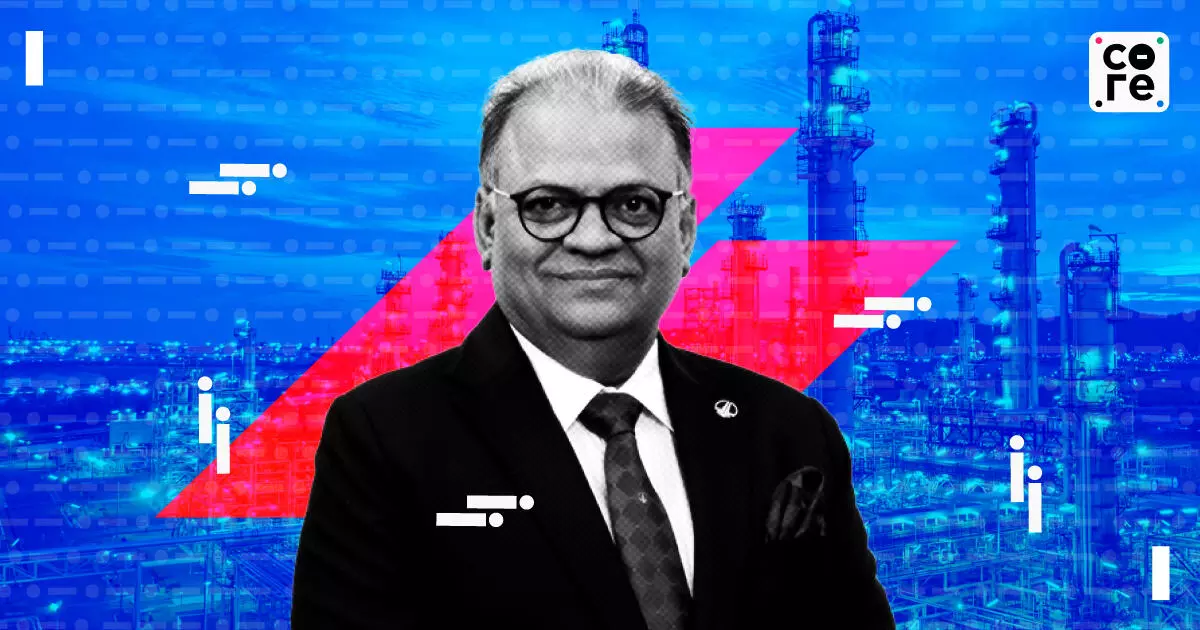
Deglobalisation Is Pushing India To Rely More On Its Own Oil And Gas
- Business
- Published on 27 Dec 2025 6:00 AM IST

In this week's The Core Report Weekend Edition, Govindraj Ethiraj speaks with Arun Kumar Singh, chairman and CEO of Oil and Natural Gas Corporation Limited (ONGC), about global energy flows fragmentation and how India is prioritising domestic exploration and offshore resources to reduce geopolitical risk and dependence on overseas supplies.
NOTE: This transcript contains the host's monologue and includes interview transcripts by a machine. Human eyes have gone through the script but there might still be errors in some of the text, so please refer to the audio in case you need to clarify any part. If you want to get in touch regarding any feedback, you can drop us a message on feedback@thecore.in.
Mr. Singh, thank you so much for joining me today. So, you've had a very busy year. You've been travelling a lot with an almost singular focus on trying to ensure greater collaboration, frontier collaboration possibilities for ONGC, particularly on the exploration side, because we are obviously looking for more oil even as we try and reduce our import substitution.
So, tell us about your travels, where has it taken you, what have you been looking for and what have you been trying to seek?
Thank you for giving this opportunity to explain our perspective of current reality. First and foremost, if you notice the world for last 10 years, all the exploration and discoveries and large production has started coming from deep water and ultra-deep water, primarily predicated on the success of three factors. The western hemisphere, which was not so good in oil and gas.
So, suddenly you find that Guyana happened, then you find Brazil kicking big, then you find Canada adding, then Permian added. So, the American, North and South America, particularly became the new hotspot of oil and gas supply and that is the experience of the current geopolitical and pricing of crude also. So, conventional areas of onshore or shallow water exploration probably is at the end of its big explorations are coming basically from the deep water and ultra-deep water.
Now, you would say that what you are coming to your question. So, we basically tried to, ONGC has been doing deep water and ultra-deep water. We drilled around 60 wells other than even eastern offshore in these areas, but somehow our probability of success is far from satisfactory.
So, one of the things that we certainly know that two things matter most and you should be also mindful that our large sedimentary basins are offshore. Sedimentary basin is where oil and gas is found typically, is deep water and ultra-deep water and shallow water also. Shallow water we have exploited in Bombay and we are exploiting, we will continue to exploit for next 30-40 years.
But deep and ultra-deep water, if you see it is mostly eastern side and also some part of Saurashtra. So, ultimately we have two things to focus on. One was digital and second was, digital we are good at.
I think our country talent is also very good at. So, we have to de-risk our drilling to some extent and second is foreign collaboration. Now, foreign collaboration is there are some niche companies and there are some IOCs.
So, naturally our focus is stitching some alliance and you would notice that for even western offshore our Bombay high, we stitched an alliance with one of the IOC BP. And similarly, now we are drilling, going to drill stratigraphy well next month. We have stitched an alliance for one well with some IOC.
So, basically this is the focus and also that India if at all finds, we believe that if India at all we succeed in our exploration mission, it is going to be deep and ultra-deep water.
So, you talked about results not being satisfactory in terms of drilling output. Now, is that something that is linked to an India context or you are saying that the same effort could have produced oil elsewhere, all other factors being constant? So, what happens that you have to stay the course.
Like Guyana, the 47th well went discovery and it is a large discovery. But what you do, you keep drilling and keep de-risking. So, you keep moving in a direction where you know that now it is little de-risk.
So, suppose you start with 100% risk, after drilling a well you go to 90. Second, now next well has 90% risk. So, you keep de-risking and keep producing and producing because this is how the physical, because you have digital data like seismic and all that.
But then you chase the drilling and find where oil is because exactly there is a hypothesis and inference of seismic data. So, this is what always happens. So, in efforts of you know one Guyana took 46, 47 wells.
So, but we must move in the direction of de-risking it.
And Bombay high would have been half of that?
Bombay high is as good as Guyana because 1 billion barrel.
No, in terms of the time it took to find.
Yeah, Bombay high we discovered in 1974. We have been chasing that field from 1960. So, today size of discovery wise Bombay high was also around 10 billion barrel and as of now Guyana is also 10 billion barrel. But Bombay we have produced a lot and so, size wise it is you can say that both are equal. But every deep water exploration takes a lot of money and also you need to be smarter.
So, smarter sense you need to be very sure that now I am increasing my probability of success by you know drilling more number of wells, not other way round that we are you know helter-skelter running and drilling left, right and centre.
And what has changed in the last year from a technology standpoint? I mean as so, you talked about partnerships and partners obviously bring technology. But what has changed in the oil and gas space?
If so, that gives us hope that yes, thanks to technology, technology plus AI plus great talent, we can actually go find more oil than we thought there was.
So, all these IOCs basically are having in some high cost area their probability of success is higher than us. So, that is predicated on their better understanding of seismic data. Basically in seismic data we look for contrast and contrast reading has improved considerably over period of time because of technology improvement.
So, in fact, that is one and second is that today tonnes and tonnes of data you collect in when you do seismic. So, if you miss something there you have missed and it is all you know a human mind which has to read that data. So, technology is helping it in localising it well.
But beyond a point again you have to drill and test whether your hypothesis is correct or not. So, it is a game of you can say improved technology reprocessing many times reprocessing results in because of the improved technology and all that. You get to a difference inference altogether.
So, it is a game of both your past experience and your current technology.
I am going to come back to supply in a moment. Tell us how you are seeing the demand side? I mean how you saw it change if so in 2025 and how you see in 2026?
So, gradually three macro trends you can see. Demand is still growing. We cannot say oil and gas.
Oil particularly and gas both. In fact, demand globally is this year also oil will grow at almost 1 million barrel a day 0.8 to 1 million barrel a day. Last year also was around 0.8, 0.9. It has slowed, but it has not slowed enough to say that peak has happened. So, demand I think that with there will be some thaw, but I will still guess that will be demand will keep growing. The number can be a function of economy and all that, but demand will keep and also price. Demand is also a function of price because other competitive energies kick in and today oil price is very low in our parlance.
So, it is 60 to 65, it is ranging. If demand remains at this level, there is no reason for any other energy source to kick in other than renewable for countries like India and Asia where there are plenty of sun.
So, since you brought that up, as you look ahead, last few years the focus obviously has been on building more composite energy companies or energy conglomerates. Does that thesis hold true in the way it was seen maybe a few years ago, given that India has also achieved maybe more than target on renewables and therefore, how do you see it? So, here multiple realities coexist.
For western world particularly, the solar is not very strong. It is mostly wind and wind is more expensive than solar and doing and they have other options like nuclear and all that which is also considered renewable. So, question is what is relevant for west may not be as much relevant for us.
For us, our story is mostly solar and we are not as strong on wind as western world is. So, as long as we are solar and the only challenge we have compared to wind is to make it round the clock. So, this time our country's focus for this year if you see is mostly around storage.
Storing this energy in daytime and using in the evening. Our evening peak loads are very high. Our peak to average if you see the ratio is evening 7 to 11 load is very high.
So, now where do you get power from? Unless you store solar, because solar power generation is very cheap. Storage is becoming a challenge.
Storage has a challenge of you know price, storage has a challenge of there are 3, 4 means of storage, which storage technology to adopt. So, here also the short term, medium term, long term returns are commensurate. So, people are taking the shots what suits them.
As someone who runs an energy company and I am sure you are always looking at all these factors that we have just spoken of which is the demand, the components of demand, supply, components of supply. What is it that you are most focused on?
Our focus will continue to be NP of oil and gas. That is our primary focus because country will keep growing oil and gas demand. So, we cannot take away our eyes of this goal, but parallelly because we have plenty of sunshine and we are highly import dependent today.
So, we have to focus parallelly on that, but our so far ONGC and oil industry is concerned, we should continue to focus on oil and gas and if 20% of resource we have extra, then we can focus on the solar too because it gives a not very high return, but healthy return plus also it gels with overall ESG goals of world. So, naturally oil and gas is more polluting. So, if it is a gradual transition, but I do not think India has any choice of giving up oil and gas because primarily we are growing 7-8% economy, 3-4% oil and gas will keep growing.
So, balance only can come from other sources, still it is 100%. If 3-4% comes and 6-7% you grow. Naturally, so there is oil and gas, there is no stop for up to 2045.
Now, within oil and gas, there could be two sources. One is let us say the oil and gas that you find in and around India and the other is your overseas assets. So, as you look ahead, where do you see more of the oil or gas coming from?
Our focus there also is India because geopolitical system of world is slightly gone towards deglobalization and more and more deglobalization comes, more and more local forces become active. So, there are very few places now in the world which is not going through the motion of very high nationalism. High nationalism comes in the way of energy transferability from one country to another without extracting a very hefty economic outcome.
So, our interest of the country lies in searching and discovering our own and that could be icing on the cake, but that cannot be a cake.
But when it comes to international, are you saying that geopolitics is the only reason which could maybe or has slowed things down in the last couple of years or maybe mostly last year?
Second, one of the more thing is democratic forces are also on rise and mature democracy can handle it. But if it is not a mature democracy, there is upheavals and upheavals target economic infrastructure of foreign countries. So, one has to be mindful that what is the political maturity and the democratic maturity of that country.
So, unlike other Middle East, Middle East today you know that it works on a different principle because they have less population and all that. But if you see today world, say for example, you take Africa, all African countries where you have oil and gas are reasonably well populated. So, unlike Middle East portion, so naturally you have to be mindful of that.
So, let us come back to India. So, I was going to ask you about deep water drilling or ultra-deep water drilling. So, walk us through, let us say what it takes to spend four or five times more than what you would traditionally to drill well.
Traditionally it is for our western offshore well is 50 crore, the ultra-deep water is 1000 crore. So, it is 20 times. So, 20 times more costly.
So, bridge size goes up and therefore, you would recall that government has stepped in and government announced, Prime Minister announced from the ramparts of Red Fort that government will support Samudra Manthan. Samudra Manthan is nothing but all energy resources whatever is possible from sea, that government will step in. The form, shape, size, how much, through whom, these are the matter of detail which I am sure it will be following very shortly.
And for let us say one particular well, I mean is ONGC, I am sure it is geared, but what has changed or what has to change within ONGC to align itself to two things. One is of course, taking these bigger beds and secondly, plugging in the technology which includes the AI and everything.
So, that part ONGC is investing very heavily. In fact, thanks to our younger workforce, they seem to be you know, I should not be saying otherwise I will run the risk of you know, but they seem to be knowing this world better. So, we are betting high on them also and we have given them world's best class consultant to them including hired data scientists to see that we integrate everything that world knows today in the space of technology to following this.
So, that work is going on. We have devoted very large number of resources if not, you know, and best resources basically to do this work. So, we hope that our probability of success will improve.
And would they be looking at old data and then trying to arrive at fresh conclusions or are they seeking new data?
New data also. We are continuously doing more seismic. So, seismic we are doing 2D, 3D we call it and that work is also going unabated because many of our deep and ultra deep water is not well surveyed, seismic surveyed.
So, that work also goes around well. In fact, you will be surprised that roughly we have been spending 4000 crore per year on the data acquisition alone. So, this is something that will continue and after we acquire data, we process data, what I told you we increase the digital penetration of the data and then we, you know, come to location where to drill.
The quality of data collection, if you were to compare it to let us say 10 years ago and 20 years ago, someone was trying to understand, I mean, how has it changed? It has improved a lot with the passage of time.
And, you know, particularly the seismic equation in ultra deep water is mostly foreigners. So, they have been investing in it and therefore, they have been, you know, good at it and they have improved a lot. It is no more the, you know, older way of doing things, but still it is ultimately you have to validate by drilling a well.
You cannot say from top there is seismic, that oh there is oil. So, you have to prove it by drilling a well and most, if the probability of success is more than 14-15 percent, we are home. For every 7-8 well, if you have a discovery, then it is fine, but if you drill 20-30 wells and 30 wells for a discovery, then naturally it is not fine, because unless the pool is large, one should discover is a very huge pool, because the size of economics will depend on size of pool.
So, let me take a step back. So, if you were to look at the map of India from, let us say, space and the region around it, you know, the areas that we know ONGC has been drilling is Krishna Godavari and Kaveri or Bombay High, now Kerala Konkan, Andaman. So, where do you see the opportunity?
So, these are what you said is, say south of Gujarat, Maharashtra, Kerala Konkan, eastern offshore, if you see Andaman, right side of Andaman, you know that all the countries are very rich in oil and gas, including Indonesia, Myanmar. So, basically very close to Andaman. So, right side of Andaman, we see, you know, a naturally natural extension of those fields, structure and all that.
So, right now, we are today also we are completing, we have drilled a well, we are moving towards Andaman. Andaman, you know, we have focused three wells in last 15-16 months. So, Andaman is one place where we think that, you know, there should be something big.
Then another area is that Saurashtra, because as you know that the same structure goes right up to Middle East, you know, from Bombay to Middle East. So, Saurashtra also with Bank High, eastern offshore, Krishna Godavari is natural sedimentary basin because of river and all that. Then we have also Kaveri, we have been producing onshore, Kaveri offshore also should be there.
In fact, so these four, five should be there. Then also Mahanadi, Odisha, because if you know, we have had, we had some success, some other company had some success. And one good thing is happening is that government has stepped in for a common infrastructure.
So, this is another area that where even small pools can be clubbed and many players are there. And if somebody can collaborate and all that, then you can. In fact, I want to reiterate again and again, new world, you won't succeed without collaboration.
You'll get destroyed if you're alone. Even Nobel Prizes, people are getting three, four people come together to get Nobel Prize nowadays. One of the time when one person would get Nobel Prize in Physics, you can see the trend.
So, now world is too, individual mind has limitation. Individual or nation has limitation. So, they can come together, they can make discovery and also make economic sense for production.
And you also see, therefore, some mitigation of risk and distribution of cost.
That is second point. You de-risk your cost also. And if all the people come together, it is because deep water, ultra deep water requires huge resource.
It is not like, you know, 2000 metre drilling and you have $4 lifting cost. No way.
And I know you collaborated with BP, for example. So, when we try and understand collaboration, so is it typically with one single company? Is it with a series of companies at different stages of exploration?
It depends on commercial arrangement because it depends on what call other party is taking. You have a strategy objective, he also has a strategic objective. So, if it marries, then we like TSP with BP clicked because we felt that, you know, it is a fit case.
For some other case, it may fit with somebody else. So, we cannot make a general statement that these companies, but we will keep trying and behind the scene, there are departments which keep working all the time. Here also, if you work on 100 projects, you succeed in 2 or 3.
Naturally, your success rate is not very great because everybody has his own compulsion.
Yeah. And I want to digress for a moment, but only slightly because you mentioned GCCs earlier and some of the big oil companies have GCCs here and they are also gunning for the same talent because a lot of now, the work is really analysing data, maybe past and present, as you said, and the quality of data is improving. So, how are you thinking about that?
ONGC is, I don't know if outside world knows or not, ONGC is in a huge, last 3 years, we have the huge part of centralisation and digitalisation. So, we have our own global capability centre. Centralisation has a word called centre.
So, centralisation, we have done a lot. In fact, in many areas, I think in whatever is left, that also will complete in 5, 6 months. So, centralisation in new world, one more reality we are realising that unless you are centralised, you can't be digitalised.
And unless you are digitalised, you can't bring efficiency in the system. So, what global capability centres have done, they have centralised the world operation to one place. And same thing ONGC is trying to do and hopefully we have covered almost procurement, we have covered finance, we have covered centralised.
Now, we have to, we are moving towards autonomous drilling. So, in one centre, we will do drilling, far remote drillings, so that the resources which are very talented and very competent, they sit in one place and they direct people and their wisdom and experience is available to everyone instead of making 100 people to go through the same experience in the life. So, now one more reality here is that probably the experience of youngsters is going to be more denser than what we had in our time because they get centralised and hundreds of things pass through you.
In olden world, we will be in 100 places and 1% of 100 will pass through you. So, your experience is not going to be as dense as the centralised agency experience. So, naturally it will accelerate our growth too.
You've also been talking about cost optimisation for ONGC as a whole.
That was a secondary product. Somehow, that became the main product.
That was my question. Is it an outcome of or is it a…
No, this is basically efficiency improvement. Efficiency is in terms of time and money both. In fact, you would realise that unless you, in this low-cost environment, low-price environment of crude and gas, we need to cut down on our cost.
So, that also came along the way that we will look at cost. But cost, we have lots of scope fortunately because it is an era of, you know, we moved 30-40 years era where the efficiency nobody bothered. But today, what choice do we have at 60-65 dollar world?
It is not a 90 dollar world anymore. So, we have to cut down 5-10,000 crore per year.
So, you know, for young engineers, thinking about joining an oil industry, you would picture yourself, you know, wearing a hard hat and putting on a jacket and going on to a rig, maybe onshore, maybe offshore. What can young engineers expect today?
So, 5-10 years of field experience will be desired for a great mind because unless you see, feel, touch and we should not forget 70% people learn through doing. Only 30% people are imaginative and 1% like Einstein that who can imagine and decode. So, working experience has no substitute.
But in new world, working for 30-40 years on the same work, that world is probably over. Otherwise, somebody will keep you, but he will not value you, as simple as that. They will value you for your, you know, intellectual prowess based on learning experience instead of your doing that you have done.
Suppose you work for same job for 30 years, one year experience repeated 30 times. But if you have a varied experience in same platform, you have moved 10 places, then 10 years is valued. But we do not think we have more than 10 years experience requirement for a bright guy.
I am repeating that word for a bright guy. But rest can work or lower skill people can say, ITI, diploma, they can work longer. But if somebody is passing out from a great institute with a great mind, he should not be there for more than 10 years.
In that principle, we have almost implemented now.
So, these are the people who are, let us say, going straight into AI labs or spending some time on field and then they come back.
They are the people who are coming back with the full rhythm, because they are ahead of us. And I do not mind saying it, IQ wise younger generation is better than us. This much I can tell you.
EQ wise they will be better, but IQ wise they are far better. Digital world, IQ, it requires a lot of IQ, because very fast movement. So, their exposure to today, in earlier time, new times, even engineering colleges and all that, the labs and all that have improved exponentially over 3 decades, 4 decades.
So, there when they come out, they have far better equipment than what older generation would be. Older generation is making up through experience, but they are making up through the nascent knowledge or latest knowledge. And if you can put a layer of experience to it, you become Mashallah.
Was there like a wow moment that you encountered, let us say, in the last year while visiting one of your labs or talking to one of your young engineers, where you said, you know...
One of the thing we should is that, when AI driven well location drilling was 98.5% accurate. So, you can say that, that is a great feeling, that you can predict something and we can come so accurate. So, this is something that should become more and more annoying, you see.
And, but last year, 2-3 AI used cases were aha. We can say aha. But it has to go up and for that, a best talent has to sit on data and also put a layer of experience into it.
And then, AI used cases we are also observing, it is a mix of both, great mind and great experience. So, how to create organisation of both type of people is the challenge. Those who, you know, there are many who wants a particular way to lead the life.
So, that is our role, that is our role. Right. Last question, last set of questions.
The India Energy Week is coming up and you are a host, exhibitor and also will be participating. But my question is really two. One is, what do you hope to take away from that personally and for the organisation and what do you hope to share?
So, basically, India Energy Week is a platform where aim to achieve two goals. One is that people who have technology, they come there and showcase it. And second, those who can collaborate more, a kind of networking, business networking and all because once you meet physically, still you understand the case better, you understand better.
So, that is one purpose. Second purpose also that India has a huge student base. So, this time, we are inviting a lot of institutes with their students to come and participate because I feel, recently I was in Japan and Korea and I felt that seeing them, sooner or later, world has no choice but to rely on India directly because they are shrinking and ageing, all sorts of problems.
So, our people, our boys particularly, what is happening to global capability centre, they have cut down their cost by coming here. Great, they did not come to India out of love. They came for their own business interest.
So, we feel that world's global capability after 10-15 years, 50% will rest in India. Because this is my reading of the situation after travelling and also seeing how the global capability is. Otherwise, why they are ramping up people from 3,000, 5,000, 8,000, 10,000.
One is now touching 15,000. In India, they are touching 15,000. Now, they are thinking of…
In your industry. In mine. I am talking about my industry.
I think I know who it is. So, this is something that they have to physical operation, they can do anywhere. But mental operation, they have to do from India only.
In fact, that is why otherwise, unless our cost goes up and it becomes prohibitive for them, our cost will continue to be low because roughly 1.5 to 2 million a year, we are putting our output of the country. So, that stream will continue to be there. So, out of that, if you take even 20-30% as a good resource, I think we can supply all mental talent to the world.
So, you are saying IEW as like a fountainhead of…
So, we want to expose our students and colleges. We have invited a lot of them to come there and also participate in the discussions and also in the energy challenges that what the challenge we have. So, this is something, three, four things we expect from IEW that showcasing that latest technology and also this time we have added, you know, other than oil and gas also in a big way.
We have a dream that one day it becomes the really energy, all the energy streams for the country converge there. So, it has already become second largest in the world. I think only Edipac is better than us.
In fact, rest all forums… And you were speaking there a few months ago, I think.
Yeah.
So, it is second forum. It will be at least 30-40,000 people will be converging on one premise in 2-3 days. And also we want to invite you for, because it is now having a, you can come by air.
If you have a chopper, you can come by sea. If you have a ferry and if you can come by road plus it also we have a type, we have installed a jetty and a lift like what you see in Niagara for accessing sea. So, we have infrastructurally made it very beautiful plus also probably Goa cannot afford to have anything.
I do not think there is any better place in Goa for conference tourism than our premise. We can host 5,000 people inside the hall in three layers, fully central air condition with the best of acoustics with four mega halls for exhibition, 225 acre premise. So, we can hold 1,000 car parking there.
We can hold another 5,000 parking there, car somewhere else. So, infrastructurally ONGC has made it good. Only thing is we should exploit it, use it and make country great through such things because now you can see in India, now you have Delhi also beautiful conference centre.
Soon Bombay you have one big one. So, now country will have 10-20 places of great conference tourism and also we should involve our youngsters because they are the future.
So, let me kind of come back and wrap it up. We talked about the sort of renewed thrust on exploration. You talked about partnerships, the importance of partnerships, importance of collaboration.
You talked about the focus on young Indians, young engineers and being efficient. If I were to ask you now to look ahead, let's say 2026-27, what would be your three key priorities?
So, I told you exploration is number one because we need badly one big discovery, one or two big discoveries for ONGC as well as for country. Second thing is retain and increase production from the current field. Somehow with great, we have been declining, but last two years we have arrested the decline at least on ONGC level, but at field level definitely BPTSP is doing well.
In fact, it is showing growth. So, that is something that number two and number three remains our focus on technology and cost and efficiency. In fact, if I can bundle it, technology, cost and efficiency is the third bundle.
So, for ONGC's mid-term and long-term future, these three are strategic priority for the time being. Foreign assets will continue to do well if it comes our way, but there our focus is not exploration, there our focus is producing asset. If something comes good at our terms, which field is commercial, we will pick it up.
Otherwise, we will focus on country.
It is a wonderful note to end on. Thank you so much.
Thanks to you. Thank you.
Core.
Core.


