



 Newsletter
 Search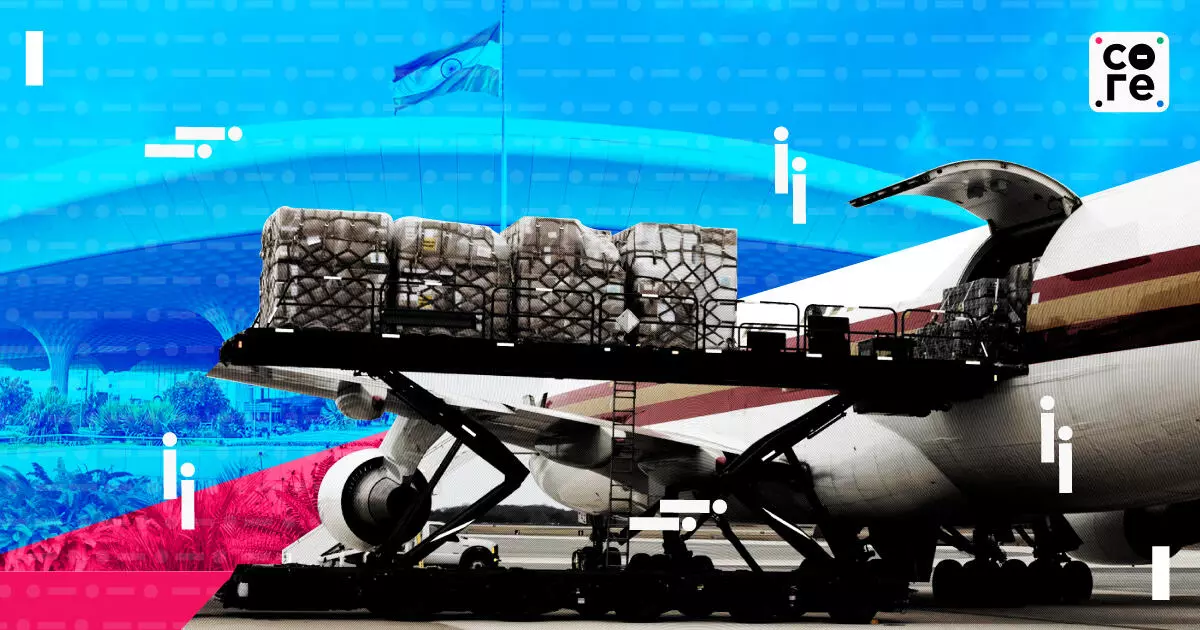
Cargo Flows Brace For Shake-Up Amid Mumbai Runway Overhaul

Mumbai airport’s planned freighter suspension will force cargo rerouting for nearly 10 months, reshaping logistics networks and raising cost and execution challenges for exporters, airlines and forwarders.
The Gist
The suspension of dedicated cargo aircraft operations at Mumbai's main airport from August 2026 to May 2027 will significantly impact freight logistics.
- Freighters may reroute to Navi Mumbai International Airport, which offers better access to logistics infrastructure.
- Challenges include managing ground operations and potential cost increases due to higher aeronautical charges.
- Industry experts believe the effects will vary based on shipment types and routes, with some costs potentially being absorbed by operators.
If you are shipping goods into or out of Mumbai later next year, deliveries may take longer than usual and cost more. From August 2026, dedicated cargo aircraft will stop operating at the city’s main airport for nearly 10 months, forcing freight to be rerouted through other hubs.
In December, Mumbai International Airport Ltd. (MIAL) informed freighter operators that dedicated cargo aircraft would not be permitted to operate at Chhatrapati Shivaji Maharaj International Airport (CSMIA) between August 2026 and May 2027 due to scheduled airside infrastructure work, including re-carpeting of the airport’s primary runway. This creates a significant hassle for not only freighters but also export businesses.
Where would the cargo freighters go?
One option frequently cited is Navi Mumbai International Airport (NMIA), which is expected to handle cargo operations and is located closer to Jawaharlal Nehru Port Trust (JNPT), India’s largest container port. Compared to CSMIA, which is located at the heart of the city, Navi Mumbai faces fewer restrictions on truck movements and offers closer access to multimodal logistics infrastructure.
However, Navi Mumbai is a potential option rather than a mandated alternative. Cargo operators remain free to route freighters through other airports such as Pune, Hyderabad or Delhi, depending on commercial feasibility, network planning and customer requirements.
Setting up temporary operations at a new airport is not without challenges. “To set up an office, move people, and arrange equipment at Navi Mumbai is an inevitable situation if there is no other option. There will be discomfort, no doubt about it,” said an aviation industry expert, speaking on condition of anonymity.
CSMIA typically handles close to 900,000 tonnes of cargo annually, making it one of India’s busiest air freight hubs. The temporary suspension comes at a time when air cargo demand is closely tied to export recovery, e-commerce growth and time-sensitive manufacturing supply chains.
With Mumbai serving as a key gateway for pharmaceuticals, electronics and high-value shipments, the halt is expected to reshape freight flows, raise logistics costs and test the readiness of alternative airports well ahead of the 2026 shutdown. This comes at a time when freighter operators and export businesses are already facing challenges due to tariffs and geopolitical scenarios.
Runway Re-Carpeting And Safety Mandates
At the centre of the disruption is the airport’s primary runway, 09/27, which handles the bulk of aircraft movements and is the longer of the two intersecting runways at CSMIA. The runway is scheduled for re-carpeting as part of periodic maintenance required under aviation safety regulations.
“This is not something new. Mumbai has done a fairly decent job in giving eight or 10 months’ notice for this activity. It gives enough time for people to plan and operate,” the expert said.
Runway resurfacing is considered non-negotiable under international aviation safety protocols and is carried out every few years. The airport’s secondary cross runway, which underwent similar work two to three years ago, does not have sufficient capacity to absorb the full volume of traffic during the maintenance period.
As a result, airport authorities concluded that allowing dedicated freighter movements during the works would not be operationally viable.
The Transhipment Tangle
The communication, issued in December 2025, was specifically targeted at freighter operators and does not apply to passenger flights or belly cargo carried on commercial airlines. MIAL has said in an official statement that the suspension is necessary to carry out safety-mandated runway maintenance and associated upgrades.
This is not the first time a re-carpeting plan has been proposed. An earlier re-carpeting schedule with a shorter notice period (about three months) was deferred after freighter operators raised concerns about insufficient time and lack of viable alternatives.
“Where I do see an impact is more on moving from a narrow-body to a wide-body and vice versa. That's where I see a big issue. Otherwise, carpeting, re-carpeting is done in every airport in the world,” the expert added.
Why is switching between narrow-body and wide-body aircraft challenging?
Take Lufthansa Cargo’s freighter operations from Mumbai as an example. Cargo from cities such as Nagpur or Kolkata is typically flown into Mumbai on narrow-body aircraft like the Boeing 737 or Airbus A320. If the onward freighter were to depart instead from Navi Mumbai, the transfer would become significantly more complex, requiring additional ground handling, trucking, and coordination between airports.
“The key questions are how the cargo will be transferred between the two airports, if by port, then whether customs will permit such movements. This introduces regulatory challenges, including the availability of pallet-capable trucks, ULD and part-ULD movement, and customs clearances,” according to the expert.
Where there is no issue is in the case of a freighter making only a technical landing, or when an aircraft lands at different airports without transhipment.
“However, once international transit or transhipment is involved, customs permissions are required, including the filing of bonds, and these processes will need to be addressed,” the expert said.
No Room For Choice
The halt affects operators that deploy all-cargo aircraft, including global integrators such as FedEx, DHL and UPS, as well as other international cargo carriers. These operators typically rely on leased aircraft that are deployed across tightly scheduled global networks.
“Using the freighters as they are, whoever is investing money to fly international operations has to lease an aircraft. If they are told that they will not be able to come into Mumbai, they will have to deploy those aircraft elsewhere on other routes, which will cause a lot of inconvenience for the freighters to replan,” CK Govil, former president of the Air Cargo Agents Association of India, told The Core.
Govil further added that this would force operators to make network-level decisions rather than temporary adjustments. Aircraft grounded due to airport restrictions still incur lease and maintenance costs, making redeployment essential.
“The extent of the impact is debatable. For imports destined for nearby markets such as Pune, the difference would be marginal and could even be cheaper if handled via Navi Mumbai. Costs would vary mainly based on trucking economics, such as whether a full pallet or a half pallet is being moved,” the expert added.
Freighter operators are given close to nine months’ advance notice to rework logistics, assess alternative airports or shift cargo to other modes depending on business needs. Discussions are ongoing on a case-by-case basis, recognising that operators handle varied cargo profiles and have different operational constraints.
“There is no question of complying or not complying. If you want to fly to Mumbai for these eight months as a freighter, you have to go to Navi Mumbai,” the expert said.
Handling Headaches
Beyond aircraft redeployment, operators will have to manage ground-handling arrangements, equipment availability and staff movement. High loaders, pallet dollies and cold-chain facilities may need to be duplicated or repositioned if cargo is split across airports.
“There will be challenges in terms of whether there will be enough equipment to move between the two airports. But that is more of a logistics issue that can be tackled,” the expert said.
MIAL has said that certain cargo-handling facilities at CSMIA are also being upgraded as part of the same airside works. Bundling runway resurfacing with other upgrades is intended to reduce the need for repeated disruptions in the future.
Cost Pressures And Freight Rates
Industry participants expect costs to rise during the shutdown, though views differ on the scale of the impact. Govil warned that operating through Navi Mumbai could significantly increase expenses.
“Aeronautical charges at NMIA are among the highest globally,” he said. “When you add trucking between Mumbai and Navi Mumbai, staff deployment and ground handling, overall operating costs will rise steeply, and that will feed into freight rates.”
Others argue the impact will vary by route and shipment type. Cargo destined for nearby industrial hubs such as Pune could see only marginal cost changes, and in some cases lower costs, depending on distance and load factors.
“If I’m importing something for Pune, there could be a very marginal difference,” the expert said. “In fact, it could be cheaper through Navi Mumbai. The impact on cost will be there, but it’s not a showstopper.”
The expert added that while costs would increase due to changes in routing, the increase may be small enough for airlines or customers to absorb, depending on contract structures.
What happens to cities that lack an alternative airport and must undergo re-carpeting?
“In such a situation, airlines have no option but to divert to the nearest available airport. That is the only alternative. I recall a similar instance in Chennai years ago, when the main runway was being re-carpeted. There is no scope for compromise when it comes to aircraft safety. Once a Notice to Airmen (NOTAM) is issued, all airlines are required to comply, without exception,” the expert said.
Will Freighters Return To Mumbai?
Whether freighter operators return to CSMIA once the works are completed will depend on several factors, including customer location, pricing and long-term network strategies.
“There is no plan for Mumbai to shut down operations permanently,” the expert said. “If I’m an importer or exporter in Andheri, I will prefer Mumbai airport any day. If I’m in Pune, I will definitely prefer Navi Mumbai.”
Industry participants emphasise that Navi Mumbai is not seen as a competitor to CSMIA but as a complementary facility. Both airports are operated by the Adani Group, reducing the likelihood of direct competition.
“Navi Mumbai is complementing Mumbai,” the expert said. “Mumbai’s terminal capacity will get saturated in a couple of years. When that happens, traffic will be forced to go there permanently.”
A Multi-Airport Future
Globally, major cities operate multiple airports serving different segments of the market. London, Paris and New York all rely on multi-airport systems, while Goa in India already operates two airports.
“It’s more to do with the load of the carrier and the market they have,” the expert said. “It will not be one-size-fits-all.”
Some freighter operators may choose to route flights to Delhi or Hyderabad during the shutdown rather than establish temporary operations near Mumbai. Others may use the period as a test case for longer-term shifts.
For now, the extended notice period has shifted the focus from immediate disruption to strategic planning. While the suspension of freighter operations at India’s busiest airport will test supply chains, industry participants broadly agree that the impact will be manageable, provided alternative infrastructure and connectivity evolve as planned.
Core.
Core.


