



 Newsletter
 Search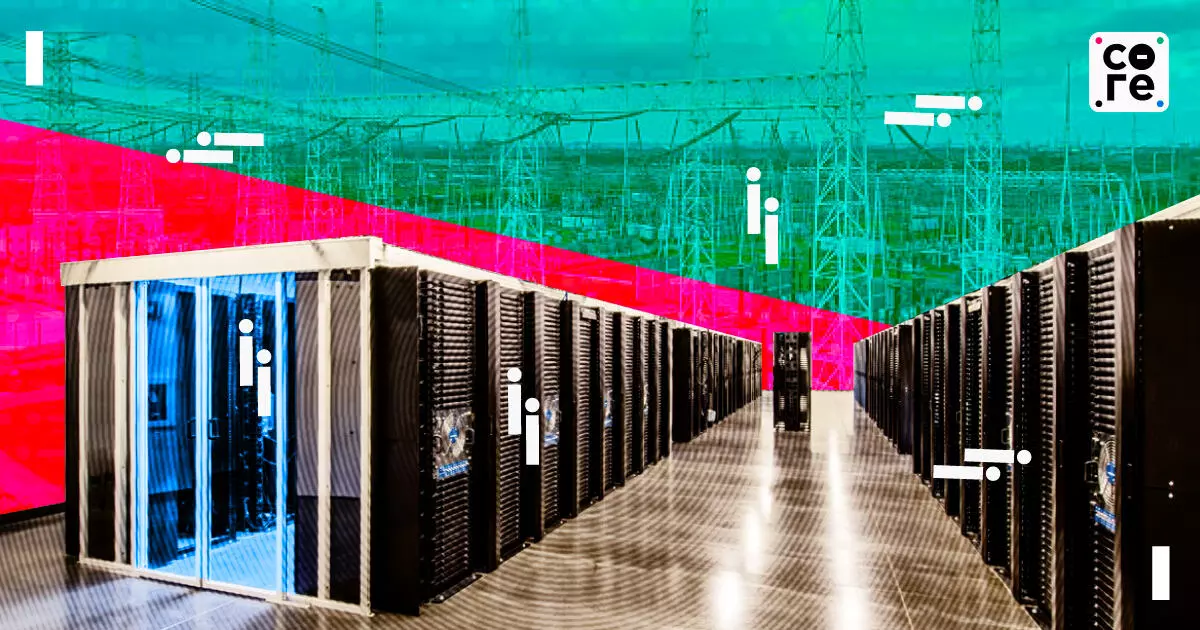
AI Hyperscalers Will Change India’s Power Demand And Renewables Aren’t Enough
- Business
- Published on 26 Jan 2026 6:00 AM IST

As India eyes AI data centre leadership, experts warn power systems need urgent redesign to deliver dense, reliable, affordable energy at scale.
The Gist
India's AI Data Centre Ambitions Require Rethink on Power Demand
- AI data centres require high-density power, necessitating intelligent grid systems.
- The integration of diverse energy sources is crucial for meeting future power needs.
- Renewables alone cannot solve energy challenges, highlighting the importance of gas and other sources.
As India gets set to become an artificial intelligence (AI) data centre hub with multibillion-dollar commitments from global tech majors like Meta and Google, energy experts believe that it needs a rethink on its impact on power demand.
The future of AI is gated on power demand, and that too, the right kind of power with high availability, high quality, high volume, and high concentration power.
“AI hyperscalers or data centres cannot expand the way, right, they are destined to or they're planned to, given the structure of power systems. We need to really engineer these kinds of corridors. Secondly, how do we integrate diverse sources of energy, like renewables, gas, coal, nuclear, not generators but storage systems,” Atanu Mukherjee, CEO of Texas-based energy technology company Dastur Energy, tells in an interview with The Core.
AI data centres require high-density power – at around 100 kilowatts per rack as compared to traditional data centres that need anywhere between 10-20 kilowatts. To be able to generate, distribute and store such power while also ensuring affordable and low-cost power requires an intelligent grid.
Smart Grids To Shape AI Data Centres
Intelligent grids use two-way communication and advanced sensors to monitor and predict requirements, which are necessary as they service power-hungry systems like data centres and AI. The technology of integration of AI into power systems to streamline a grid that can, in turn, support AI data centres indicates the ubiquitousness of technology as well as the need for systems to upgrade.
Indian power distribution systems are mired in financial as well as other issues. But even across the world, these transformations are not easy, says Mukherjee.
“The grid is a very large, complicated, complex, what you call amorphous infrastructure, right. To make technological changes to move it forward takes a little time, but that recognition is there that if you don't integrate these using intelligent technologies, it's going to be very difficult to maintain the kind of demand and supply trajectory required going forward,” he adds.
‘Renewables Not The Saviour’
Within India as well as internationally, grids are facing their own set of complications due to a rise in the extent of renewable sources. Nations like Germany, UK and others who have a critical proportion of renewables are now rethinking their strategies in order to make power cleaner, affordable and abundant.
“To solve the world's energy problems and also make it as clean as possible, renewables alone cannot do it. This is a broad recognition across swathes of population, across nations, across political regimes. This is a reality and we kind of talked about it for quite some time but we didn't expect this to happen so fast in 2026, people are talking about how we can make energy more affordable. In Germany, UK and mostly European countries, power prices went through the roof in a period of 10 years,” says Mukherjee.
The role of renewables will also evolve and he believes that it would be more complimentary than a replacement. “Renewables will help, but renewables will not be the saviour or significantly substitute the role of crude and gas in power generation; and of course, in commodity production,” declared Mukherjee.
Gas: The Clean Enough Source
Nations like India, which aim to provide utilities at an affordable rate to swathes of its population, can also explore more resources like gas. “Gas is a very important energy commodity for any application around the world, including India. And India doesn't have gas,” he added.
India imports LNG and has around 50-55 million tonnes of LNG capacity. But here too, the capacity utilisation of gas import infrastructure is about 35-40%, which is extremely low. The price and economies around LNG does not allow for absorption in large volumes. Mukherjee believes that LNG capacity is more of an insurance, which can come in handy in case of any extreme events, apart from supporting the systems at their current volumes.
He believes that there are other ways in which India can produce gas. “India's biggest endowment is coal. If you can convert coal, rather than combust coal into gas at economics, it can complement, supplement, and substitute a lot of the LNG import requirements. That's one direction that we think the government has embarked upon,” he added.
Moreover, India can also look at synthetic natural gas going forward in order to maintain a clean and affordable energy source. After many years of chasing clean energy at all costs or Net Zero at all costs, the world seems to be pivoting to a ‘clean enough’ model, believes Mukherjee. And India, which is on the verge of substantial renewable generation, would be able to make a pivot at the right time, to aid the growth of new-age businesses at the right cost.
Core.
Core.


